Borgo La Pietraia: A Hotel Built Like a Home
Borgo La Pietraia sits above the plain of Paestum in the Cilento, one of the original Blue Zones where the Mediterranean diet was first documented as a longevity practice. Built in 2007 by the Scariati family with architect Nicola Pagliara from local sandstone, the property is a slow hospitality hotel in the deepest sense: twelve rooms curved into the hillside, a kitchen rooted in the land around it, and a pace of days that the terrain itself sets.
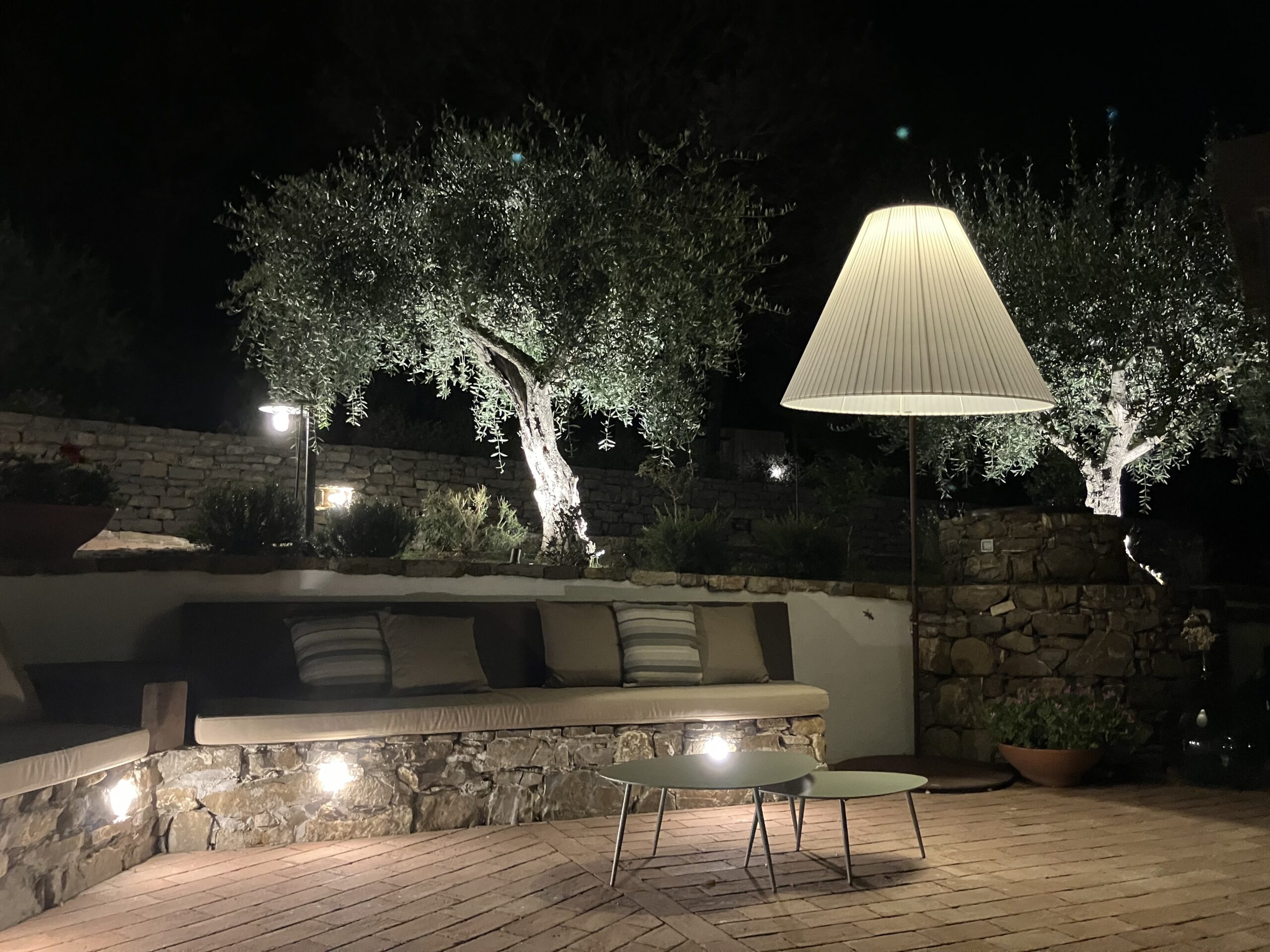
The scent arrives before the building does. Rosemary, laurel, the dry warmth of stone that has been in the sun all afternoon. Giovanni Scariati planted more than seven thousand plants on this hillside above Paestum — cypresses, over a hundred olive trees, carob, herbs, fruit trees — and the landscape they have grown into in the years since 2007 now frames the twelve rooms of Borgo La Pietraia in a way that no architectural decision alone could have produced. The building and the terrain have grown together. That is what you feel on arrival, before a single door has opened.
The hillside sits at around 350 metres above the plain of Paestum, where three Greek temples have been standing for two and a half thousand years. On clear evenings, from the upper terrace where Ristorante Pietre serves its thirty guests, the temples are visible in the distance below, small and precise in the fading light, with the Tyrrhenian Sea behind them and Capri on the horizon. The Cilento is the original Blue Zone, the territory where researchers first documented the Mediterranean diet as a longevity practice. It was never designed. It grew from what the landscape gives and what the people living inside it learned, across centuries, to do with it.
When the Word Hotel Falls Short: Nicola Pagliara and Twelve Rooms in Sandstone
Borgo La Pietraia is not a hotel in the conventional sense, and the Scariati family has never tried to make it one. There is no classic reception, no lobby. A room designed as a living space leads into the grounds, and from there the twelve rooms — four Deluxe, seven Junior Suites, one Suite — are reached along paths bordered by the low dry-stone walls typical of this stretch of southern Italian hillside. The atmosphere is that of a borgo, a village, and the word is precise: scattered volumes in the green, the stone walls, the sense of a settlement that has found its form through use rather than through planning.
The twelve rooms all open onto private terraces facing the plain of Paestum and the sea. The Suite, twenty-nine square metres of quiet precision, is furnished with pieces from Pedrali, Emu and Designers Guild — selected with the same attention to material and proportion that the building itself carries. The architecture, by Nicola Pagliara, uses local sandstone as its primary material — the yellowish-grey arenaria of this hillside — with windows, doors and pergolas in strong colour: red, blue, green, yellow, the original colours of the Paestum temples reproduced in the architectural elements that punctuate the stone. The effect is neither nostalgic nor merely decorative. The building knows where it stands.







A Conversation Between a Site and an Architect
Nicola Pagliara, professor at the University of Naples and one of the defining architects of the Cilento, died in 2017. His work, influenced by the organic architecture of Frank Lloyd Wright, Louis Sullivan and the Viennese school of Otto Wagner, understood buildings as what he called a conversation between matter and memory. When Giovanni Scariati invited him to see the hillside above Paestum, Pagliara was immediately drawn to it. The geographical situation, the panorama, the specific quality of the terrain — these were the material he wanted to work with.
His proposal was to follow the natural curvature of the road running up towards Capaccio-Paestum, a decision that required shaped iron beams and raised the construction costs considerably. Scariati agreed without hesitation, because the quality of the project mattered more than the budget. That exchange — between a builder who understood the value of the right decision and an architect who understood the intelligence of this particular place — is visible in every line of the building.
The planting that followed was Scariati’s own contribution to the project, undertaken personally, outside the architectural brief. The seven thousand plants he chose and placed over the years after construction give the property its specific sensory signature: the temperature modulation of the hillside in the hot months, the privacy between the terraces, the scent that meets you before you arrive.
Spaces · Slow Travel · Cilento
Borgo La Pietraia
Address
Strada Provinciale 13
84047 Capaccio Paestum (SA)
Cilento, Italy
Contact
+39 0828 1991999
info@borgolapietraia.com
borgolapietraia.com
Visit WebsiteThe Kitchen as Landscape: Mario Stellato at Ristorante Pietre
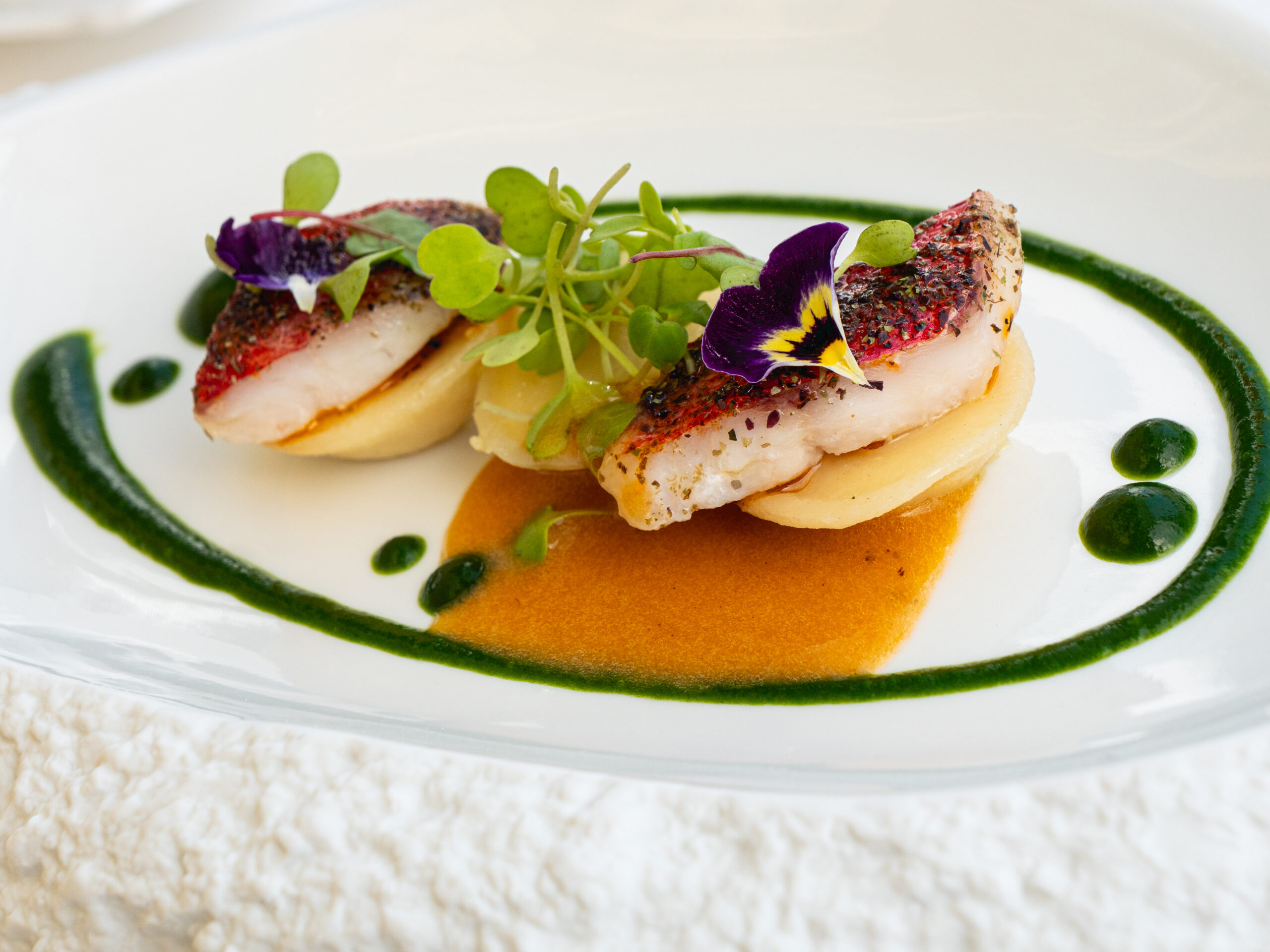
Ristorante Pietre is open year-round, with thirty seats distributed between inside and the upper terrace. Chef Mario Stellato, born in 1990, trained with chef Paolo Barrale and returned to the Cilento to build his own project here. He is Arianna Scariati’s husband, and the kitchen he runs draws from what the property’s own garden produces and what the region around it offers by season. The cuisine is contemporary and deeply rooted: plant-forward, seasonally precise, built from the specific nutritional intelligence of this coastline. The Cilento Blue Zone is not a marketing claim. It is the accumulated consequence of what this land gives and what the people living inside it learned to do with it over centuries, and Stellato’s kitchen carries that knowledge into each plate.
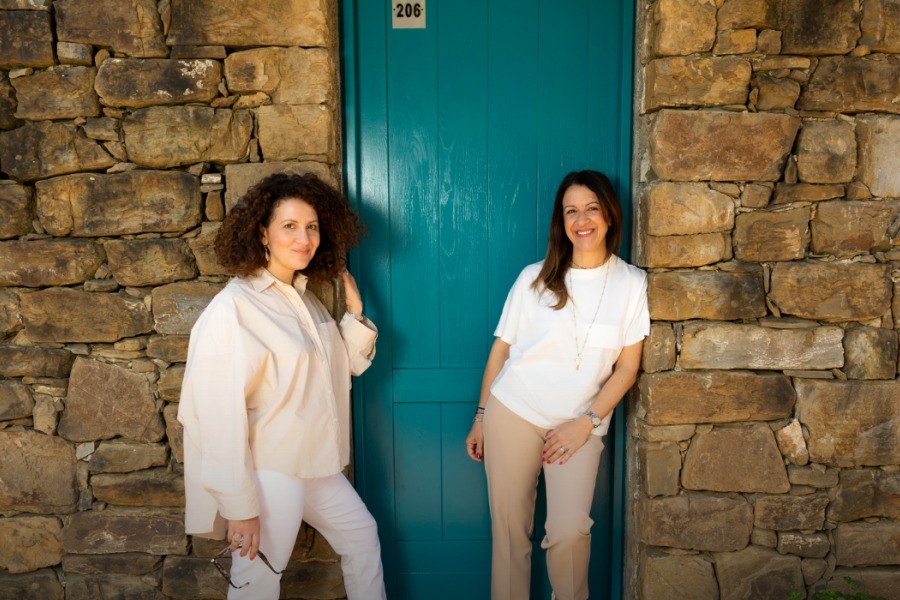
Arianna and her sister Raffaella Scariati run the property today, continuing the work their father began. The warmth guests describe in review after review — the sense of being made to feel like family, the feeling that the hospitality is genuine rather than performed — comes from the same place as the architecture: from people who understand what this hillside is and have built something that serves it rather than competes with it.
What Remains: Giovanni Scariati and the Opposite of Ugly Building
Giovanni Scariati, speaking to the architecture journal akeda about the project, said: “Thank you, Nicola Pagliara, and thank you to everyone who believed in us. In many cases the Cilento has been damaged by ugly buildings. This project was meant to be the opposite of that.”
The opposite of that, in practice, turns out to be a place where the stone holds the afternoon warmth until late in the evening, where the olive trees planted by the owner filter the August heat into something bearable, where a terrace at sunset holds the plain of Paestum and the sea and the last light on the temples below, and where a kitchen rooted in the longevity traditions of one of the world’s original Blue Zones makes the connection between landscape and wellbeing entirely concrete. Borgo La Pietraia is a slow hospitality hotel in the sense that matters: built from the ground, held by a family, open to a landscape, the slow region of the Cilento, that has always known how to take care of the people living inside it.
Similar Articles
The Water Keeps Flowing: A Journey Through the Architecture of Well Living

Nine Seconds in the Feed or Nine Days in the North Sea.

Carved into the Rock: Saudi Arabia’s New Desert Resorts