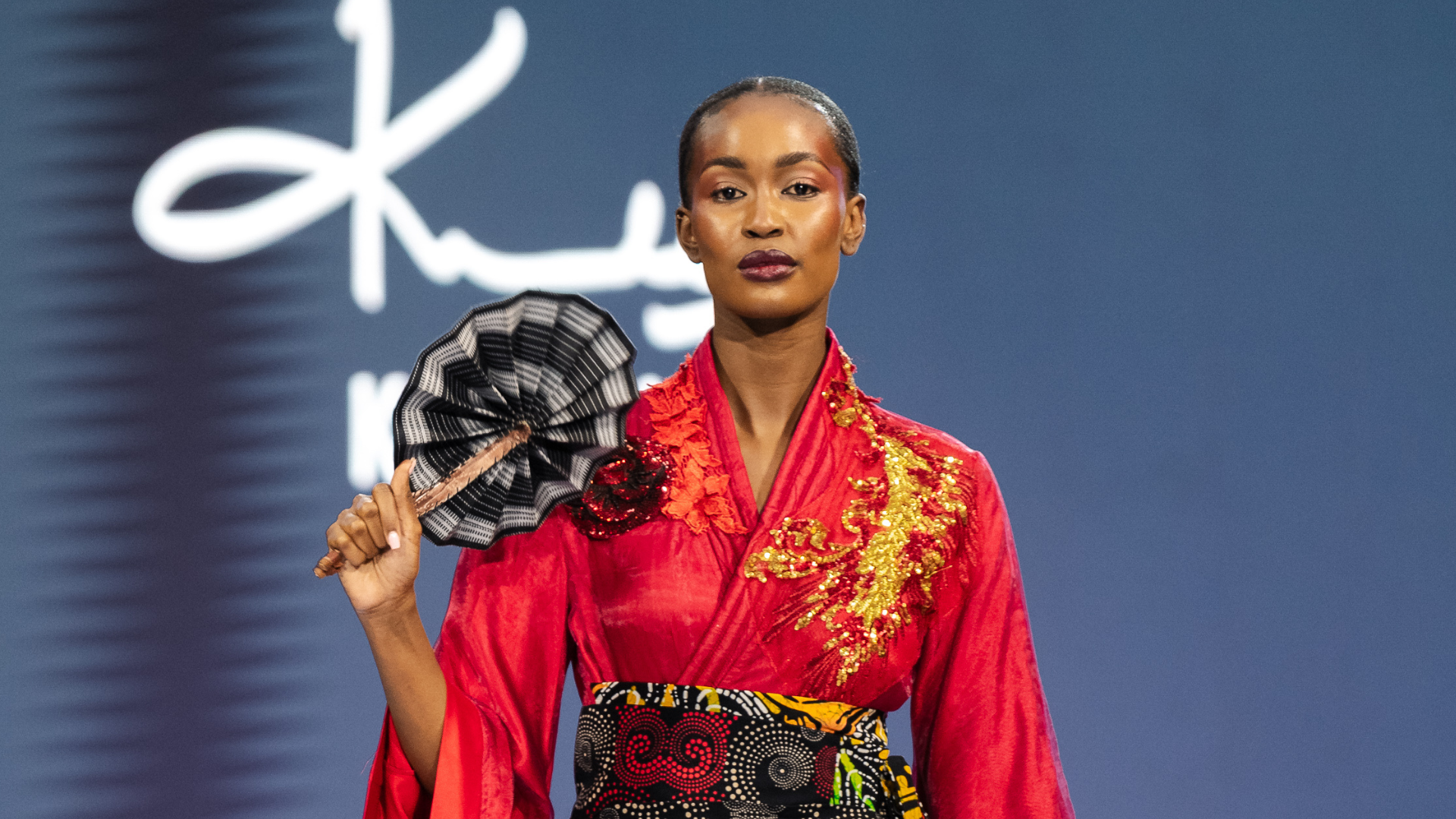
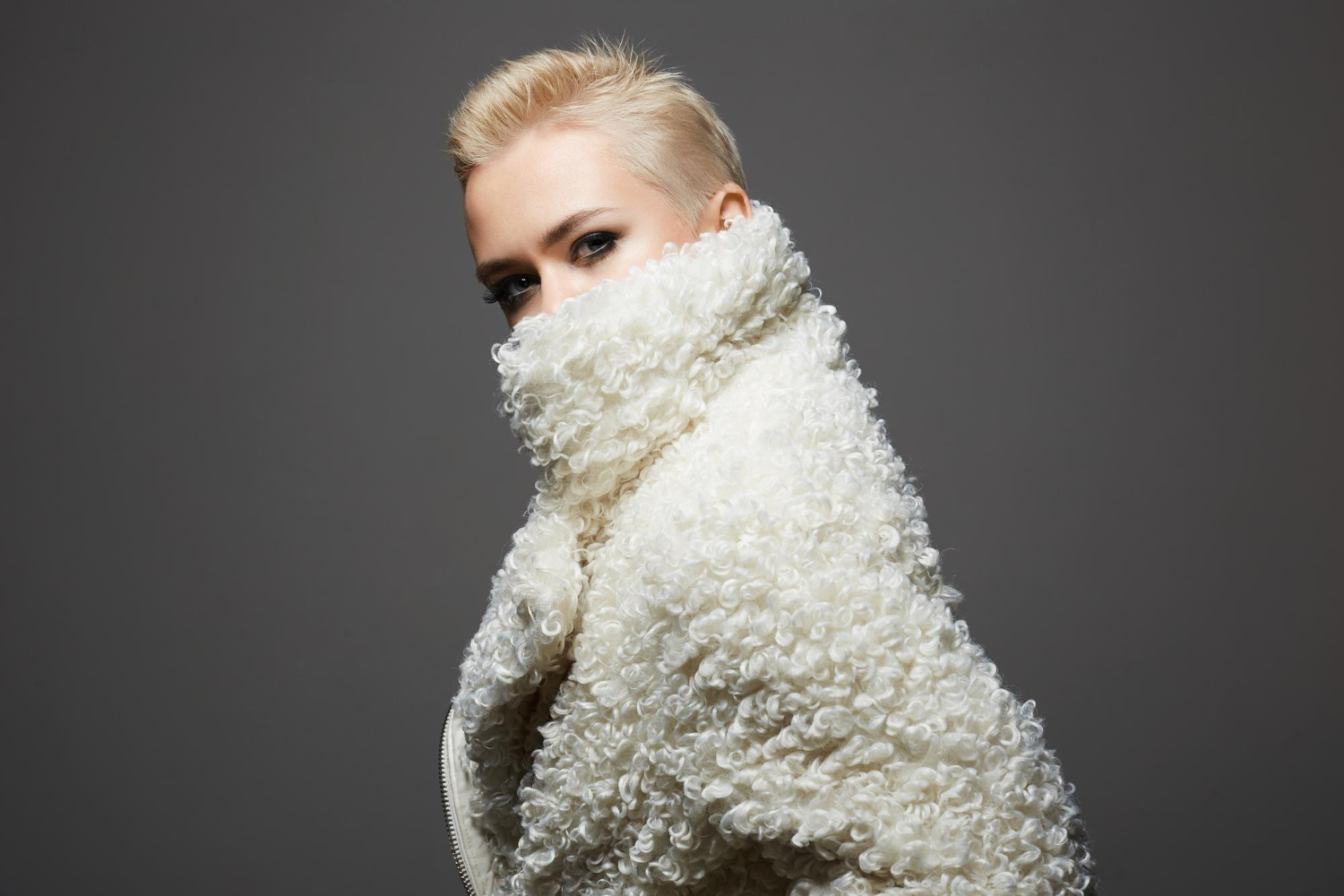
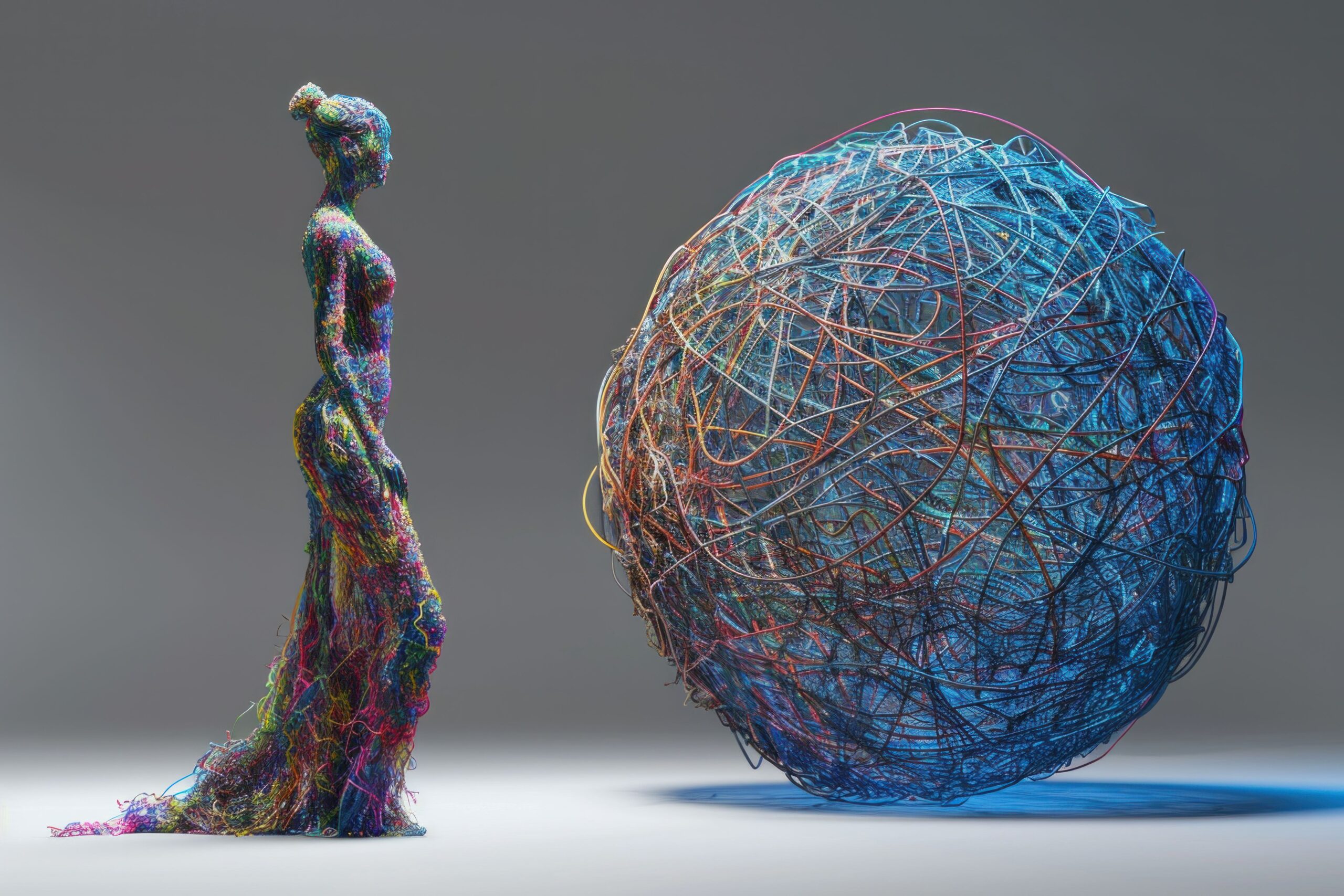
The Requirement of Obligation: Backstage at The Garment, Copenhagen Fashion Week AW26. A collective study in material depth and the persistence of craft, where the human presence remains visible inside every fold and seam. | Photo: Tonya Matyu / CPHFW.
From Copenhagen to Nairobi, via London, Milan, Paris and Bolzano: how the AW26 fashion season made the case for craft, longevity and regenerative design — and what that means for the future of luxury.
In the entryway to the Padiglione d’Arte Contemporanea in Milan, two men were at work. Vincenzo and Manuel Aucella, coral artisans and cameo carvers representing the fourth generation of a family tradition begun in 1892, sat stitching, folding, and carving while the audience for Tod’s AW26 show filed past them. Matteo Tamburini, Tod’s creative director, had placed them there as the collection’s first argument: that what the industry calls “heritage” lives in sustained practice, one pair of hands at a time. The collection that followed, organised around leather as a material of lightness rather than armour, carried the weight of that argument through every seam.
The season that stretched from late January in Copenhagen to early March in Paris turned out to be full of such arguments. Quiet ones, mostly. Dressed in tailoring and texture rather than statement, but unmistakable in their insistence that fashion is at its most serious when it asks what it chooses to preserve.
The architecture of obligation
The 20th anniversary edition of Copenhagen Fashion Week, running from January 27 to 30 under a fresh blanket of snow, arrived with its strictest sustainability requirements to date: at minimum 60 percent certified, preferred or deadstock materials per collection, externally screened for genuine compliance. This is a fashion week that has turned its framework into a form of architecture, and the architecture is now load-bearing. At a time when climate commitments across European industry are softening, the city’s refusal to soften its own was not lost on anyone present.
What made the edition matter, though, was what the designers built within it. Holzweiler, the Norwegian label celebrating its tenth year showing in Copenhagen, sent out leather bombers with shearling collars, tartan wools, and floor-length anoraks, each piece framed by a philosophy its designer Maria Skappel Holzweiler stated with characteristic plainness: “We want to create wearable fashion, clothes that can live with a person and become better and better over time.” This is precisely the second pillar of Couture Régénérative in action, the pursuit of longevity as aesthetic principle. Freya Dalsjø, who had returned to the Copenhagen calendar the previous summer after six years away, continued with a collection built around “respect for slowness.” Her Double Face pieces, hand-sewn by seamstresses specialising in the technique, exist outside the seasonal logic entirely. Bonnetje, one of the week’s quieter names, presented reconstructed old suits recut into new silhouettes: the third pillar, circular aesthetics, in its most concentrated form.
What Copenhagen has built over twenty years is a proof of concept: that binding minimum standards do not diminish creative ambition but give it direction. This proof is now spreading. London adopted Copenhagen’s sustainability requirements for its NEWGEN programme in January 2026. The conversation has moved from the Nordic bubble.
What institutional recognition looks like
London arrived in mid-February with the season’s most politically charged opening. King Charles III took his place in the front row for Tolu Coker’s show at 180 Studios, the first time a senior royal has attended London Fashion Week since Queen Elizabeth II appeared at Richard Quinn’s show in 2018. The parallel was not incidental. Both moments were about institutional recognition of what London does that no other fashion capital quite replicates: it places designers who think critically about identity and society at the centre of its calendar, and it takes them seriously.
Coker’s collection, titled Survivor’s Remorse, arrived in corseted tailoring and tartans inflected with Yoruba colour language, tomato reds and lime yellows running through sculptural silhouettes finished with Manolo Blahniks. What grounded it was the material intelligence beneath the spectacle. British wool, upcycled leather, and reclaimed satin carried the collection’s emotional charge. Sustainability functioned here as structure — which is exactly the distinction the framework of Couture Régénérative was coined to make.
Coker was not alone in this. Also on the London calendar, Brand63Africa made its debut at the British Council’s Designer Showcase at Harrods, named after 1963, the year the African Union was formed. The platform brought together designers of African heritage building on small-batch production, traditional craftsmanship, and what its founder described as cultural legacy merged with contemporary relevance. Their presence at London Fashion Week, in the same week King Charles attended Coker’s show, pointed toward a deeper reconfiguration of what “British fashion” contains. Foday Dumbuya’s Labrum London, also on the schedule, continued its signature practice of treating fabric as documented history of migration: pattern and provenance as the same thing. And Conner Ives, closing the week at Claridge’s in a collection built from upcycled bias-cut piano shawls and opulent Chinoiserie, proved that circular aesthetics have now reached the register of high glamour. The old shawls didn’t announce themselves as rescued. They announced themselves as beautiful.
In Milan, the hands were visible
The Aucella brothers at Tod’s had their counterparts across the schedule. Daniela Gregis, the Bergamo-based house now led by founder Daniela Gregis’s daughter Marta Bortolotti, sent out deconstructed suits and layered wool alongside velvet, silk, and cotton in compositions that felt accumulated rather than designed, the kind of clothes that ask to be worn in, not worn out. Marta Bortolotti’s direction continues the house’s commitment to “wearable, elegant, warm pieces,” deepening her founder’s insistence on the quality of material and the quality of contact between garment and wearer. This is craftsmanship as living method.
Brunello Cucinelli named his FW26 collection Ars Imitatur Naturam, art imitates nature, and organised it around tuxedo styles and outdoor utility in a combination that should have been contradictory and wasn’t. The house’s argument has always been that its clothing is less about fashion than about a certain quality of attention to how things are made, and who makes them. Ermenegildo Zegna’s “A Family Closet,” presented by fourth-generation co-CEOs Edoardo and Angelo Zegna alongside creative director Alessandro Sartori, explored generational wardrobing: marled mohair, soft leather, felted linings on rustic tweed, textures that carry time visibly. The collection was not about the Zegna family. It was about the logic of inheriting well-made things. Jil Sander’s Simone Bellotti, in his sophomore collection for the German house, offered a near-exclusively black-and-white study in proportion and volume that demonstrated, quietly and with conviction, that minimalism is an aesthetic of clarity.
Prada did something more complex. Miuccia Prada and Raf Simons sent fifteen women through four circuits of the runway, each removing a layer on every pass, showing how the same carefully composed pieces transform across moments in a single day. It was a structural argument about capsule wardrobes dressed in philosophical language: clothing designed to be lived with rather than bought and replaced.
Paris confirmed what the other cities had already said
Running through early March, was where the louder names gathered. Stella McCartney, staging inside a Parisian horse stable, sent out 80s power suits, oversized coats, and bedazzled denim with sustained joy. Chemena Kamali’s Chloe continued its nature-drawn vocabulary in silk chiffon, ponchos, and capes that felt genuinely connected to the land they referenced. Pieter Mulier’s final collection for Alaïa was spare and structural, the clothes the unambiguous stars of a show with nothing to prove.
What the Paris schedule confirmed was that the season’s most significant proposals had arrived earlier, from cities with less media weight but more urgency. Which brings us to Nairobi.
Nairobi: the conversation that predates the term
Between January 28 and 31, simultaneously with Copenhagen, Nairobi Fashion Week ran its “Decarbonise” edition, and what happened there was something the European capitals are still working toward: sustainability as systems thinking. Panels interrogated supply chains. Designers spoke about fabric waste and the dignity of labour. Buyers were encouraged to think in cycles rather than seasons. On the runway, the work was tactile and intentional, rooted in the ancestral material traditions of a continent whose designers have always understood regeneration not as a trend but as a condition of practice.
This is the context within which names like Bubu Ogisi of I Am Isigo, who presented her “spiritual technology” as modern design language, and Tokyo James, who has been redefining African luxury through what he calls creative chaos, deserve to be read. They are not peripheral to the Couture Régénérative conversation. They predate it.
A note from Bolzano
The European Textile & Craft Award 2026, which The Silent Luxury Magazine accompanies as media partner, will be presented this year without a gala ceremony. The principle it has followed since its founding remains: “Better instead of more.” Categories span Textile Craft, Sustainable Fashion Craft, and Sustainable Fashion & Textile Industry, evaluated against criteria that read in close alignment with the three pillars of Couture Régénérative. The gala returns in 2027. Worth keeping the date clear.
In the entryway to the Padiglione d’Arte Contemporanea, after the last look had passed, Vincenzo and Manuel Aucella were still at work. The show was over. The garments had moved down the runway and back. The craftspeople remained.
That image is perhaps the clearest summary of what this season offered: an insistence on the human presence inside the object. The hands that made it. The time it contains. The responsibility that passes, along with the garment, to whoever chooses to keep it.
What defines “Couture Régénérative” in the context of the AW26 fashion shows?
Couture Régénérative is a systemic shift seen across the AW26 circuit that prioritizes longevity over trends. It is defined by three pillars: Sustained Practice (preserving artisanal knowledge), Circular Aesthetics (reconstructing or recutting existing materials), and the pursuit of longevity as an aesthetic principle. Read more: https://the-silent-luxury.com/couture-regenerative-architecture-of-value/
Which designers defined the regenerative conversation at AW26?
The most compelling arguments came from designers working at different scales and geographies. Tolu Coker in London used British wool, upcycled leather and reclaimed satin as structural material. Conner Ives built a collection from upcycled piano shawls. Daniela Gregis and Tod’s in Milan centred craft as method rather than marketing. In Nairobi, Bubu Ogisi of I Am Isigo and Tokyo James have been making this argument for years — independently of the European sustainability conversation and, in many ways, ahead of it.
Couture Régénérative is the framework The Silent Luxury Magazine uses to read fashion beyond the seasonal cycle. It rests on three pillars: materials that actively restore rather than deplete, craftsmanship designed for longevity rather than replacement, and circular aesthetics that treat existing material as a starting point. Across AW26 — from Holzweiler in Copenhagen to Conner Ives in London and Tod’s in Milan — these pillars were visible in the work itself, not the press releases. Read the full framework.
Its 20th anniversary edition introduced its strictest requirements to date: at minimum 60 percent certified, preferred or deadstock materials per collection, verified by external screening committees. Copenhagen is the only fashion week where these standards are a condition of participation. London’s NEWGEN programme adopted the same framework in January 2026 — which means the Nordic model is now structurally influencing the British calendar.
The European Textile & Craft Award, presented by the European Textile Academy in Bolzano, honours outstanding work across Textile Craft, Sustainable Fashion Craft, and Sustainable Fashion & Textile Industry. Its founding principle — “Better instead of more” — is the institutional articulation of what Couture Régénérative argues editorially. The Silent Luxury Magazine accompanies the award as media partner. The gala returns in 2027.
The Silent Luxury Magazine serves as media partner of the European Textile & Craft Award, providing editorial coverage of the award categories, nominees, and the broader craft conversation they represent. The partnership is built on a shared premise: that the integrity of making is a cultural value — and that it deserves the same quality of attention as the collections shown on the runway.