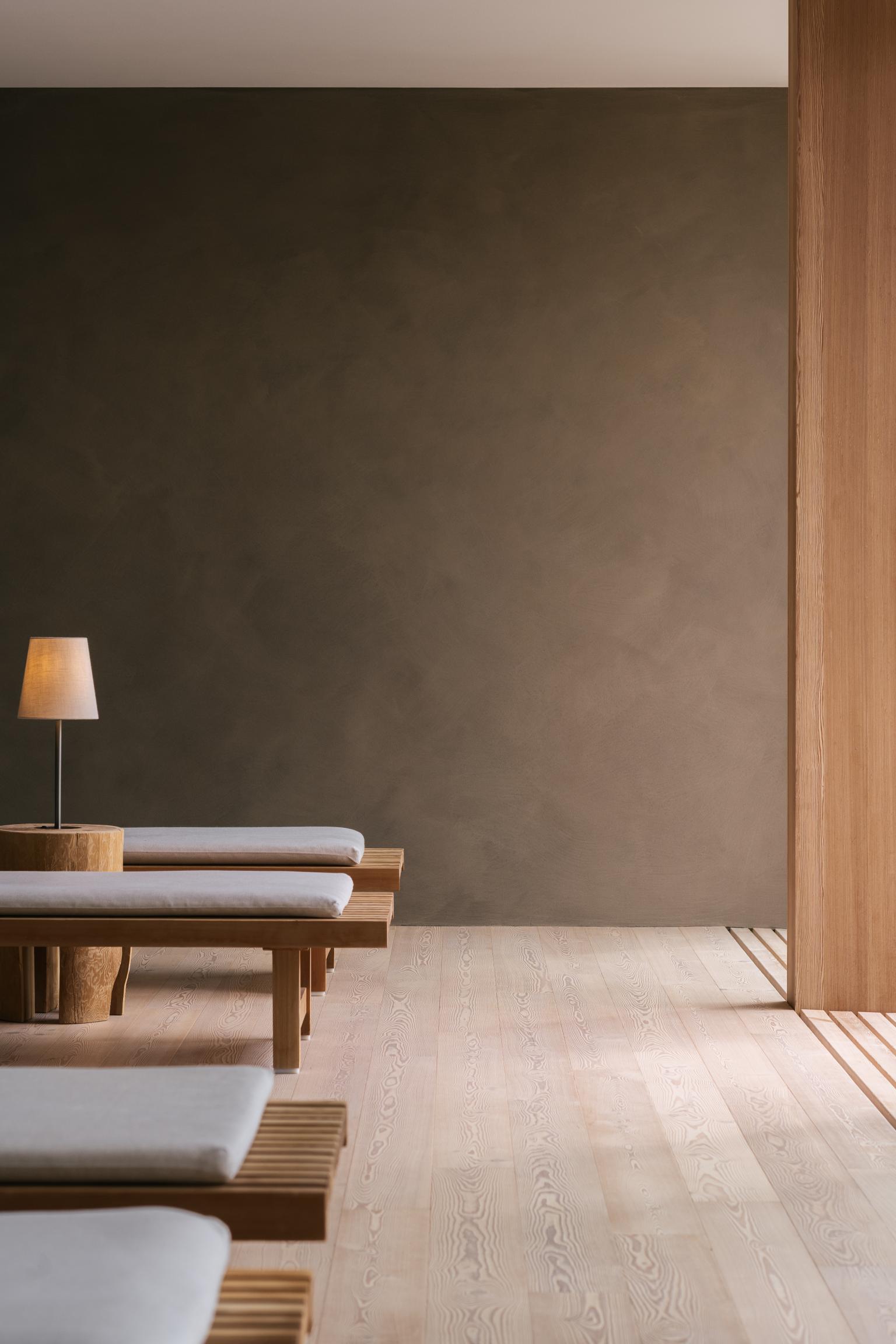
Carved into the Rock: Saudi Arabia’s New Desert Resorts
A Vertical Journey Through Geological Time
A scenic express lift will bring guests to the heart of the resort. During the ride, they pass through millions of years of geological layers; the sandstone formations are 500 million years old. This vertical journey through geological time functions as a curatorial choice as much as a technical element. Nouvel works here “in the museographic sense,” as he puts it, creating public spaces “oriented toward the joy of living there, during the day and at night, with all the different colours, light, shadows, wind, intense rain and the passage of time.”
The resort follows the Charter of AlUla, a framework of twelve guiding principles that commit the Royal Commission for AlUla (RCU) to long-term development. Amr AlMadani, CEO of the RCU, formulated it in an interview as follows: “These concepts, which demonstrate Jean Nouvel’s masterful innovation in architecture, underline our commitment to developing AlUla as a global tourism destination without compromising the history, heritage and landscape of AlUla. We are a destination created by artists. Sharaan by Jean Nouvel will build on this heritage and become a form of timeless landscape architecture, a gift to the world.”
The RCU has ambitious goals: 5,000 hotel rooms by 2030 and 8,500 by 2035. The Sharaan Resort is the flagship development in this strategy, scheduled to open in 2026.
Desert Rock and the Language of the Earth
Around 500 kilometres north of Jeddah, in the Red Sea region, the Desert Rock Resort takes a related approach. The resort, which opened in December 2024, is part of the Red Sea Global project, extending across 11,000 square miles and comprising 22 islands as well as six inland sites.
Oppenheim Architecture, known for biophilic designs that blend nature and built form, developed a resort that nestles into a canyon of the Hejaz Mountains across 30,000 square metres. Chad Oppenheim described the vision in an interview with Red Sea Global: “In contrast to the curvilinear forms of our nearby Sacred Reef Resort, this inland project engages with the majestic granite mountains and the mythical desert landscape. We work with the language of the earth and have created new spaces and experiences. The buildings disappear into the tectonic landscape and evoke ancient Nabataean civilisations.”
The 64 accommodations, comprising villas and suites, are integrated into the mountain. Indoor and outdoor spaces sit within fissures and caves or on shaded slopes, using cooler microclimates and minimising sun exposure. During the day, the architecture merges with the environment; at night, the rooms illuminate like lanterns within the massif.
Regeneration as Architectural Method
The project defines itself through its regenerative approach. The Royal Commission operates coral reef programmes using advanced techniques such as 3D photogrammetry and robotics. A Marine Life Operations Facility at AMAALA includes a coral regeneration laboratory and mangrove nurseries. Rewilding initiatives reintroduce native species such as Arabian oryx and sand gazelles.
For guests, the resort sits twenty minutes from Red Sea International Airport yet follows a different sense of time. Travel access is straightforward. Qatar Airways flies three times weekly from Doha, Saudia several times weekly from Riyadh and Jeddah, and FlyDubai twice weekly from Dubai.
A New Understanding of Time
This form of hospitality connects with the concept of Slow Hospitality, which The Silent Luxury explored in detail in our article “Slow Hospitality: Time as Luxury, The Temporal Economy Shift.” It rests on the understanding that transformation requires time measured in weeks. Architecture must do more than appeal aesthetically; it can support the body’s own rhythms. Extended stays of two to four weeks correspond to natural patterns of habit formation.
The Nabataeans understood this. Their rock-cut rooms provided stable temperatures, cool in summer and sheltered in winter. The massive walls softened sound. The orientation of openings followed the path of the sun. They worked from necessity, and that necessity is what makes the method relevant again.
Ben Hudson, Chief Development and Construction Officer at the RCU, said in an interview with the organisation: “The Sharaan Resort is our most ambitious project. This first excavation is tangible evidence of our efforts to develop AlUla as a destination that brings luxury tourism together with the preservation of its unique cultural and natural heritage. Our work is guided entirely by the environmental, social and health procedures of the RCU, and we ensure that all parties understand the special context in which we operate.”
This is the difference from conventional hotel construction. These projects pursue long-term preservation of value. They are designed for centuries, with planning horizons that stretch across generations.
Local Narratives: Rawis, Rangers and Cultural Continuity
AlUla has recently launched a remarkable programme. UNESCO and the Royal Commission collaborate with the Rawis, the local storytellers of the Hegra tradition, and with Rangers to keep the site’s stories alive. In workshops in February 2025, they shared knowledge passed down through generations.
“The Rawis and Rangers are the guardians of AlUla’s unique narrative,” said WHIPIC trainer Sungre Lee during the workshop interviews. “Through them, we do not simply study history; we experience it.”
These workshops are part of a broader initiative to interpret and present the World Heritage Sites. The goal is for visitors to see the splendour of Hegra and to understand the multiple layers of history embedded in the site.
In 2023, the world’s first reconstruction of a Nabataean woman was presented. “Hinat,” as archaeologists call her, lived 2,000 years ago. Her skull and skeleton were found in 2008 in a well-preserved tomb in Hegra, along with nearly 80 other individuals. The 3D reconstruction of her face now stands at the Hegra Welcome Centre, an attempt to make an abstract past tangible.
What Endures
At a time when architecture is often conceived as a backdrop for selfies, these projects follow a different approach. They recede into the landscape. They use what is already present. They operate in geological time, on the scale of generations.
The technical precision behind them remains highly advanced. Nouvel and Oppenheim draw on contemporary material research, climate engineering and structural innovation. The approach reaches in two directions at once: it learns from the people who shaped this landscape two thousand years ago, and it builds for the people who will inhabit it two centuries from now.
At night, the rooms illuminate like lanterns within the massif. From the valley below, the resort echoes how Hegra must have looked when its tombs and chambers held lamps and voices: a presence inside the cliff, lit from within.
Saudi Arabia Desert Resorts: What You Need to Know
Saudi Arabia’s Sharaan Resort by Jean Nouvel in AlUla and Desert Rock Resort by Oppenheim Architecture in the Hejaz Mountains are reviving 2,000-year-old Nabataean architectural craft. These are the questions readers ask most often about both projects: their architects, their opening timelines, the regenerative luxury practices that surround them, and the Slow Hospitality philosophy that frames them. The answers draw directly on interviews with the Royal Commission for AlUla, Bouygues Construction, and Red Sea Global.
The Sharaan Resort by Jean Nouvel in AlUla and the Desert Rock Resort by Oppenheim Architecture in the Red Sea region are two flagship Saudi Arabian projects that translate 2,000-year-old Nabataean rock-cut architecture into contemporary hospitality. Both resorts are integrated directly into existing rock formations.
The Sharaan Resort was designed by French architect Jean Nouvel, recipient of the 2008 Pritzker Prize. His firm developed a 38-suite resort excavated into the sandstone cliffs of the Sharaan Nature Reserve, twenty kilometres north of the UNESCO World Heritage Site Hegra.
The Sharaan Resort is scheduled to open in 2026. Construction began in March 2024 with the excavation of the rock, carried out by Bouygues Construction in joint venture with the Saudi company Almabani.
The Desert Rock Resort is located approximately 500 kilometres north of Jeddah in the Red Sea region of Saudi Arabia. The resort is part of the Red Sea Global project and opened in December 2024, with 64 villas and suites integrated into the Hejaz Mountains.
The Nabataeans were a nomadic civilisation that controlled the incense and spice trade routes between South Arabia, Mesopotamia and the Greco-Roman world from the 4th century BCE to the 5th century CE. They are best known for their rock-cut architecture in Petra (Jordan) and Hegra (Saudi Arabia), and for their sophisticated water management systems.
Hegra, also known as Mada’in Salih, was the Nabataeans’ second most important city after Petra. The site holds 131 monumental rock-cut tombs and was recognised in 2008 as Saudi Arabia’s first UNESCO World Heritage Site.
Slow Hospitality describes a model of luxury travel that prioritises extended stays, architectural integration with place, and time as the primary luxury asset. The Sharaan and Desert Rock resorts embody this approach by designing for centuries instead of seasonal renewal cycles, and by encouraging stays that align with natural patterns of habit formation.
Regenerative luxury is a model of high-end hospitality that actively restores ecosystems while operating commercially. In the Saudi Arabian context this includes coral reef regeneration laboratories, mangrove nurseries, and the reintroduction of native species such as Arabian oryx and sand gazelles within the Red Sea Global development zone.
Similar Articles
The Water Keeps Flowing: A Journey Through the Architecture of Well Living
Borgo La Pietraia: A Hotel Built Like a Home

Nine Seconds in the Feed or Nine Days in the North Sea.