La Vaisselle des Chefs: Passing On the Great French Table
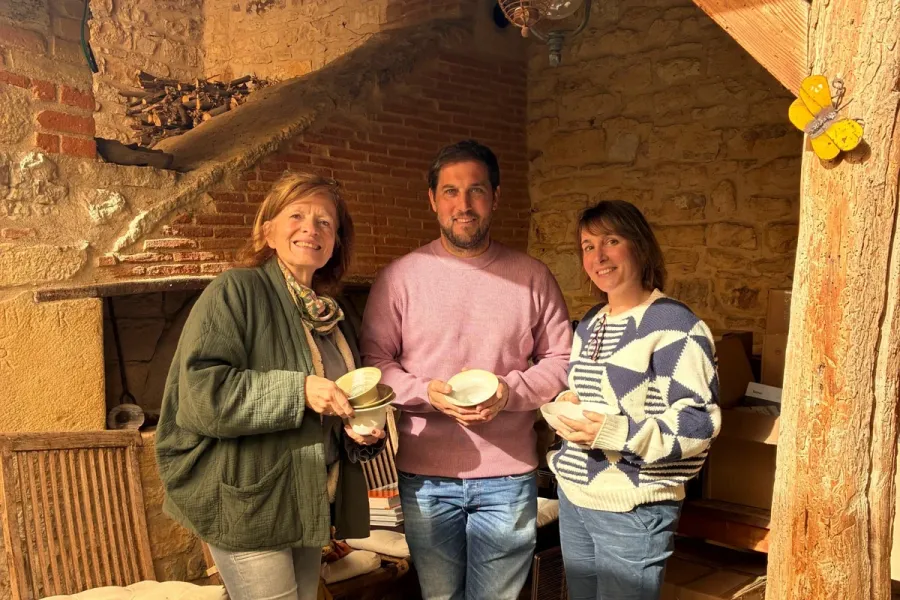
La Vaisselle des Chefs empties the storerooms of France’s great restaurants. The plates stacked there have served their last tasting menu, and since 2015 Florence Daveau and Frédérique Belhomme have carried them out into halls in Lyon, Bordeaux and Paris, where anyone with a ticket can leave with a dinner plate from Restaurant Paul Bocuse or a piece of silver from the Plaza Athénée.
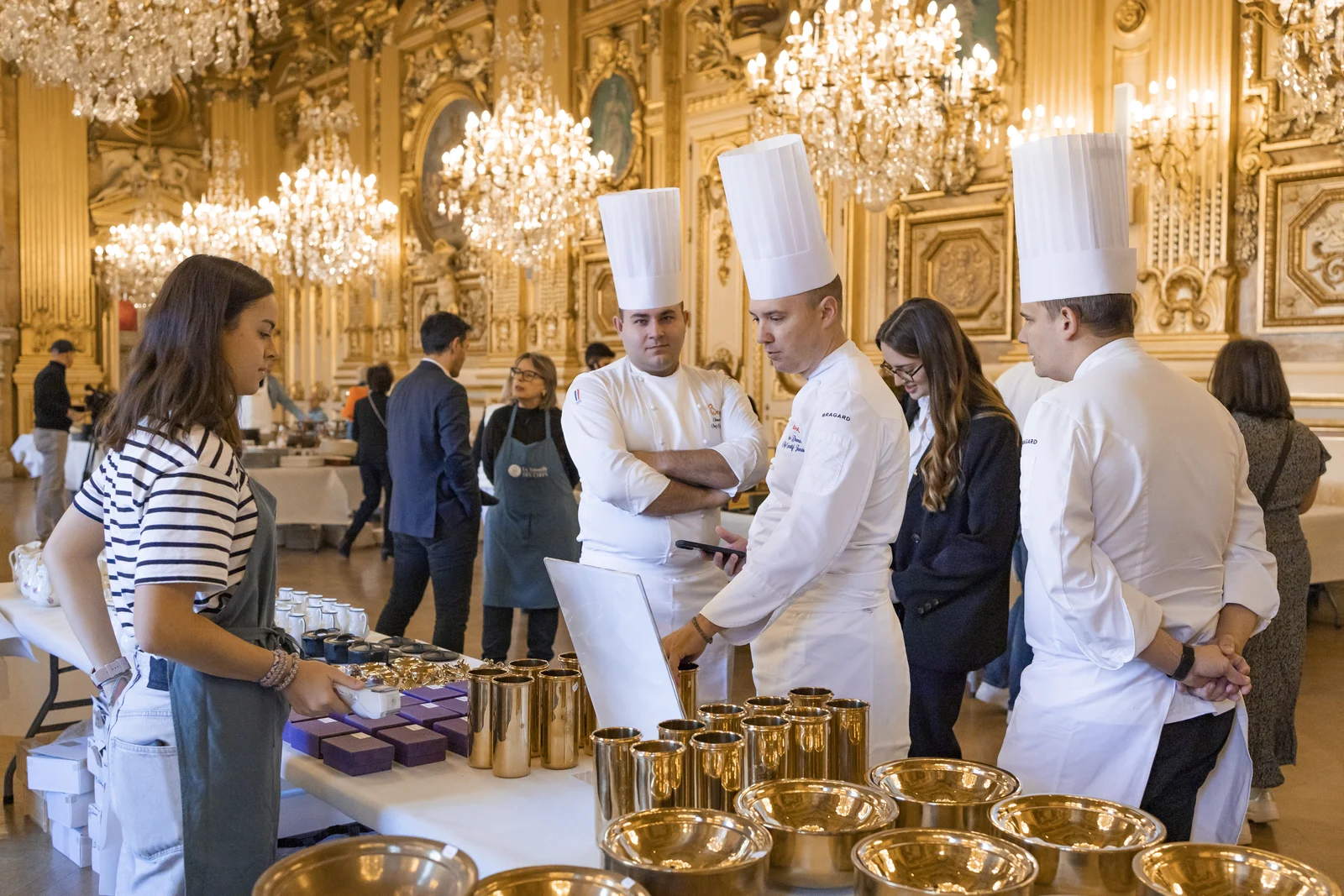
The chefs often bring their plates themselves. This week it was Frédéric Molina, who holds a Michelin star at Forêt Ivre, handing over the tableware that had carried his cooking to the dining room. More than 150 chefs have done the same.
It is a business with a conscience built into the till. Part of every sale goes to local partners that change from city to city: a group for seriously ill children, another for families in poor housing and, in Paris, the Fondation Apprentis d’Auteuil, which trains young people for kitchens and dining rooms. In conversation with The Silent Luxury, Belhomme talks about why chefs let go, why a collector and a young couple can fall for the same plate for entirely different reasons, and what a well-set table can teach an apprentice.
“A second life can lead to a third, and many more beyond that.”
Out of the Storeroom: Why Great Kitchens Let Their Plates Go
Chefs guard everything that touches their food. What does it take for a kitchen to open its storeroom to you, and what makes it let the plates go?
It all begins with trust and with respect for each restaurant’s identity. A plate is part of a chef’s cuisine, of the way a dish is presented and of the memories guests take home. Our role is to show that its story can continue at another table.
Chefs, maîtres d’hôtel, restaurant managers and their teams open their doors to us. In their storerooms, many pieces sit unused. Through La Vaisselle des Chefs, they find their place at a table again.
Over the years, more than 150 chefs have placed their trust in us, and the idea has become better known and better understood. Once a restaurant discovers it, the appeal is clear: it frees up storage space, brings beautiful tableware back into use and passes on something of the restaurant’s character.
Alongside this continuity, there is an environmental commitment and a charitable dimension, through the organisations that take part in our sales. Together, these give the project its meaning.
You have run these sales for more than a decade. How has the way restaurants think about the plates they retire changed in that time?
Restaurants already take part in this second life through the sales we organise with them, and we have watched their approach evolve from one edition to the next. They increasingly recognise what these pieces still offer: quality, a distinctive identity and an appeal to new owners.
Resale also brings a tangible financial benefit. It raises money that can help buy plates for a new signature dish or for one of the chef’s new creations. Pieces that have been part of a restaurant’s history can therefore contribute to its future.
Our role is to bring restaurants and buyers together. That means finding the right venue, gathering pieces from several great establishments in one place, and preparing and running the sale.
As the tableware passes from one table to another, its provenance remains part of its value. It keeps its connection to the restaurant, while its new owner gives it a new purpose and new memories.
A Bocuse Plate at Home: Who Buys, and Why
The same plate can go home with a diner who celebrated an anniversary in that dining room or with a collector who knows the room only by reputation. Who comes to your sales, and what are they after?
People come for very different reasons, and that is what makes these sales special. Some are looking for a memory. They have dined at the restaurant, or celebrated an occasion there.
For others, it is the pleasure of owning a piece from a great restaurant: a plate bearing its name, with its own history, an object that may hold a deeply personal meaning. There is something magical about bringing a little of that world into one’s home.
Provenance adds another dimension. A plate from La Mère Brazier evokes a restaurant, a cuisine and a place in the history of French gastronomy. Its new owner carries that connection on by using it at home.
We also welcome collectors, people drawn to fine materials, people who enjoy mixing styles of tableware, and young couples looking for quality and character. Some travel a long way to be there.
What the sales have taught us is that the same piece can mean very different things to different buyers. Its value lies in its origin, its beauty and its usefulness, and in the emotion it carries.
Lyon, Bordeaux, Strasbourg, Lille, Paris: does the crowd change with the city, or does the same appetite show up everywhere?
Above all, we meet the same enthusiasm in every city. Visitors from very different backgrounds share an appreciation for beautiful pieces and a wish to give them a second life.
The selection depends largely on the restaurants taking part, on their history and on the tableware they have chosen over the years.
An attachment to a familiar restaurant or a personal memory often plays a part. But a purchase can also begin simply with falling in love with a plate, a glass or a serving dish.
This enthusiasm for pre-owned tableware encourages us to keep searching and to reach out to more chefs and great restaurants, so that we can bring together more pieces for our visitors.
“Choosing a second-hand piece and finding a place for it is already a way of reinventing tradition.”
Passing It On: The Apprentices at the Table
Part of every sale goes to local partners, and their volunteers unpack the crates alongside your team. What do they bring to the room?
Passing things on is at the heart of La Vaisselle des Chefs. We are a business built around an environmentally conscious and socially supportive idea, and a share of the proceeds from our sales goes to our partner charities. The causes we support vary by city and by edition. We work with organisations that help children with serious illnesses, people living in inadequate housing and, in Paris through Apprentis d’Auteuil, young people in vocational training.
In each city, these organisations join our teams for the final stages of preparation. Their help is invaluable: they unpack and display thousands of pieces with us and welcome the visitors. These are busy, memorable days that create bonds between our teams and the volunteers, and they give La Vaisselle des Chefs an added sense of purpose and warmth.
In Paris you work with Apprentis d’Auteuil, which trains young people for kitchens and dining rooms. How did that begin, and why does it matter to you?
Partnering with Apprentis d’Auteuil in Paris made sense to us. We give objects from great restaurants a second life, and at the same time we support an organisation that trains young people for careers in hospitality and catering. Both share a commitment to passing on knowledge and to valuing craftsmanship and skill.
That spirit of solidarity comes to life at the sale itself. Our partner charities work alongside us and bring volunteers of all ages. We love this mix of generations, and the energy that comes when everyone contributes to a shared project they can see and touch.
What can a weekend among the plates of great restaurants do for a young person weighing a career in hospitality?
On our own scale, we offer a hands-on experience. Everyone gets involved and immediately sees the value of what they contribute.
La Vaisselle des Chefs creates occasions for conversation and connection, and gives everyone a chance to find their place within a team. The sale offers moments of discovery and sharing, and sometimes the chance to make new contacts.
What can a plate or a glass teach young people about the table?
A plate, a glass: each tells a story. Choosing a beautiful object to present a dish at its best and to delight your guests is also a way of keeping table culture alive. These objects invite us to take the time to welcome others and to share a meal.
What should the next generation keep, and what should they feel free to reinvent?
I would like them to keep the spirit of conviviality alive: the pleasure of coming together and sharing good moments around a beautifully laid table.
Mixing eras and colours, pairing a piece from a great restaurant with simpler tableware, creating a table that reflects their own personality: choosing a second-hand piece and finding a place for it is already a way of reinventing tradition.
The Next Chapter: A Plate’s Third Life
When a plate changes hands, what do you hope goes with it?
A plate from a great restaurant carries a history, even if we do not know every detail of it. It bears witness to craftsmanship.
I hope that plate will continue its journey for many years, to be used, appreciated and then passed on again. A second life can lead to a third, and many more beyond that. This continuing chain of transmission is what inspires us: beautiful objects that stay in use and become part of new moments of togetherness.
Picture a chef choosing plates for a new menu ten years from now. How might a sale like yours change that decision, and the tables those plates end up on?
A chef could choose a plate for a new creation already knowing that one day it will find its place at another table. That second life would become part of the object’s story from the start.
The French art of the table could then reach far more people, from celebrated restaurants to everyday dining. People could make these pieces their own, combining them with the tableware they already have and with the way they live and entertain.
It is a prospect we find appealing: beautiful pieces that stay in use, bring people together over a meal and create new memories. Their time in a restaurant would then be the first chapter of their story.
And who knows? La Vaisselle des Chefs might one day cross borders. Why not an edition in Vienna?
Insight: From Lyon to Nice, and Perhaps Vienna
For the founders, the picture of Frédéric Molina delivering his own plates says more about La Vaisselle des Chefs than any portrait could. The sale runs on chefs who turn up in person, and on the conversations that start the moment they walk in.
After the salons of Lyon’s Hôtel de Ville on 7 and 8 November, where Henri Carlier of the Villa Florentine is patron, the sale opens in Orléans for the first time on 22 and 23 November. Paris follows on 27 and 28 February 2027, then Nice on 10 and 11 April. Vienna, for now, is a wish.
Send this ↗ to someone who still has the menu from the best dinner of their life.
 Read next · The ReadingLuxury Trends 2027: From Hermès to Zegna, the Second Purchase DecidesFewer people walk into the stores, those who do spend more, and enduring objects outsell seasonal fashion.
Sources
- Frédérique Belhomme, co-founder of La Vaisselle des Chefs, in conversation with The Silent Luxury, November 2026
- The Silent Luxury, France’s Great Restaurants Give Their Tableware a Second Life, 28 October 2026
- La Vaisselle des Chefs, editions 2026–2027
- Luxus Plus, La Vaisselle des Chefs returns to Paris in February 2026
- Journal du Luxe, La Vaisselle des Chefs va faire son retour à Paris
- Visiter Lyon, La Vaisselle des Chefs, Hôtel de Ville de Lyon, 7 and 8 November 2026
Similar Articles

Marie Droll of Kearney: Beauty Buyers Now Pay for Proof
Luís Onofre: Portugal’s Family Shoemakers Are Betting on Skill Over Scale
When Banks Become Hotels: Stephan Ferenczy on Urban Change, Restaurants and the Life of Old Buildings