Lanificio Bottoli: Ettore Bottoli on Natural Colour and the Recipe Behind Every Cloth

At Lanificio Bottoli, colour still begins with the animal, while most of the world’s colour now comes out of a chemical palette. The family mill in Vittorio Veneto, at the foot of the Venetian Prealps, has spun, dyed and woven its own cloth since 1861 and turns 165 this year. What it guards is less a product than a body of knowledge: recipes that blend eight wools into a single plain camel, machines that Ettore Bottoli’s grandfather and father designed for rooms too small for anything bought off the shelf, and an archive of cloth that has outlasted its century. In a world whose fibre is 59 percent polyester and less than one percent wool, that knowledge is what separates a cloth from a commodity.
Ettore Bottoli, who runs the mill together with his father, walked The Silent Luxury through it in October 2026, from the bales of raw fleece to the blending room, the dye house, the spinning floor and the archive. The conversation, recorded in Italian along the way, is published in full as TSL Conversations, Episode 05. What follows is the interview in English. Lanificio Bottoli is also one of four voices in the deep dive Where Luxury Begins: The Value of Natural Fibre, From the Karoo to Vittorio Veneto.

“For shepherds, dark fleece has always been a bad thing. For us it is a richness.”
Photo: Lanificio Bottoli
Wool From Everywhere: Italian Wool and Merino at Lanificio Bottoli
Your wool comes from across the world. What decides the choice?
Character. South American wool has its own, Australian wool has its own. Most of what you see here is Spanish wool. In terms of quality and price, Spanish wools are the best, because all the wool we use is merino, and merino is the top of the range. Then of course there is Australian merino and New Zealand merino.
Is there a hierarchy among them, a best wool?
You can’t say that one wool is better than another, because every wool has a different character. For one cloth you use one wool, for another a different one. It isn’t more or less beautiful. It has different qualities. Italian wool, for example, has a strong insulating power: for the same weight it is much warmer, and it has loft. New Zealand merino is much finer.
The Colour of Nature: Brown Sheep and Natural Undyed Wool
This brown has never seen a dye bath. Why does that matter to you?
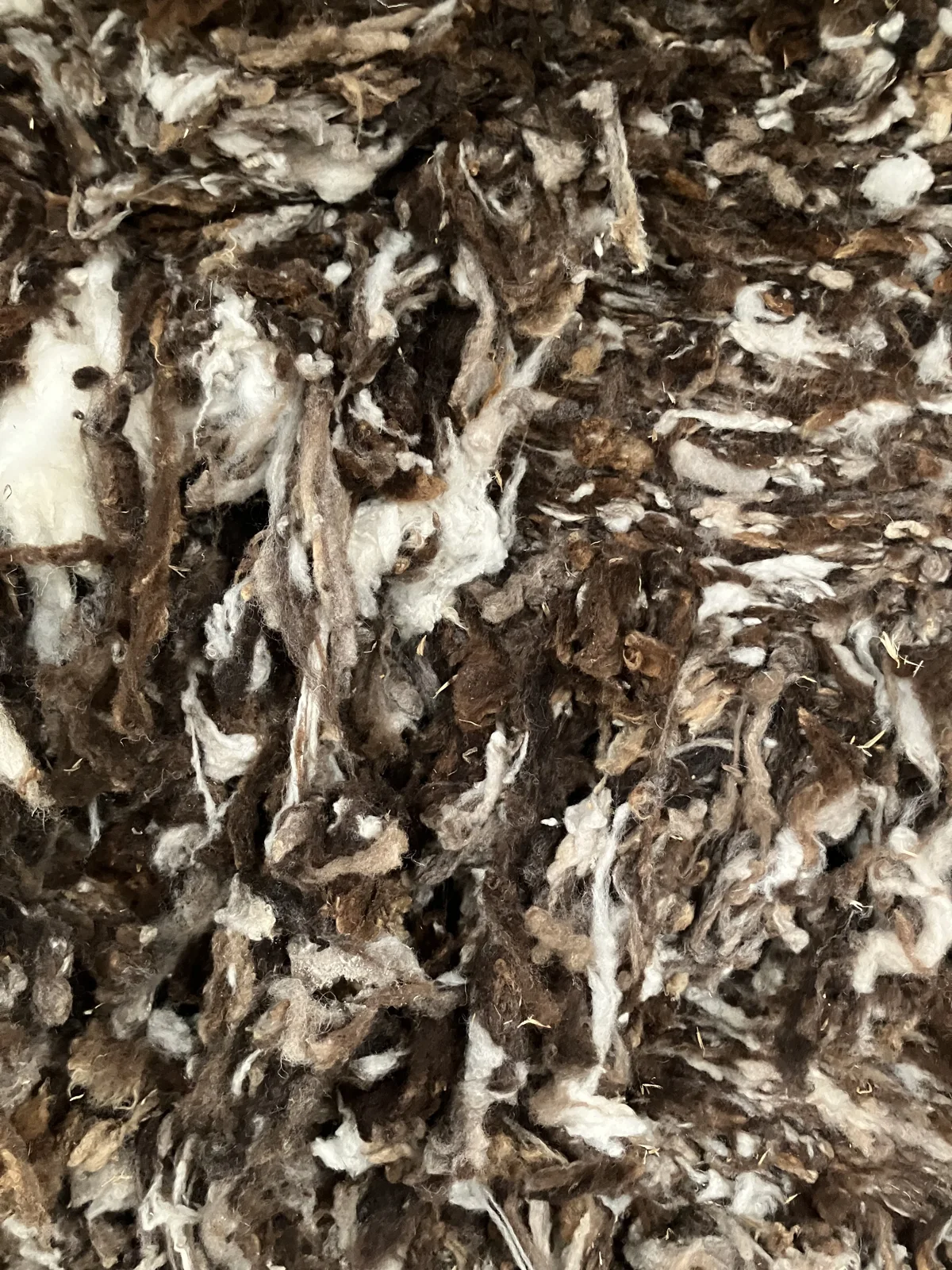
This is the colour of nature. It isn’t dyed. It really is the colour of the sheep, nothing but nature, and I find that incredible. It is also the rarest colour. Think of a flock: ninety percent of the sheep are white. There are hardly any dark sheep, and for shepherds dark fleece has always been a bad thing. For us it is a richness, because it lets us make colours like this one.
If dark fleece is that rare, can supply be changed at the source?
This summer, instead of going on holiday, I went to Australia to see the shepherds and try to convince them to breed more brown sheep. But it’s impossible. For them it is simply a waste of time, because the market asks for white, and the few dark fleeces there are go to buyers much bigger than us.
You now buy cashmere in its natural colours too. What changes when a fibre is left as the animal grew it?
Feel how soft it is. We used to use only white cashmere. Now we also buy it coloured, but naturally coloured: this is how it comes from the goat. Wool comes from the sheep, cashmere from the goat. The beauty of working with fibres in their natural colours is that if you don’t dye them, they stay much, much softer. The fibre keeps its character. Think of your own hair: if you colour it too often, it gets damaged.
The Recipe: How Natural Wool Is Blended Into a Single Colour
A great cloth is rarely made from one great wool. Why not?
Because every wool has a different character, and the cloth depends on it. A single wool may be wonderful but have no strength, so you always have to blend different wools so that they balance each other. We are a woollen mill, but we also work with linen, cotton and silk, and those we buy as yarn.
Take us through a single colour. What does it take to make something as plain as camel?
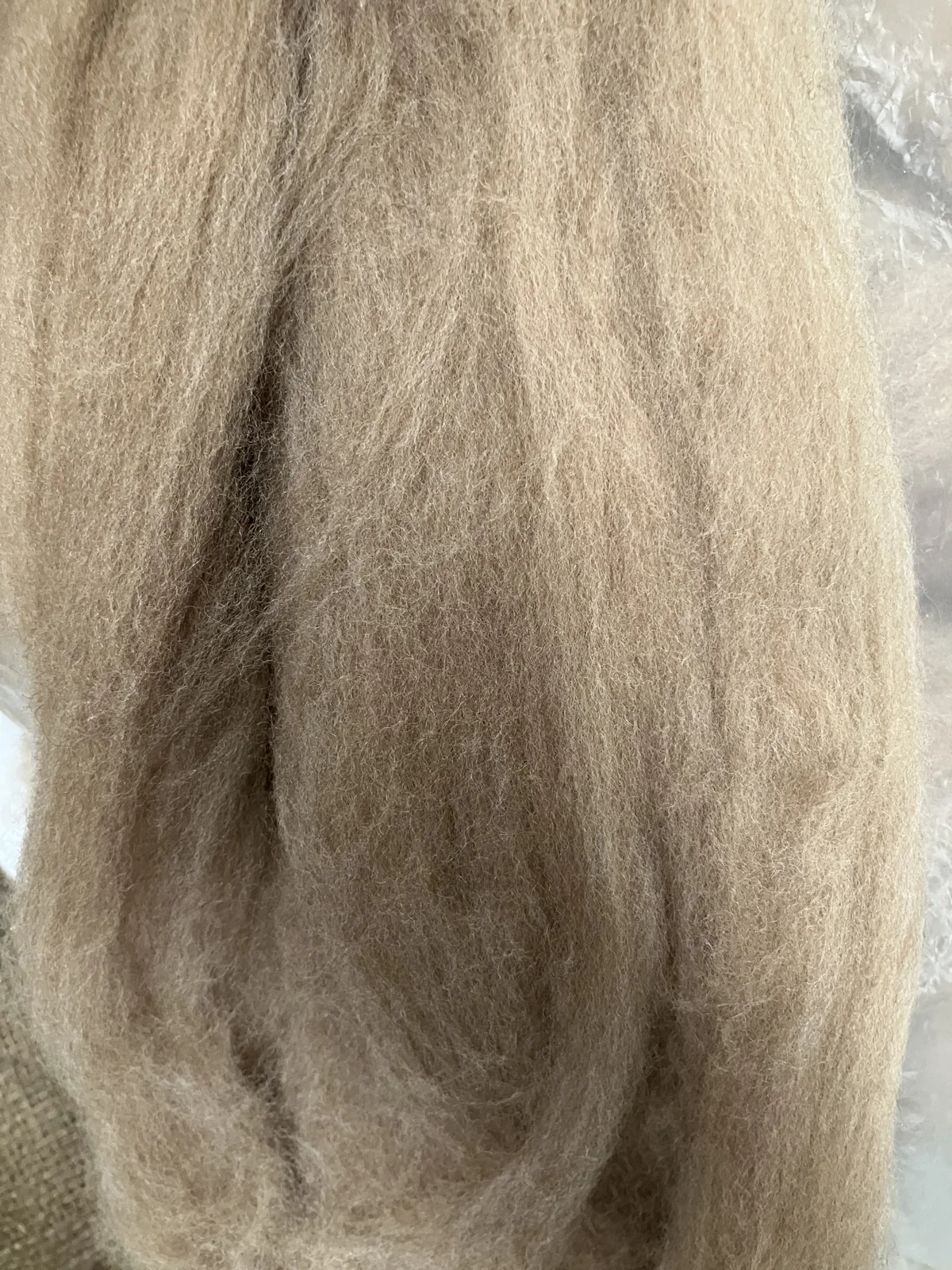
This big machine is the blending machine. We bring the wool here and start mixing it. Take white. You would think white is one wool, but look: one, two, three, four. That one is easy. But for camel, a light brown, you would think it is one colour, and instead, look: one, two, three, four, five, six, seven, eight. For camel we use thirty percent Spanish merino, thirty-seven percent wool from Chubut in South America, twenty percent of another wool, then Portuguese wool, a golden brown that gives it a touch of lustre, a grey, because you have to add grey, some cashmere, and ten percent of another cashmere from Mongolia. That is the recipe for camel, a simple colour: eight different wools. Then, depending on whether the cloth is for summer or winter, you add a percentage of oil. Even this pearl grey, which looks so simple, is made of seven components. Imagine a red: there are fifteen or twenty.
So the design of a cloth is decided long before the loom.
Creativity begins with the recipe. That is where it starts.
A note from The Silent Luxury
Good reading deserves to find you again.
A Mill Built by Hand: How Lanificio Bottoli Dyes and Spins Its Wool
Much of the machinery here was never bought. Where does it come from?
Look, this is still my grandfather’s. He designed it. So when something breaks, we have to look here. All the machines you see were designed or adapted either by my grandfather or by my father, because our spaces are small and everything had to be made to measure. It is a machine made only for us.
What does it take to run a blend, and to be trusted with one?
A blend takes about an hour, and every time you have to clean the whole machine. If I make white, then red, then green, I have to clean everything. So you have to be good. First, because you have to read my father’s handwriting, which is terrible, understand what is written and then do it. You have to be intelligent, because you have to judge how much oil to add: touch the wool, feel it, be sensitive. And then you have to be a hard worker, because you have to clean everything.
When a wool is dyed, what happens to it, and who has come to you for colour?
If the wool is to be coloured, we take it to the dye house. You can dye the wool or the yarn, and we mostly dye the wool. This is the one you will know, the coffee dyeing. We bring in coffee grounds, heat them and bring them to the boil, then put in the wool, cashmere and silk yarn, and it takes on the colour of the coffee. My father also told me that in the 1990s Giorgio Armani would give him a colour palette, “I like this pink”, and my father would dye the wool in the colour Armani asked for. We did that for many years. We were honoured.
Which part of this knowledge is hardest to keep alive?
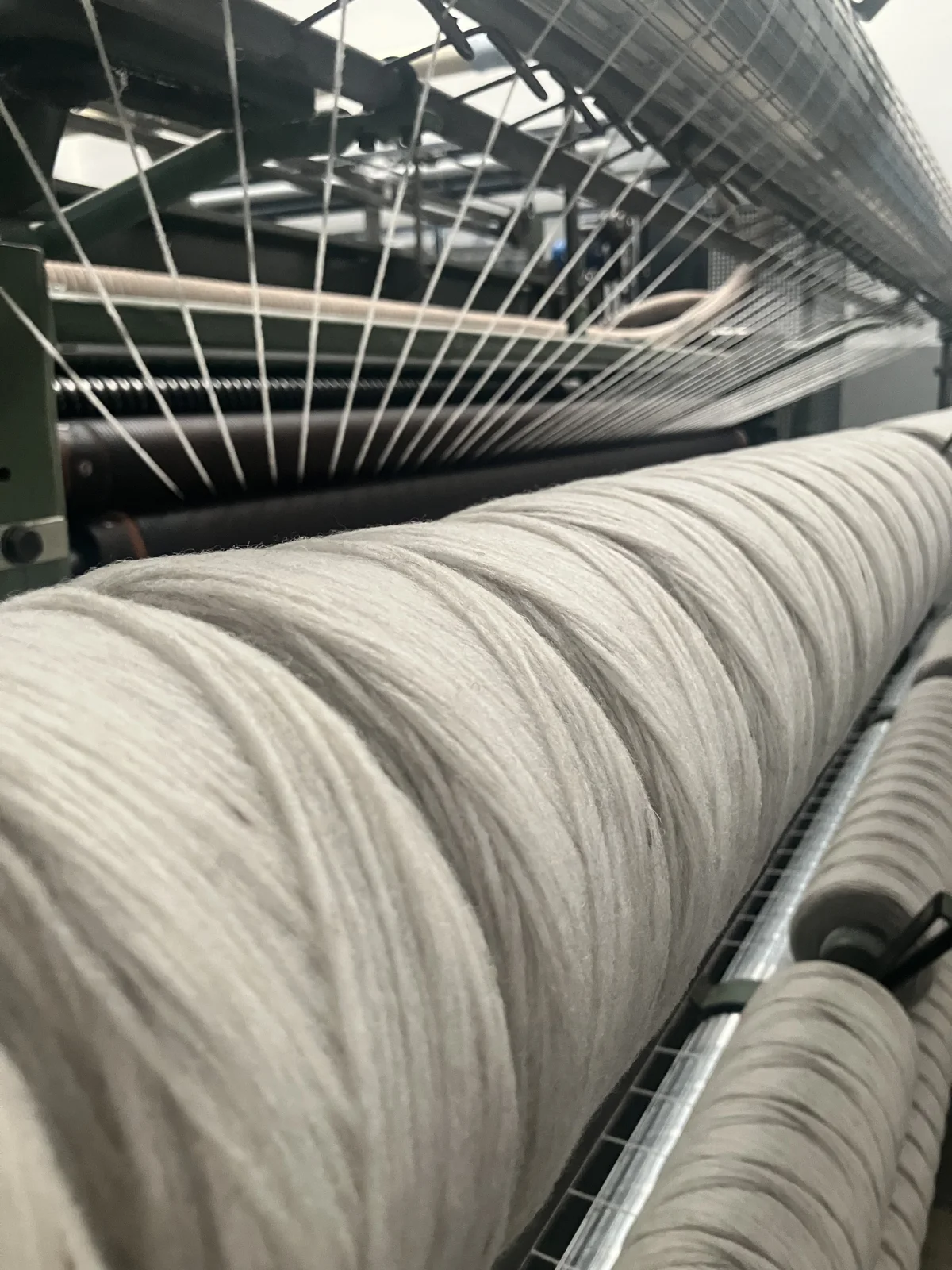
The spinning department is one of the places where we can’t find people. The machine is complicated, and people don’t want to do it. And there is a machine we use only once a year, because there is one single Japanese client who asks us for a particular finish. We don’t know how to use it ourselves. We have to call an employee who is seventy, the only one who knows how, and we always hope he will say he’ll come. It’s crazy, because it’s a very old machine, from the seventies, fifty years old if not more, and I can’t bring myself to tell our Japanese client that we can’t do it anymore. We are friends. So we carry on, year after year.
Design and Demand: What Sells at Lanificio Bottoli
You present a vast collection every season. What does the market actually choose?
We make 2,500 new designs a season. We present much, much crazier things, but in the end people buy the simple ones. For everything we present, we make ten times as much, and what sells is the simplest, because people want simplicity.
Which collaborations have carried the mill’s name furthest?
Junya Watanabe, for one. He took this cloth from us and made the sleeves of a leather jacket with it, and I saw it in Japan. These here are the fabrics dyed with coffee. In the archive you can see the most important collaborations we have done: a blanket for Armani Casa, the first collaboration with Levi’s and Junya Watanabe, and Bottoli for Missoni, which was a great success.
Time: How Long Natural Wool Lasts, Seen in a Cloth From the 1940s
What does the archive tell you about how long a cloth can last?
It’s from the 1940s. Really, it’s an incredible thing. When I showed it to Junya Watanabe, he was shocked, because he couldn’t believe a cloth could last that long. And yet it has lasted over the years. I still have to sort it all out. There is so much in here, but I never have the time.
The conversation was recorded in Italian in Vittorio Veneto in October 2026, during a walk through the mill, and translated by The Silent Luxury. It has been condensed and edited for clarity, and the questions have been edited for this version. The full recording is available as TSL Conversations, Episode 05.
Send this ↗ to someone who believes the finest colour is the one nobody dyed.
Sources
- Ettore Bottoli, Lanificio Bottoli, conversation with Eva Winterer in Vittorio Veneto, October 2026, translated from Italian by The Silent Luxury
- TSL Conversations, Episode 05
Similar Articles

Marion Röttges of Remei: Transparency Is Where Change Begins

IWTO’s Dalena White: Fibre Choice Decides How a Garment Ends
H&M, Inditex and the Circular Economy Act: Who Pays for Fashion’s Waste