
IFF Takes Its Fragrance Lab to Brazil’s Forest and Brings Back Scent as Data
IFF has taken its fragrance laboratory to the plant. On 18 November the company opened the IFF Brazil Forest Lab, its first, inside Legado das Águas in Brazil’s Atlantic Forest. The 31,000-hectare reserve in the south of São Paulo state belongs to Reservas Votorantim, the green-economy arm of Votorantim S.A.
“Roughly two in every five of the Atlantic Forest’s plant species exist nowhere else on Earth,” said Ana Paula Mendonça, president of IFF Scent.
So far the forest has yielded more data than raw material. Since August 2025 the teams have identified 33 native species as fragrance and beauty candidates, according to IFF. They have captured the scents of 27 plants “straight from the living plant, without picking it”. Eight of those scents have already been recreated with IFF Livings, and IFF says its perfumers will have them soon.
● In Brief: IFF Fragrance and Atlantic Forest Plants
The method. Perfumers call this kind of work headspace. A glass dome over a flower collects the scented air, and chemists reconstruct the scent from its molecules. IFF says it developed its version, Living Flower, in 1985.
The partners. Scientists from IFF and LMR, its natural-ingredients house in Grasse, work beside researchers from Reservas Votorantim. The 2025 agreement gave IFF and LMR exclusive access to the reserve’s native flora.
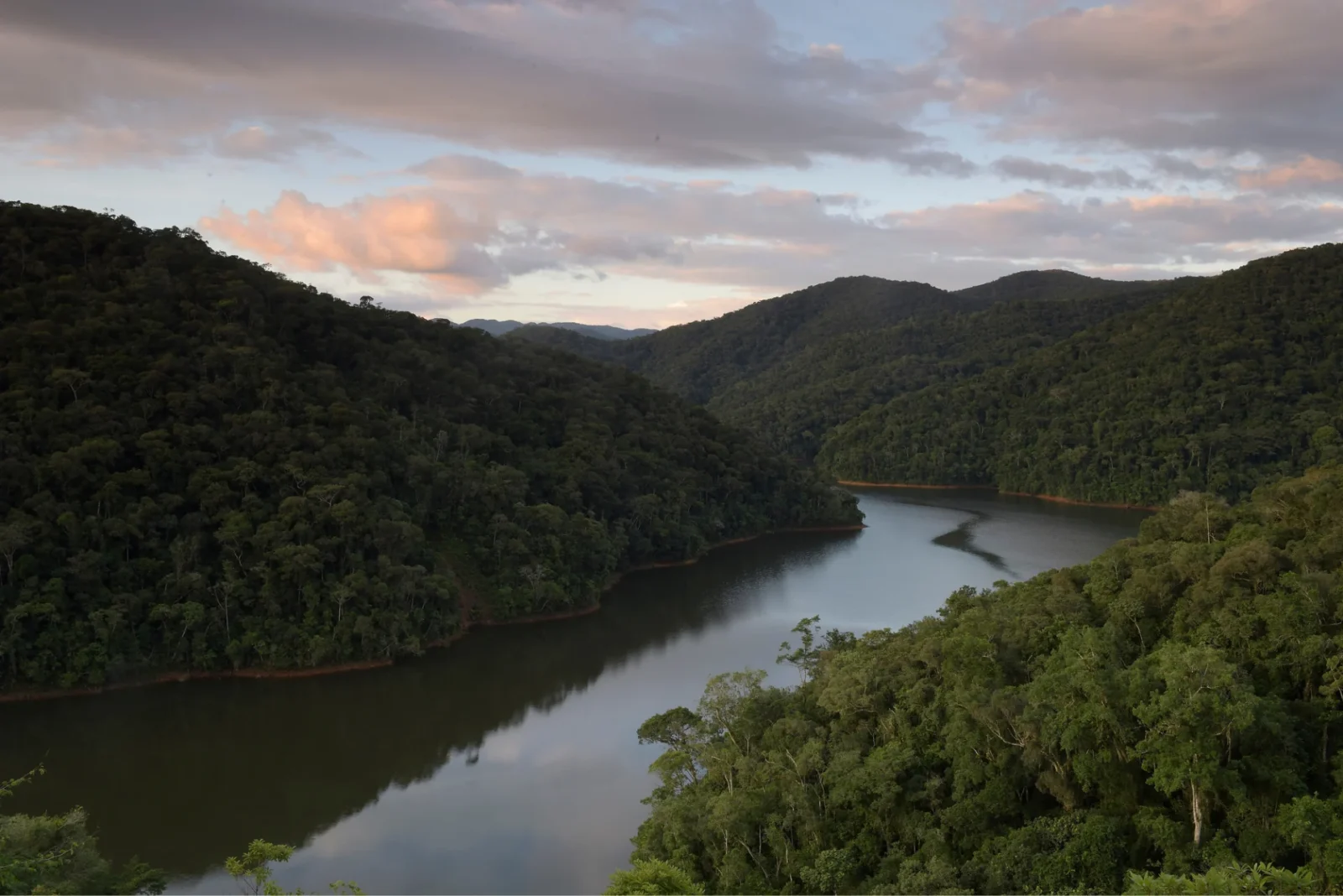
Legado das Águas in Brazil’s Atlantic Forest, where IFF has opened its first fragrance Forest Lab. Courtesy of Reservas Votorantim
● Why It Matters: IFF Fragrance Between Brazil and Grasse
IFF fragrance research arrives in a country where others have long built scent palettes from the forest. Natura sources 46 forest ingredients after 25 years in the Amazon. O Boticário has captured the scent of living flowers since 2022, under the name Green In. Symrise opened a plant near Belém in 2015 and was sourcing 19 Amazon ingredients a year later. On a far smaller scale, Nörre Nordic, which leaves flowers standing for pollinators, works with the same restraint.
Grasse remains the workshop. LMR opened a 1.8-hectare flower field there in May. Givaudan is building Campus 52, a site costing about €60m that is due to open in early 2028. Origin has become part of the story a perfume tells, from Spezieria Siciliana’s seven Sicilian notes to Puig’s bet on fragrance.
One question stays open: who owns a scent that was never picked? Brazil’s biodiversity law, Law 13.123, ties benefit sharing to the finished product. The manufacturer pays 1 per cent of the product’s annual net revenue, a rate that sector agreements can lower. The announcement leaves open how this applies to a scent recorded from the air. The answer will matter once the first recreated scent reaches a bottle, carrying a note that left the Atlantic Forest only as data.
Send this to someone who wonders where a perfume really begins.
Sources
- IFF, press release via Business Wire, November 2026
- IFF, Portuguese release, 18 November 2026
- Cosmetics Business
- Premium Beauty News
- IFF and Reservas Votorantim, August 2025
- IFF, Fine Fragrance
- AP, Living Flower technology, 2004
- LMR, Grasse field, May 2026
- Premium Beauty News, Givaudan Campus 52
- Bloomberg Línea, Natura
- CNN Brasil, O Boticário Green In
- Symrise, Amazon sourcing
- Law 13.123/2015