From Baja California to Bhutan: Hospitecture and the Stays That Treat Arrival as a Health Decision
Rancho La Puerta opened in 1940 in the mountains outside Tecate, in Baja California, Mexico. Edmond Szekely, a Hungarian philosopher with a theory about the relationship between diet, movement, and longevity, charged his first guests seventeen dollars a week for a tent, a vegetable garden, and a daily exercise programme. He called it a health and fitness ranch. His guests called it extraordinary, came back the following year, and brought their friends. Eighty-five years later, programmes at Rancho La Puerta are still booked months ahead, the average stay has grown longer with each decade, and the word that now describes what Szekely built before anyone had named it is Hospitecture.
The concept is straightforward, even if the experience rarely is. You choose a place to stay, and that choice is also a decision about your health — not a spa afternoon, not a detox week, but a stay with a structure, a diagnosis at the beginning and a protocol at the end, and somewhere in between, a landscape and a kitchen and a bed that are doing some of the work. Hospitecture is the word for it. And it has been built — under different names and through different cultural traditions — across Japan, India, the Gulf, Latin America, Bhutan, Africa, and the Alpine medical wellness corridor for decades, long before a shared name existed for any of it.
Alpine: The Architecture of the Stay
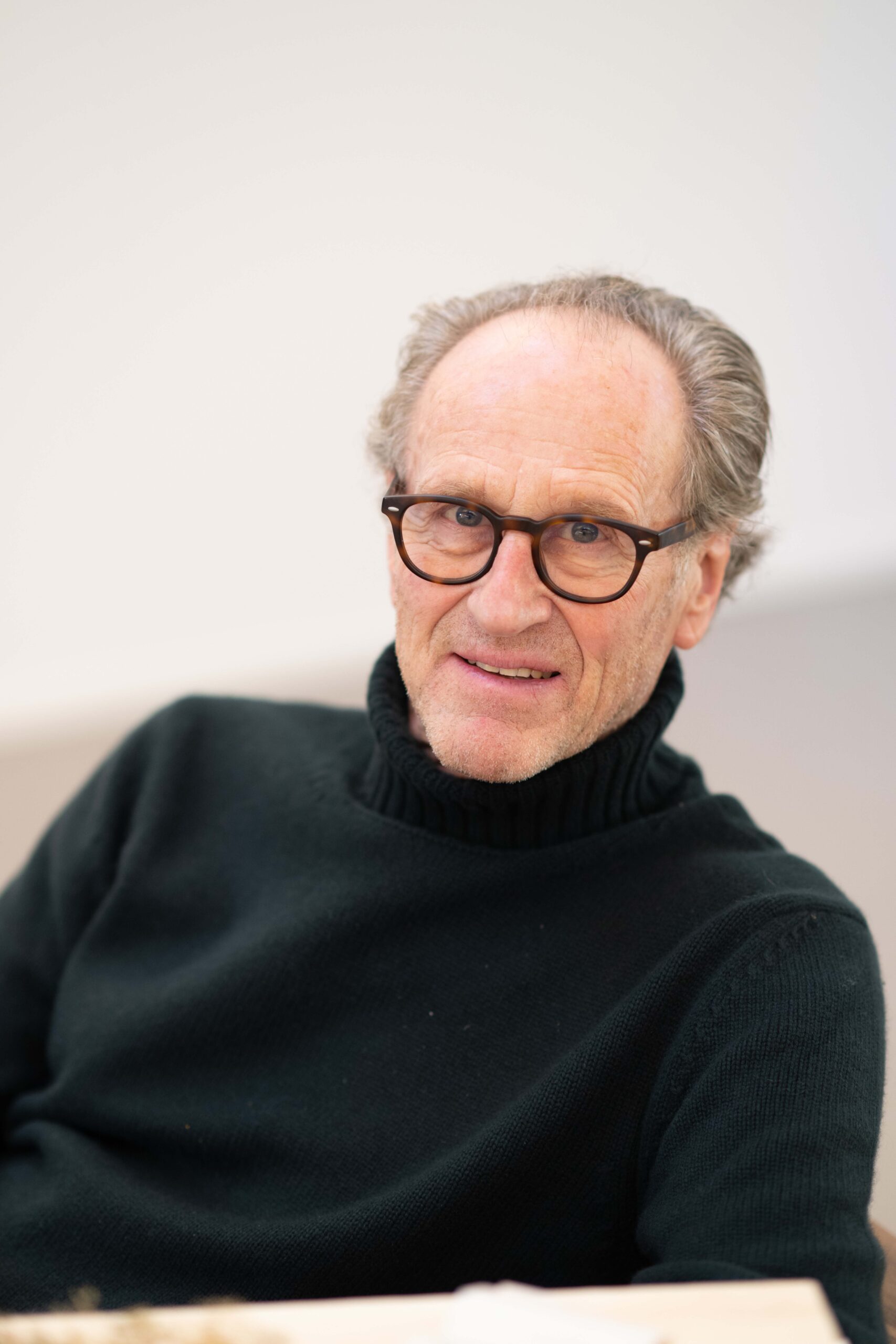
When Matteo Thun was designing the Waldkliniken Eisenberg in Thuringia, a municipal clinic, he put a fine-dining restaurant in it, because healthy, varied cuisine is a prerequisite for the healing process. The corridor widths, the wood on the floor, the windows and their orientation toward the forest outside — the brief was the same one he uses for five-star hotels. He explained the underlying principle to The Silent Luxury with a single Latin word. Hospes. It means guest, and it is the root of both hospital and hospitality. “Clinics can learn from the hospitality concept how to place the guest at the center,” he said. “This isn’t a question of luxury, but of attitude.”
In Austria, MAYRLIFE in Altaussee and Park Igls near Innsbruck have been practising this convergence for decades, grounding it in FX Mayr medicine and Modern Mayr diagnostics respectively. The Waldhotel at Bürgenstock in Switzerland, which Thun also designed, sits 500 metres above Lake Lucerne and holds an accredited medical centre on its ground floor, with the spa directly above it. The transition between the two is architecturally seamless. That seamlessness is the point.
A Geography of the Health Stay
The concept has been built — under different names and through different cultural traditions — across Japan, India, the Gulf, Latin America, Bhutan, Africa, and the Alpine medical wellness corridor for decades, long before a shared name existed for any of it.
| Region | Core Tradition | Key Destinations |
|---|---|---|
| Alpine CorridorAustria & Switzerland | Clinical architecture where medical centre and spa share the same floor plan. Nature — forest, lake, altitude — integrated as therapeutic environment. The stay begins with diagnostics and ends with a protocol. | MAYRLIFE Altaussee · Park Igls Innsbruck · Waldhotel Bürgenstock |
| Japan | Thermal bathing, shinrin-yoku forest immersion, biomarker research, ryokan multi-night tradition | Kii mountain peninsula · Hakone volcanic region · Ryokan culture |
| Thailand | Integrative medicine, clinical and hospitality programmes since 1995 | Chiva-Som, Hua Hin |
| India | Ayurvedic diagnostics, individualised programmes of two to four weeks, booked a year ahead | Ananda in the Himalayas · Kairali Ayurvedic Healing Village, Kerala |
| The GulfUAE · Saudi Arabia · Singapore | Genomic diagnostics, longevity protocols, wearable health tracking, state-level investment in health tourism infrastructure | Dubai longevity clinics · Abu Dhabi health tourism · AlUla · Singapore preventive medicine |
| Latin AmericaMexico · Costa Rica · Colombia | Blue Zone longevity research, health and movement programmes, biodiversity medicine | Rancho La Puerta, Baja California (since 1940) · Costa Rica Blue Zone |
| AfricaKenya · Tanzania · South Africa | Indigenous plant medicine, ethnopharmacology under formal clinical study, landscape immersion | Premium wellness lodges combining traditional knowledge with high-end hospitality infrastructure |
| ItalyAbruzzo | Albergo Diffuso: recovery through community immersion, duration, and the quality of place over time | Sextantio Albergo Diffuso, Santo Stefano di Sessanio |
| Bhutan | High-value low-volume policy: landscape, altitude, and enforced slowness as the programme itself | National high-value tourism framework · Himalayan immersion stays |
Editorial research: The Silent Luxury, 2026
Asia: Centuries Before the Word Existed
Japan’s ryokan tradition organises multi-night stays around thermal bathing, seasonal kaiseki cuisine, and a host relationship built carefully over the full length of the visit. What Japanese culture developed alongside this — and what Western medicine is now measuring in clinical studies at universities in Tokyo and Chiba — is shinrin-yoku, the practice of extended time in woodland environments whose effects on cortisol, blood pressure, and immune markers are documented and quantified. Retreats in the Kii mountain peninsula and around the Hakone volcanic region now frame multi-day forest immersion programmes as preventive medicine, with before-and-after biomarker testing included in the stay.
Thailand arrived at Hospitecture through integrative medicine. Chiva-Som in Hua Hin has been running combined clinical and hospitality programmes since 1995, predating the global wellness tourism conversation by a decade and building the evidence base that the industry has been drawing on ever since. India contributes the longest continuously documented medical tradition in the category. Ananda in the Himalayas, set in forested foothills above Rishikesh, and Kairali Ayurvedic Healing Village in Kerala offer programmes of two to four weeks built around Ayurvedic diagnostics calibrated to the individual. Both are booked a year ahead by guests arriving from across Asia, Europe, and the Gulf. In South Korea, where a 2025 academic study found that social norms and environmental self-efficacy are stronger drivers of health-related purchasing decisions than in most Western markets, a new generation of medical wellness houses is developing around sleep medicine, immune diagnostics, and nature immersion in the country’s coastal and mountain regions.
Bhutan has taken the most explicit position. The country’s high-value, low-volume tourism policy, which limits annual visitor numbers and sets a mandatory daily fee, produces a Hospitecture logic by design: the visit is an investment in an experience of depth and rarity, and the landscape — the Himalayan altitude, the intact forest cover, the silence — is inseparable from the value of the stay.
Gulf: Where Health Tourism Became Policy
Dubai has been building preventive medicine and longevity diagnostics into its tourism infrastructure with government backing, international clinical partnerships, and a visa framework that explicitly targets health travellers. Abu Dhabi recorded a 26 percent increase in international arrivals in 2024. Singapore is developing the technology layer — genomic diagnostics, wearable health tracking integrated into the stay, longevity protocols built on real-time data — that positions it as the Hospitecture reference point for the Indo-Pacific. In Saudi Arabia, the AlUla project is combining desert environment exposure, traditional herbal medicine traditions, and contemporary clinical diagnostics in a setting where distance from ordinary life is built into the geography.
Africa: The Pharmacopoeia and the Lodge
Africa holds approximately 45,000 vascular plant species. An estimated 5,000 of them are documented in traditional medicine across East and Southern Africa, identified and transmitted by healers across generations, rooted in specific landscapes, specific soils, specific seasons. A pharmacopoeia, in its original sense, is precisely this: a living archive of plants, their properties and their preparation. In Africa, it has never been written down in a single volume. It lives in the communities, in the land, and in the knowledge of those who work with both.
In East Africa, Hospitecture finds its material in the ground itself. At Segera Retreat on the Laikipia Plateau, every ingredient used in the spa is sourced from within the 50,000-acre conservancy, formulated from plants that the surrounding communities have identified and worked with medicinally for centuries. The stay connects to a pharmacopoeia that grows in the ground outside the window. The guests who seek it out are part of a shift that the numbers reflect: 55 percent of luxury travellers plan to spend more per trip while visiting fewer destinations, according to the Virtuoso Luxe Report 2026. Wellness safaris recorded a 41 percent surge in demand in the same period, according to Global Growth Insights Luxury Safari Tourism Market 2025.
The Village as Protocol
Italy arrived at its version of Hospitecture from a completely different direction. After the 1976 Friuli earthquake, architects and local administrators began converting abandoned stone buildings in mountain villages into dispersed hospitality — guests distributed across the borgo rather than concentrated in a single hotel, inhabiting the place and its community over stays measured in days and weeks. The Sextantio Albergo Diffuso in Santo Stefano di Sessanio, a medieval village in the Abruzzo Apennines, became one of the most studied examples of what this model produces: a form of recovery that happens through proximity, duration, and the specific unhurriedness of a place that has been there for eight hundred years. The streets are the corridors, as The Silent Luxury noted in its feature on the project. That observation contains an entire philosophy of what hospitality can be when it stops competing with medicine and simply becomes part of it.
The guests who seek Hospitecture experiences tend to return. In Mexico, Costa Rica — one of five Blue Zone regions in the world where populations measurably live longer than the global average — and Colombia, which recorded a 6.6 percent increase in international health tourism arrivals in 2024, the infrastructure for long stays built around health is growing faster than any other segment of the travel market. In every region on this list, the pattern is the same: the guests who came for a week come back for two, and the ones who came for two come back for three. Szekely charged seventeen dollars a week for a tent in the Baja mountains. He had no marketing at all.
Sources:
Virtuoso Luxe Report 2026 · virtuoso.com
Global Growth Insights, Luxury Safari Tourism Market 2025 · globalgrowthinsights.com/market-reports/luxury-safari-tourism-market-100146
Mordor Intelligence, Africa Wellness Tourism Market 2025 · mordorintelligence.com/industry-reports/africa-wellness-tourism-market
Lighthouse Global Hotel Rates Q4 2025 · mylighthouse.com/resources/insights/hotel-pricing-trends-q4-2025
Frontiers in Pharmacology, Medicinal Plants South Africa 2021 · ncbi.nlm.nih.gov/pmc/articles/PMC8569556/
Springer Nature, Ethnobotany East Africa 2024 · link.springer.com/article/10.1007/s42452-024-05970-7
Travel and Tour World, Colombia Tourism 2025 · travelandtourworld.com/news/article/tourism-keeps-growing-in-colombia-with-record-number-of-international-visitors/
Similar Articles
The Store Is the New Runway: Gucci and Moncler Turn Shopping Into an Experience
Villa Nava: The Spaceship That Became a Home
The Yellow Oil: How Saudi Arabia Turns Its Landscape into Wealth