Two Voices of a New Haute Couture: The Rise of Couture Régénérative
The map of international luxury is shifting. Away from established centers, new places are emerging, defined by unique material quality, outstanding craft techniques, and deep cultural anchoring. From this movement grows an aesthetic that combines haute couture’s claim to precision and artistic freedom with the principles of regeneration.
New Perspectives on Haute Couture
This connection, which can be termed “Couture Régénérative,” rests on three pillars: materials that strengthen nature’s cycle, craftsmanship that creates lasting value, and design that breathes new life into existing resources. On the world’s runways, collections increasingly embody this philosophy. Two outstanding examples are Rahul Mishra from India and Imane Ayissi from Cameroon. Both regularly show their collections in Paris and enrich the scene with fresh perspectives deeply rooted in their respective geographic and cultural origins.
Becoming Love: Seven Stages of Love on the Runway
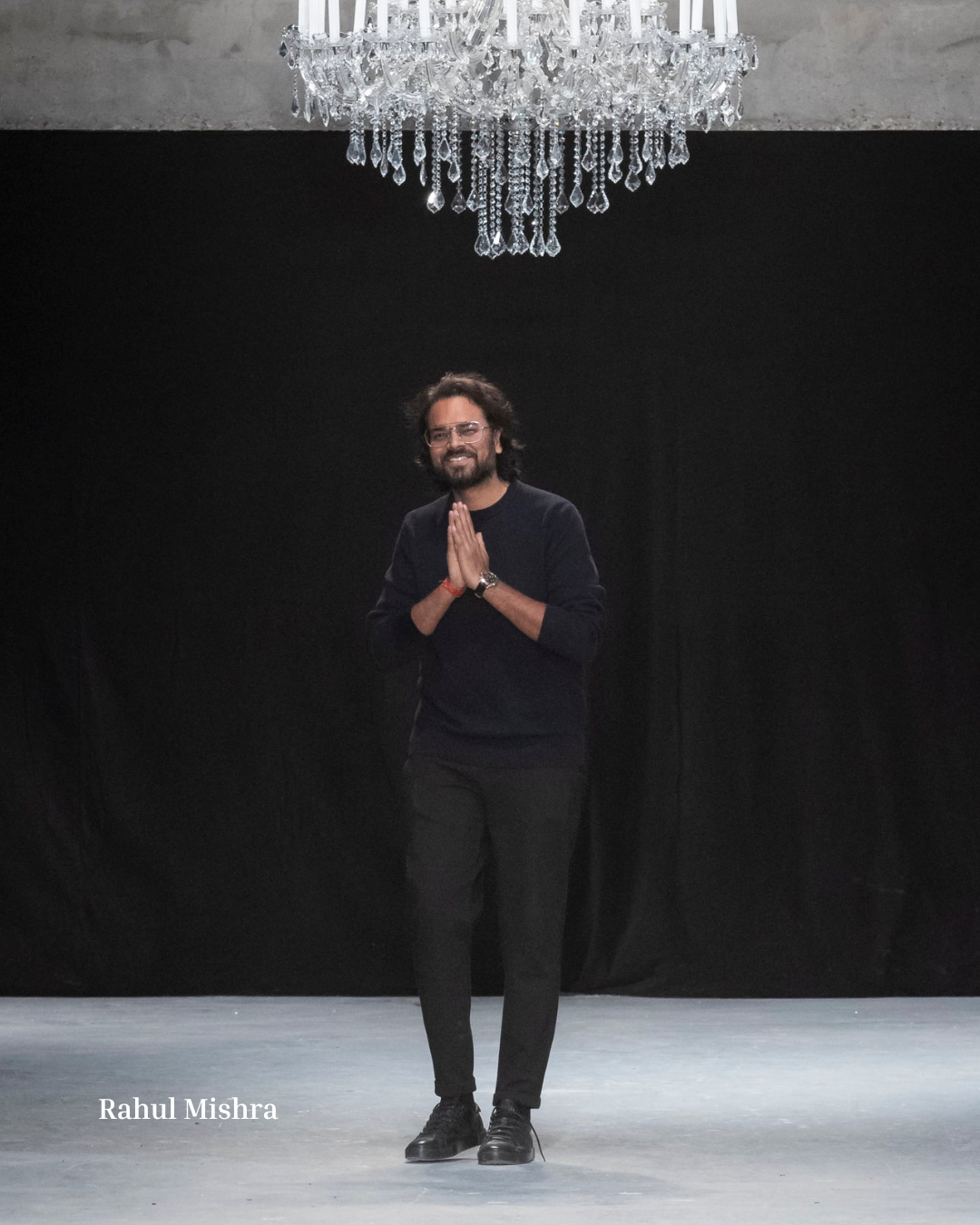
With his couture line for Fall/Winter 2025 titled “Becoming Love,” the designer invites the audience on an emotional journey. The collection, presented both in Paris and at India Couture Week, is a poetic interpretation of the Sufi idea of the seven stages of love, ranging from attraction to dissolution of self.
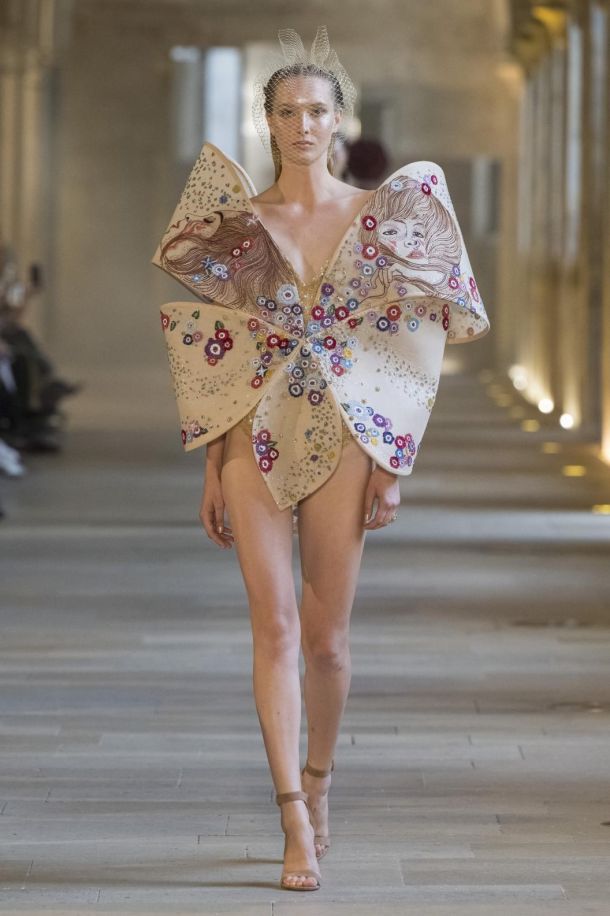
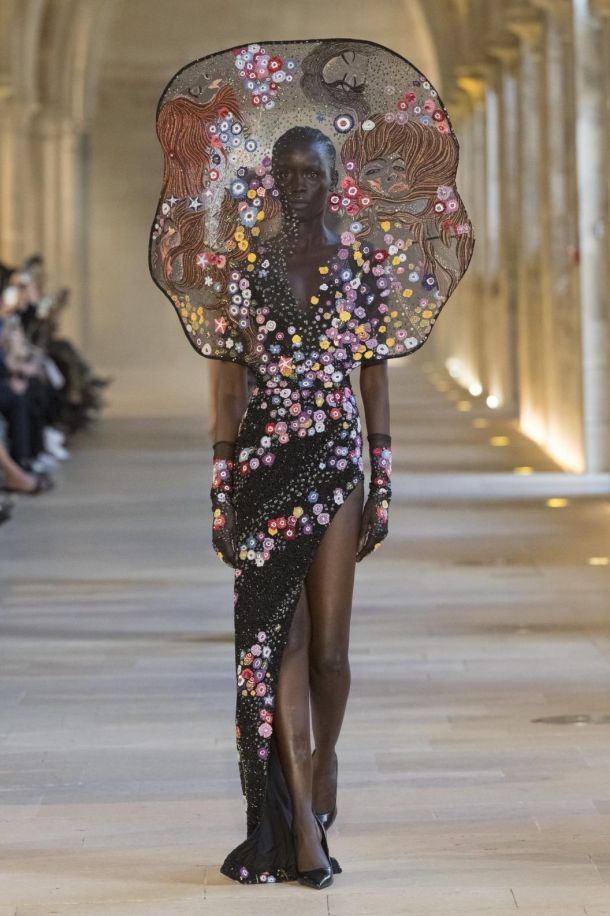
Each of the seven stages is reflected in the silhouettes of the dresses, which develop from delicately flowing beginnings to opulently embroidered highlights. Mishra’s signature is unmistakable: embroidery is the heart of the collection. It emerges in Aari, Zardozi, and Naqshi techniques, complemented by Kundan and sequin work. Over 1,000 artisans worked on realizing the designs and the collection.
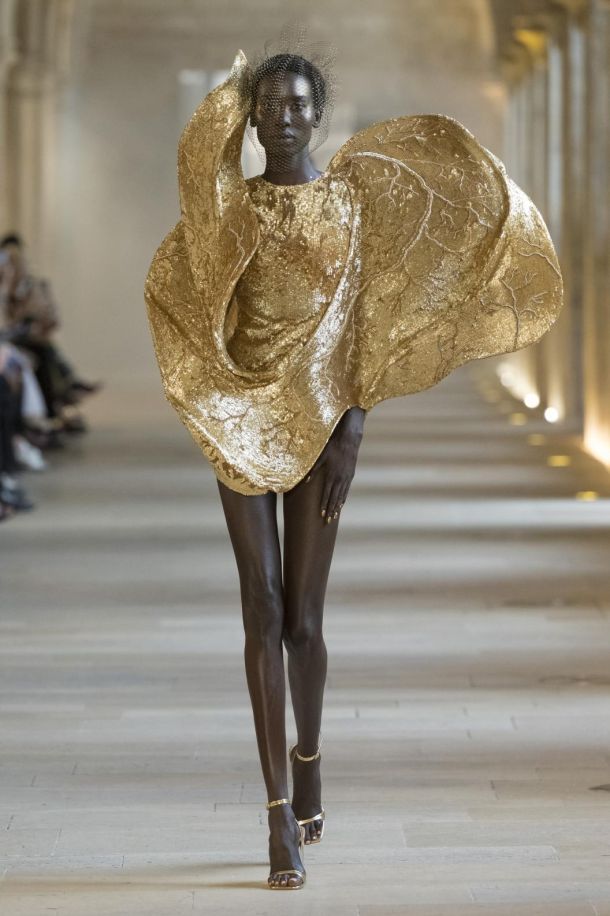
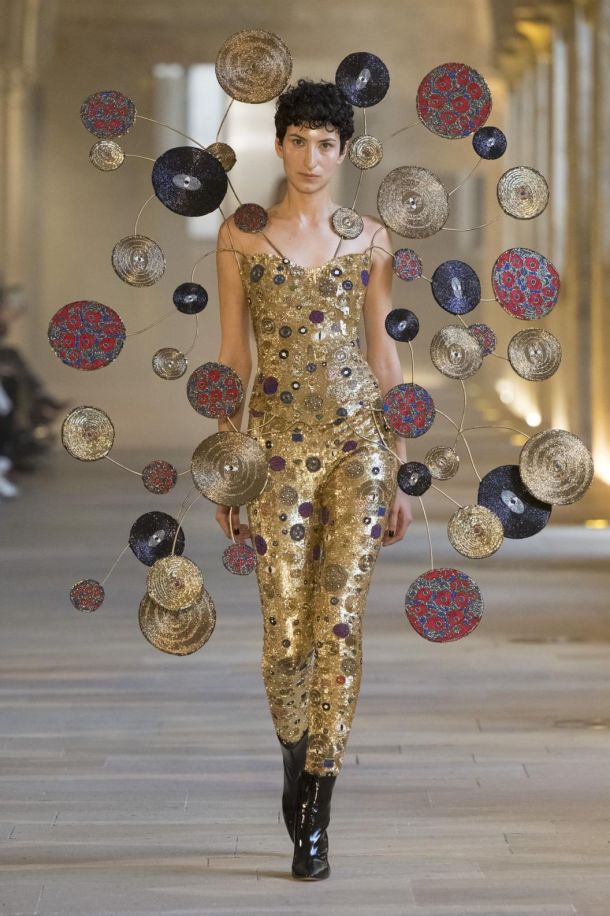
A quintet of golden dresses and suits, inspired by Gustav Klimt’s artworks, tells the story of obsession, the penultimate stage of love. The dresses, adorned with sequins and embroidery, quote Klimt’s swirl patterns and golden tones. Floral motifs, including large lotus flowers, symbolize love’s beauty. For “Becoming Love,” Mishra collaborates for the first time with renowned milliner Stephen Jones and the Indian jewelry house Tanishq.
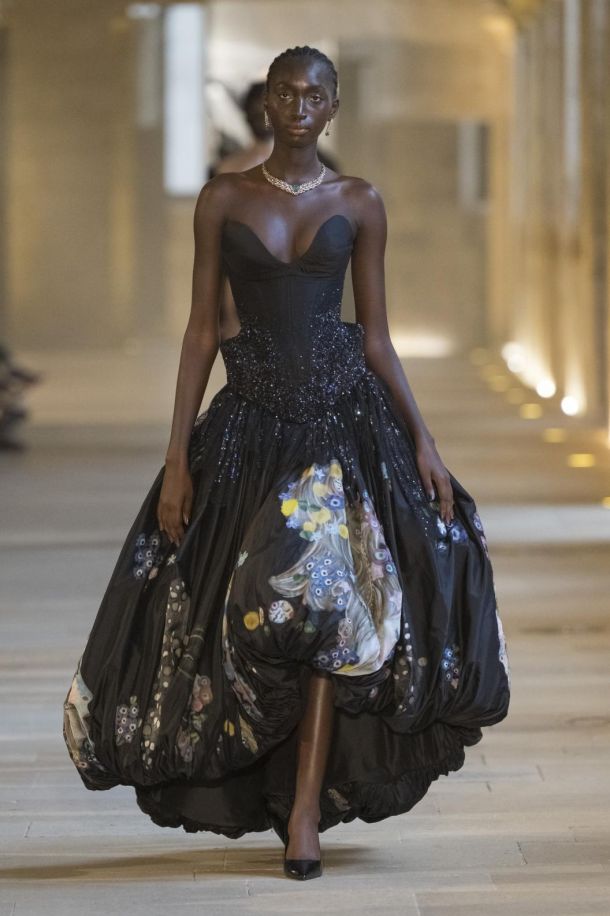
The Seven Stages of Love: From Attraction to Transcendence
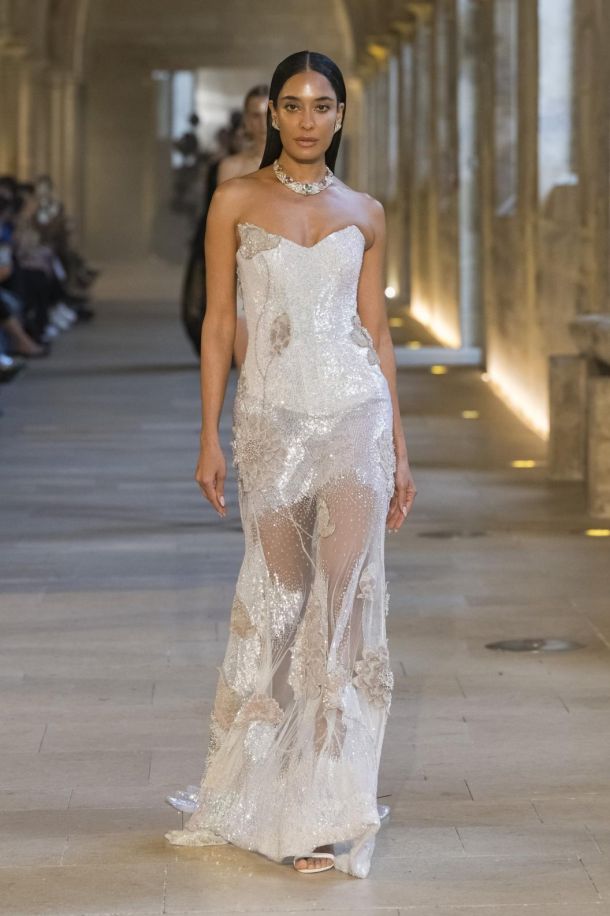
Rahul Mishra’s “Becoming Love” collection for Fall/Winter 2025 translates the Sufi mystical journey of love into wearable poetry on the Paris Fashion Week runway. Each silhouette embodies one of seven stages: from the delicate, flowing forms of initial attraction through increasingly opulent embroidery representing deepening devotion, culminating in the spectacular Klimt-inspired golden quintet that speaks of obsession’s intensity. Over 1,000 artisans worked in Aari, Zardozi, and Naqshi techniques to create hand-embroidered narratives where lotus blossoms symbolize love’s blossoming and golden swirl patterns echo the consuming nature of passion. This is Sufi philosophy made tangible—the understanding that love is not a destination but a transformative journey through stages of yearning, surrender, reverence, and ultimately the dissolution of self into something greater. Each garment becomes a meditation: “We are the guardians of life’s meaning,” Mishra declares, positioning beauty not as vanity but as planetary responsibility. The progression from pale beginnings to gold-encrusted maximalism mirrors the soul’s evolution from first glance to complete absorption, where the beloved and lover become indistinguishable. In Mishra’s hands, couture transcends decoration to become spiritual cartography—mapping the territory between human longing and divine union, rendered in silk from family-run mills, cotton from regenerative farms, and the patient dedication of hands that understand craft as prayer. | Photo: nowfashion.com
The Pale Blue Dot: On Our Planet’s Fragility
Another collection, “The Pale Blue Dot” from Spring 2025, is a homage to our planet’s fragility. The designs tell of a future where nature gains the upper hand over urban landscapes. Mishra combines architectural details with natural motifs.
A cape of dark velvet is embroidered with a skyline in sequins, while a floor-length skirt shows three-dimensional lotus blossoms in sculptural embroidery. The cotton used comes from projects that regenerate soil through crop rotation and organic fertilization. The silk fabrics are made in weaving mills that work exclusively with rainwater and plant-based dyes.
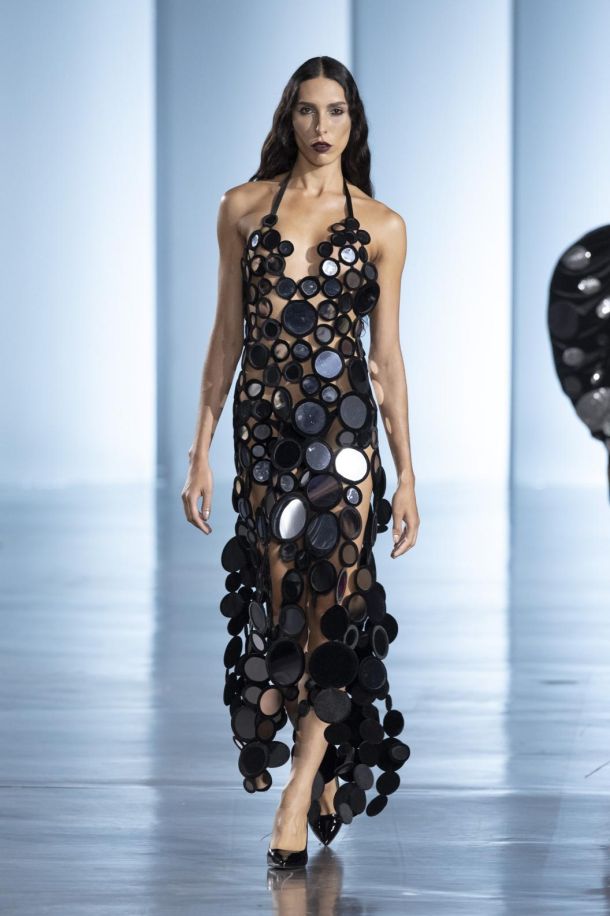
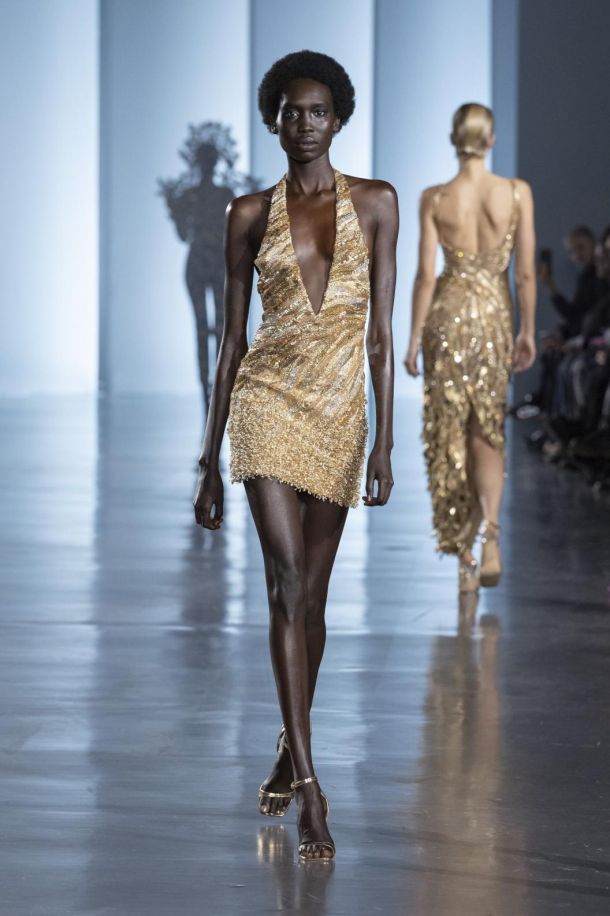
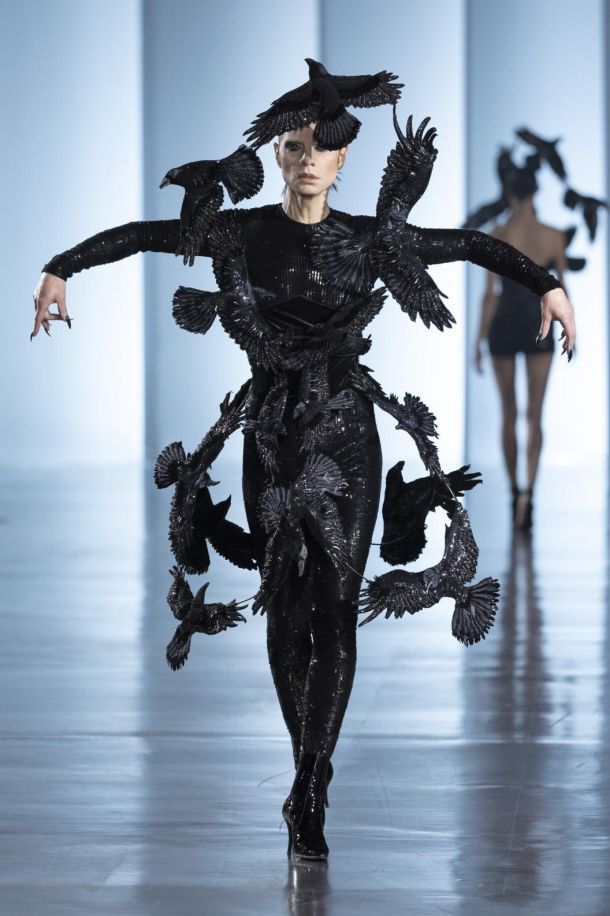
When Nature Reclaims the City: A Vision of Planetary Hope
Rahul Mishra’s “The Pale Blue Dot” collection for Spring/Summer 2025 envisions a future where nature triumphs over urban sprawl. Sequined skylines on dark velvet capes give way to three-dimensional lotus blossoms in sculptural embroidery—architectural precision meeting botanical resurrection. “We are the guardians of life’s meaning,” Mishra emphasizes, transforming regenerative cotton and rainwater-dyed silk into wearable prophecy. Each piece asks: what if beauty could heal? The collection’s title references Carl Sagan’s meditation on Earth’s fragility, yet Mishra’s vision refuses dystopia. Instead, flora and fauna reclaim concrete in delicate threadwork, suggesting that humanity’s greatest luxury lies not in dominance but in harmonious surrender to natural cycles. This is couture as planetary meditation—hope stitched by over 1,000 artisan hands into garments that speak of restoration, not ruin. | Photo: nowfashion.com
Akouma and Faliya: Cultural Richness
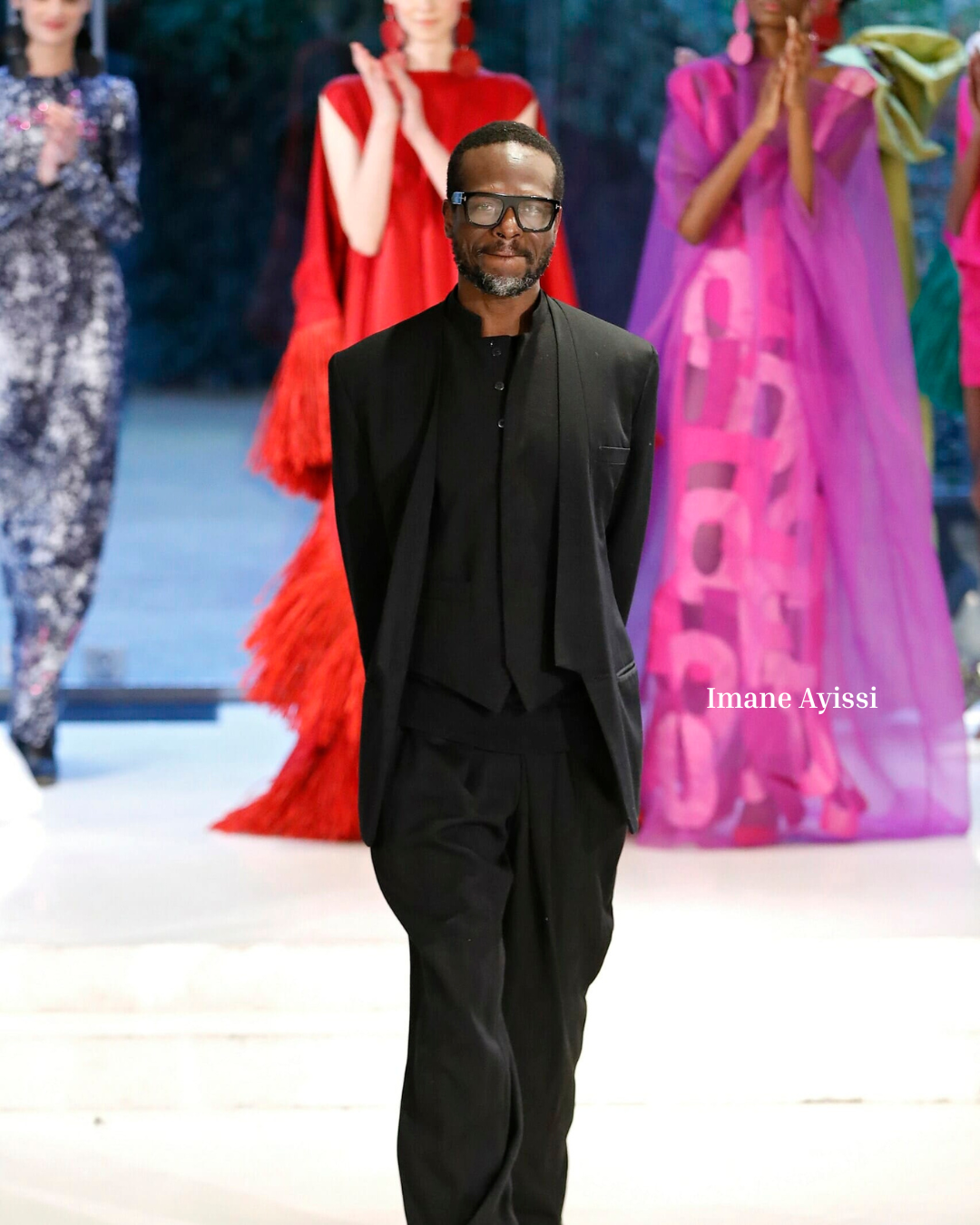
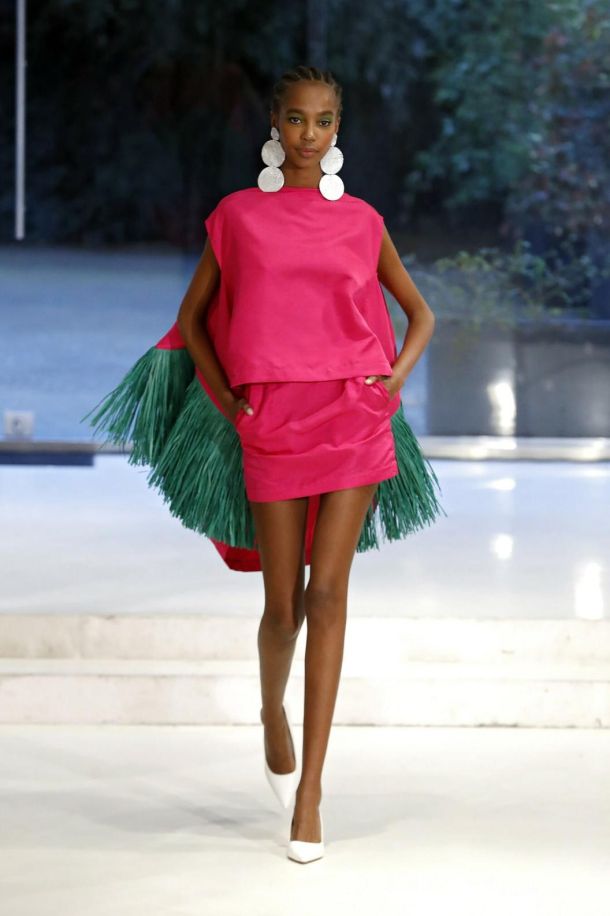
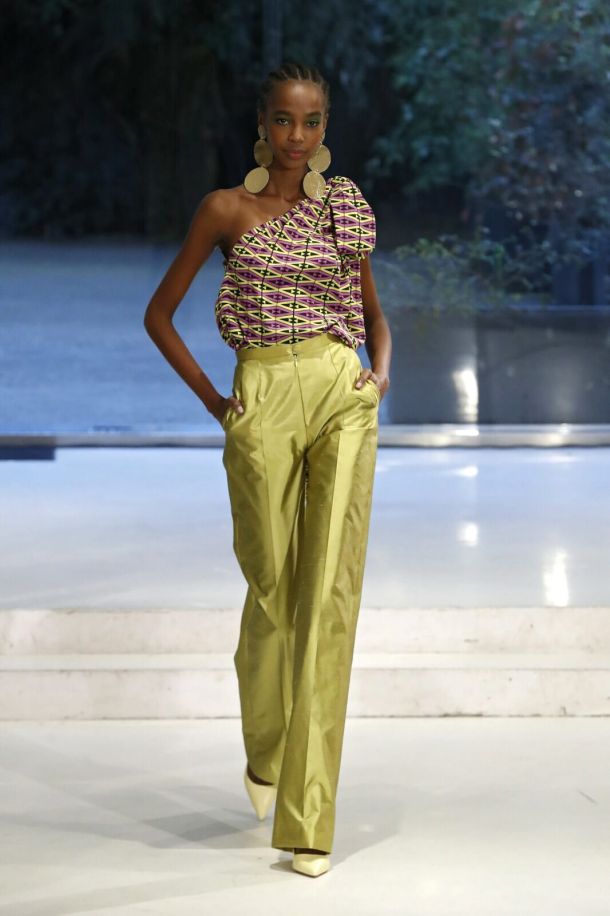
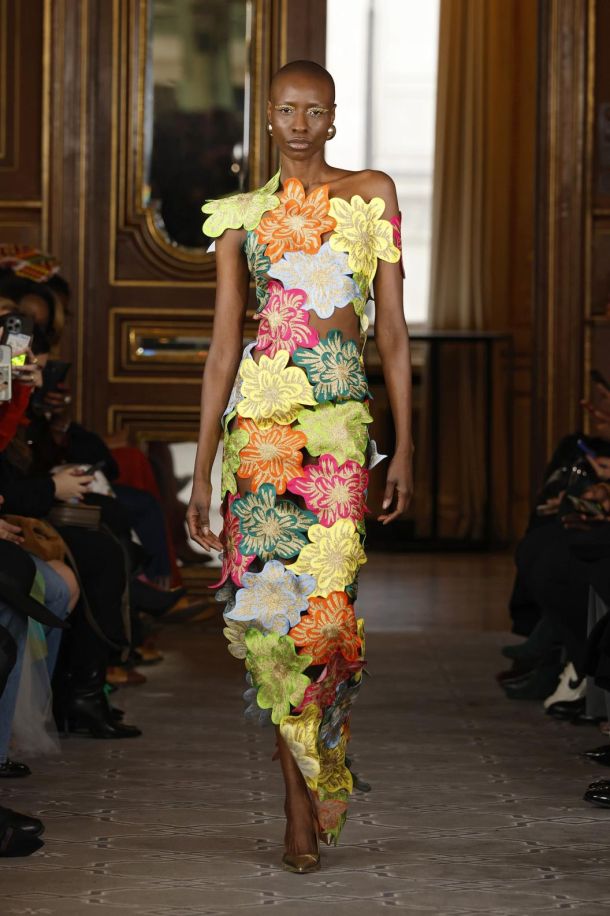
Ayissi’s work consistently explores the meaning of textiles as carriers of identity and history. An earlier 2020 collection ran under the title “Akouma,” which means “wealth” in the Beti language. With this, Ayissi referenced the cultural significance of fabrics like raffia or kente, which in Africa stand for dignity, status, and collective memory. Inspired by dance and movement, he staged the materials in layers and draping to make their structure and vitality visible. He developed this thought further in his couture collection “Faliya” (Spring/Summer 2022). The name from his native Ewondo language means “mixture” or “crossing” and becomes the leitmotif: Ayissi examined the beauty that emerges from the encounter of cultures. Upcycling served as his technical and metaphorical foundation. Fabric remnants from earlier collections were processed into artful appliqués and combined with materials like jersey and organza. Thus, from fragments of the past, a new, harmonious aesthetic emerged.
Faliya: Where Fragments Become Future
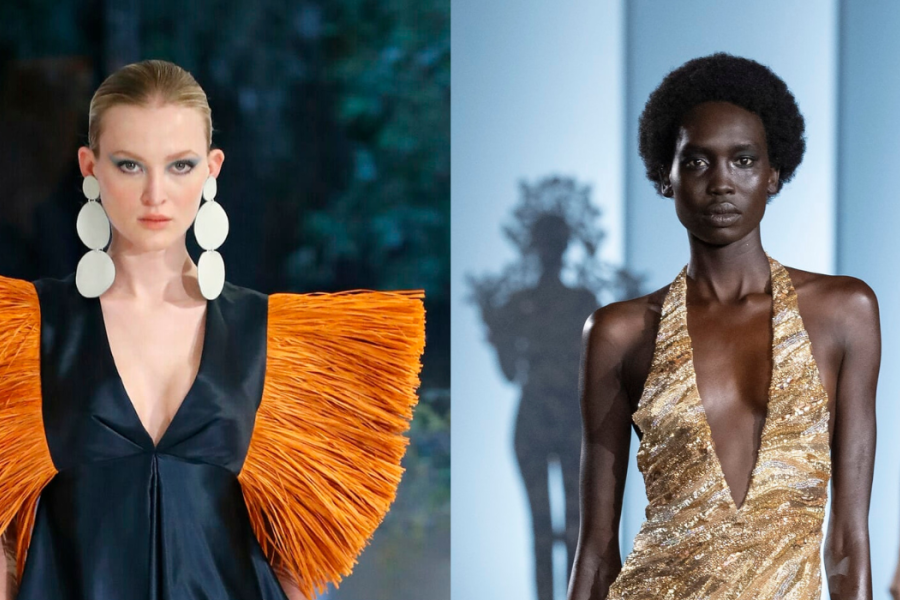
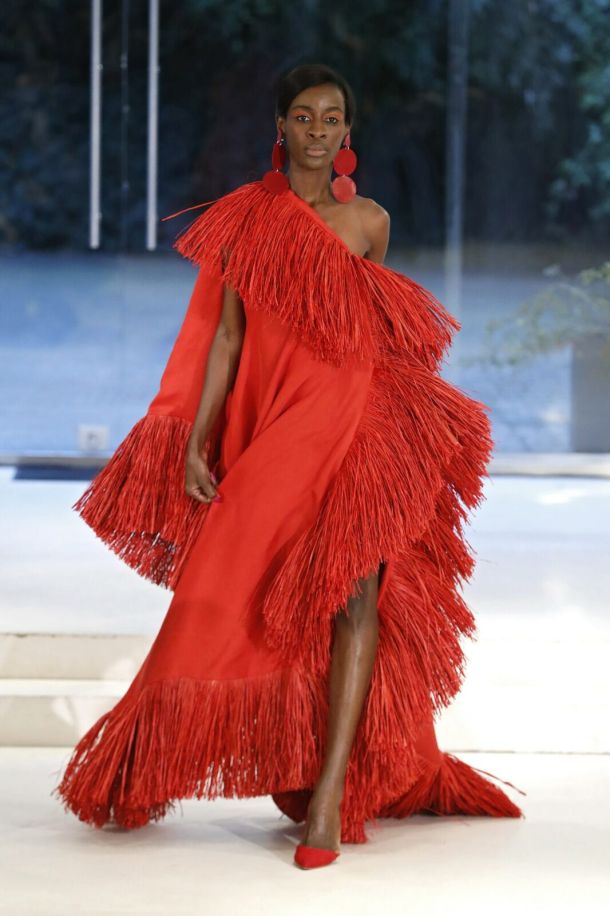
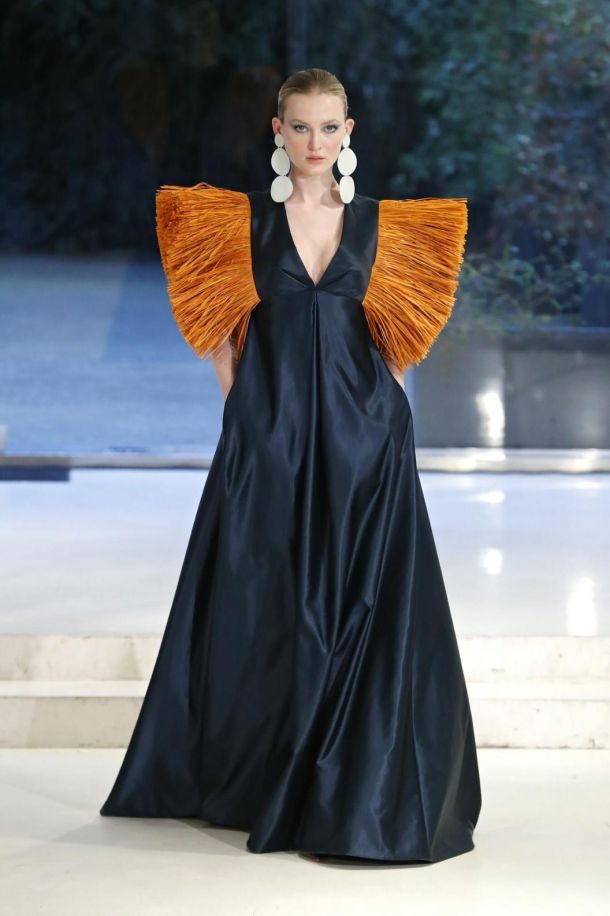
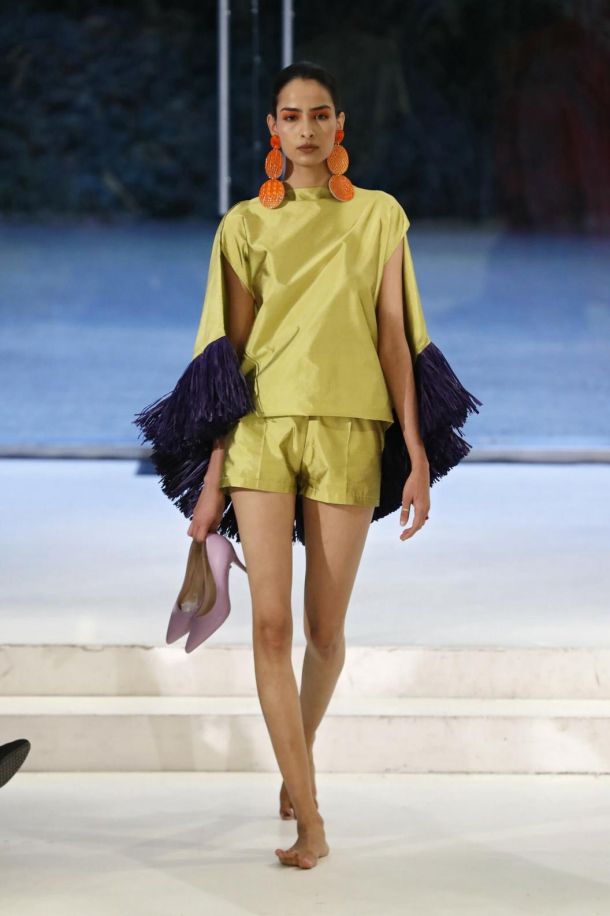
Imane Ayissi’s “Faliya” collection for Spring/Summer 2022 embodies the Ewondo concept of “mixture” or “crossing”—a philosophy that finds beauty in cultural encounter and material transformation. Vibrant fuchsia meets emerald raffia fringe, chartreuse silk pairs with midnight fringe cascades, each ensemble a testament to upcycling as both technique and metaphor. Fabric remnants from past collections are reborn as artful appliqués, combined with jersey and organza to create harmonious tension between African textile traditions and Parisian couture precision. This is regenerative luxury made visible: what was once discarded becomes dignified, what seemed finished finds new beginning. Ayissi’s vision challenges fashion’s linear narrative of consumption and disposal, proposing instead a cyclical understanding where nothing is truly waste—only material waiting for reimagination. The dramatic fringe work references movement and dance, honoring Ayissi’s background with the Ballet National du Cameroun, while bold color blocking speaks to textiles like kente and raffia that carry cultural memory across generations. In “Faliya,” beauty emerges not despite fragmentation but because of it—proof that the most compelling futures are built from thoughtfully assembled pasts. | Photo: nowfashion.com
Akalann and Ikorrok: Dialogue and Regeneration as Design Principle
For his collection “Akalann” (Spring/Summer 2025), Ayissi deepened the cultural dialogue. He deconstructed traditional African garments like the Boubou and the Kaba, discovering structural parallels to the Asian kimono or Korean hanbok. These intercontinental connections were underscored through collaboration with painter Wang Ying, whose impressionism-inspired brushstrokes on silk and bamboo fabrics bridge worlds.
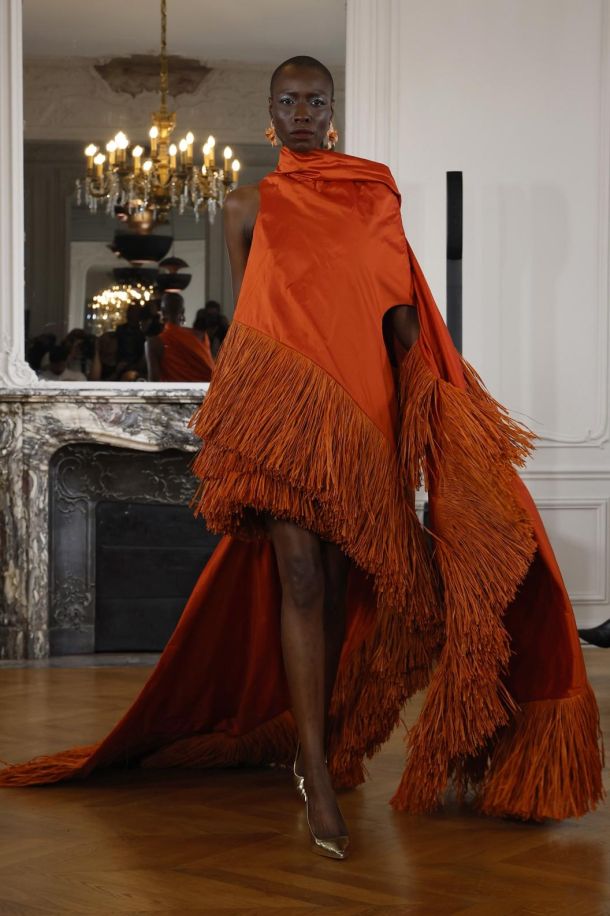
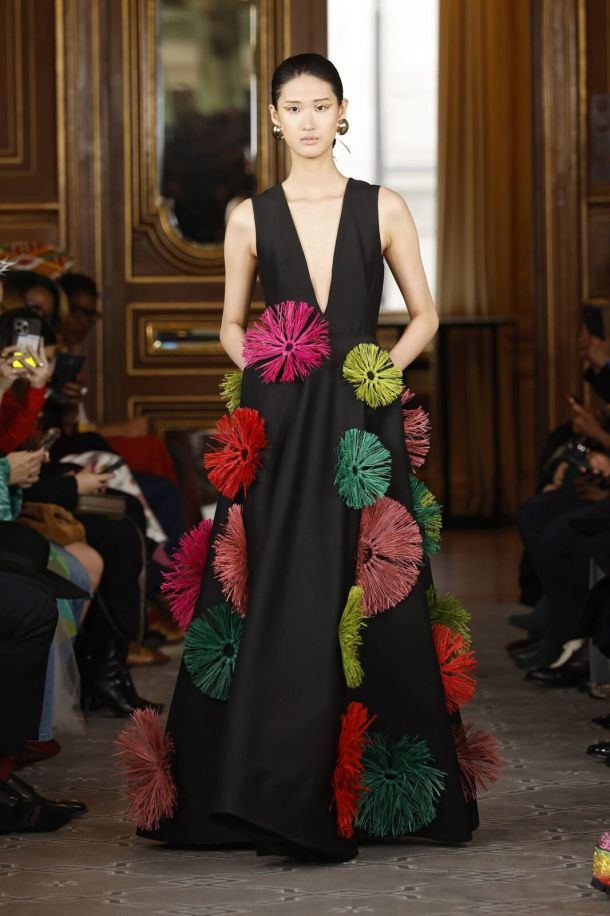
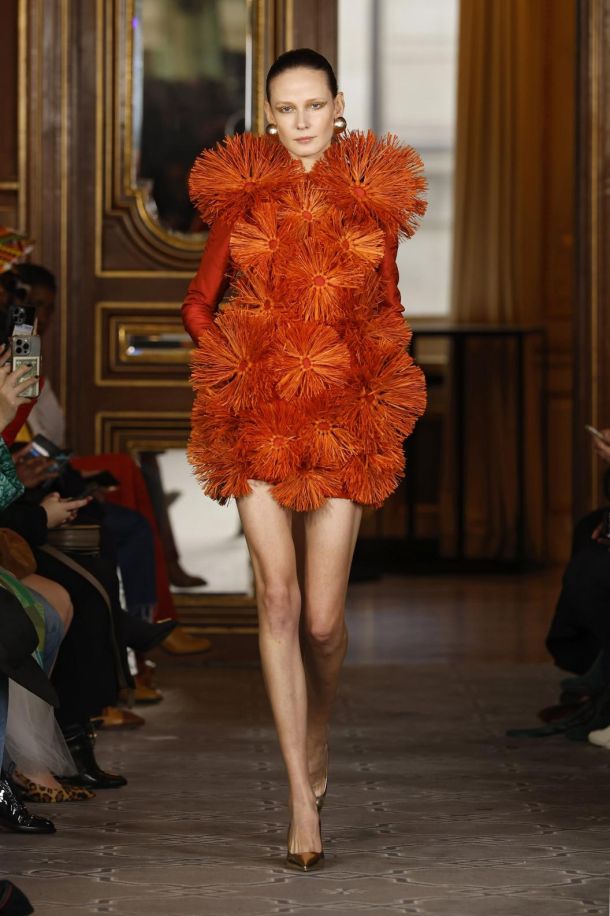
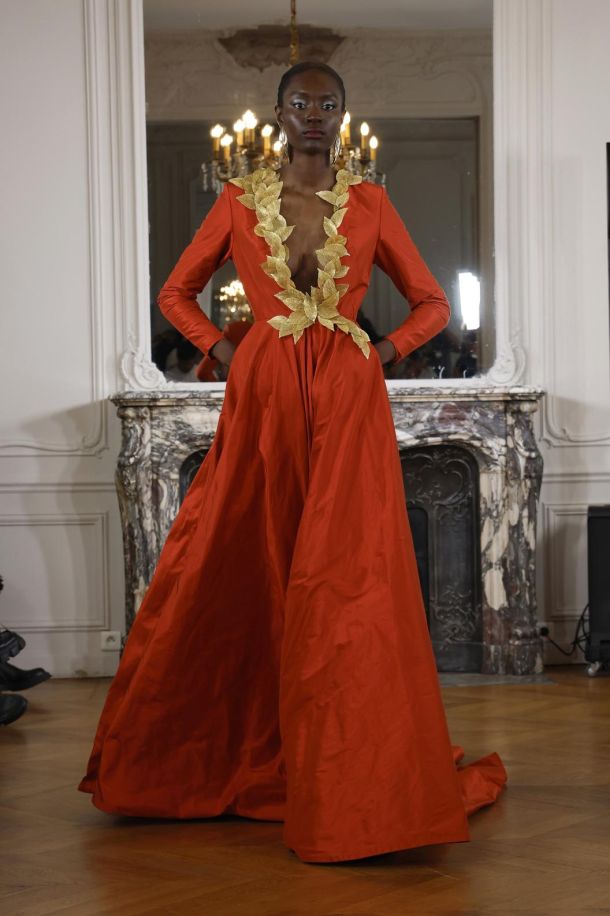
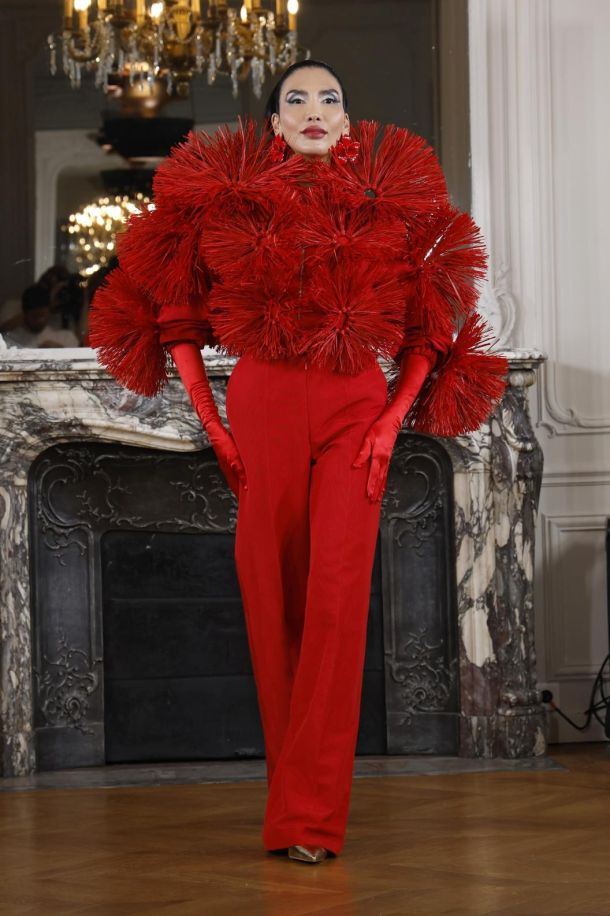
His collection “Ikorrok” for Fall/Winter 2025/2026 is finally a “vibrant hymn to Earth’s regeneration.” Ikorrok means “fallow land”—an area returned to nature for recovery. Ayissi reflects this philosophy in his designs by incorporating nature motifs in brocade, appliqués, and embroidery. He processes traditional fabrics like hand-woven Faso Dan Fani from Burkina Faso and Obom bark cloth from Cameroon, which regrows after harvest. He combines these authentic, often coarse materials with fine silk and tulle to create a tension-filled aesthetic where graphic cuts meet soft draping.
Part of the collection consists of biodegradable sheep wool felt from France, refined in collaboration with artist Aline Putot-Toupry with porcelain, semi-precious stones, and urushi lacquer. The color palette ranges from earthy tones to vibrant red and deep blue.
Cultural Dialogue Meets Planetary Regeneration
Imane Ayissi’s vision spans two collections that bridge continents and philosophies. “Akalann” (Spring/Summer 2025) deconstructs the African Boubou, Japanese kimono, and Korean hanbok, revealing unexpected structural kinships across cultures. Collaborating with painter Wang Ying, Ayissi transforms silk and bamboo into canvases where impressionist brushstrokes speak a universal language of beauty. “Ikorrok” (Fall/Winter 2025/2026) takes its name from “fallow land”—earth returned to nature for regeneration. Hand-woven Faso Dan Fani from Burkina Faso meets Obom bark cloth from Cameroon that regrows after harvest, their raw authenticity juxtaposed against biodegradable French sheep wool felt refined with porcelain and urushi lacquer by artist Aline Putot-Toupry. Together, these collections propose that true luxury emerges from patient dialogue—between cultures that discover shared wisdom in their textile traditions, and between humanity and nature when we trust regenerative cycles over extraction. Ayissi’s couture becomes cartography of connection: proof that borders dissolve when we honor origins, that beauty deepens when creation includes rest, and that fashion’s future lies not in endless production but in thoughtful cultivation of what already exists. | Photo: nowfashion.com
A Shared Vision: Couture Régénérative
Rahul Mishra and Imane Ayissi are shaping haute couture that offers a glimpse into tomorrow’s fashion. They rely on materials that promote the natural cycle and whose origin is traceable. With this attitude, their work builds a substantive bridge between geographically distant places—from the cotton field in India to the weaving mill in Burkina Faso to the runways in Paris. They connect regional traditions with modern aesthetics, showing how luxury and beauty can be interpreted in a new way that is both demanding and forward-looking.
The Essence: A Vision of Integrity
Rahul Mishra and Imane Ayissi remind us that fashion is a living organism. They believe that true elegance lies in the harmony between the creator, the wearer, and the earth. The essence of their work is the practice of Couture Régénérative—a ritual of mindfulness where every stitch contributes to the restoration of cultural and natural cycles
Couture Régénérative goes beyond sustainability; it aims to actively restore. For Rahul Mishra, this means his ‘Triple E’ philosophy (Environment, Employment, Empowerment), which revitalizes rural ecosystems and artisan communities. For Imane Ayissi, it involves using regenerative materials like Obom—a bark cloth harvested without killing the tree—ensuring that the creation of luxury strengthens the natural world instead of depleting it.
They prioritize fibers that are part of a healthy ecological cycle. Ayissi champions Faso Dan Fani and organic raffia, while Mishra focuses on hand-spun silks and regenerative cotton. By integrating these materials into Haute Couture, they prove that high-end fashion can be a catalyst for biodiversity and the preservation of ancestral botanical knowledge.
In this context, Quiet Luxury is the excellence of a balanced system. It is not just about the final aesthetic, but the integrity of the process. It’s a luxury that doesn’t scream for attention through logos, but commands respect through its regenerative impact—measuring success by the thousands of hours of hand-craftsmanship and the health of the communities and landscapes that produced the garment.
Zitat Lorem ipsum dolor sit amet, consectetur adipiscing elit, sed do eiusmod tempor incididunt ut labore et dolore magna aliqua. Ut enim ad minim veniam, quis nostrud exercitation ullamco laboris nisi ut aliquip ex ea commodo consequat.
Similar Articles

Armani Without Giorgio: The House Opens a New Chapter
Savile Row: One Block of Mayfair, Two Centuries of Bespoke Tailoring
The Caliber of the Deep: Blancpain and the Ocean Photographer of the Year 2026