

Ikorrok: When Fallow Land Becomes the Stage
When Imane Ayissi uses materials like Obom (bark cloth) or Faso Dan Fani, his focus is on more than just aesthetics. It is a form of quiet luxury that draws its exclusivity from traceability and artisanal depth. His designs act as cultural bridges, connecting the structure of African weaving with the fluid elegance of Parisian ateliers.
Parisian Haute Couture is experiencing a quiet revolution. Beyond the established maisons, new voices are emerging that fundamentally expand our understanding of luxury. They no longer speak only of exclusivity and perfection, but of responsibility, origin, and future. This movement, understood as Couture Régénérative, combines the highest level of craftsmanship with materials and processes that strengthen natural cycles instead of destroying them.
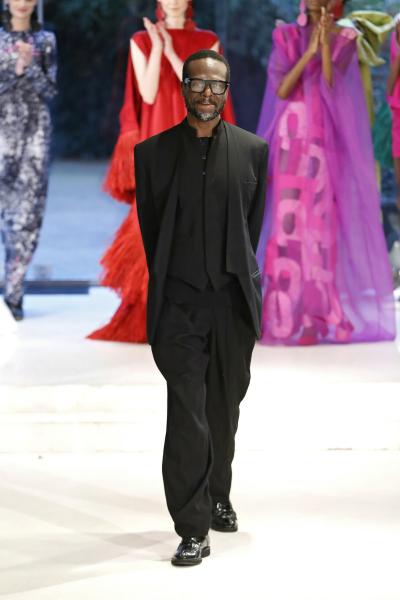
A designer who masterfully embodies this new aesthetic is Imane Ayissi. From his atelier in Paris, the Cameroon-born designer creates fashion that connects traditional African weaving techniques with the elegance of Parisian tailoring. His collections are more than garments – they are cultural bridges between continents and a vision for fashion that heals instead of consuming.
From Dancer to Couturier: A Path Between Worlds
Imane Ayissi’s life story reads like a kaleidoscope of the arts. Born in 1968 in Yaoundé, he grows up in a family deeply rooted in Cameroon’s cultural life – his mother was Miss Cameroon. Early on, he becomes part of the Ballet National du Cameroun and works as a dancer with international choreographers like Patrick Dupont, whose tours take him around the world.
In the early 1990s, Ayissi moves to Paris and begins a successful career as a model for major houses like Dior, Lanvin, Yves Saint Laurent, and Valentino. But his heart belongs to design. Since 2020, he has been part of the official selection of the Fédération de la Haute Couture et de la Mode – recognition that honors his unique contribution to contemporary couture.
Materials as Carriers of History and Future
Ayissi’s approach to Couture Régénérative first manifests in his radical material choices. His fabrics don’t come from anonymous industrial operations, but from small, often family-run weaving workshops throughout Africa. Faso Dan Fani from Burkina Faso, a hand-woven cotton fabric created in state cooperatives. Obom bark fabric from Cameroon, extracted from tree bark that regrows and regenerates itself after harvest.
These materials bring their own aesthetic – often coarse, always authentic, never perfect in the industrial sense. But precisely this “imperfection” becomes strength in Ayissi’s hands. He creates tension between the natural structure of these fabrics and fine tulle and silk, combining them in soft draperies to create a dynamic aesthetic between authenticity and elegance.
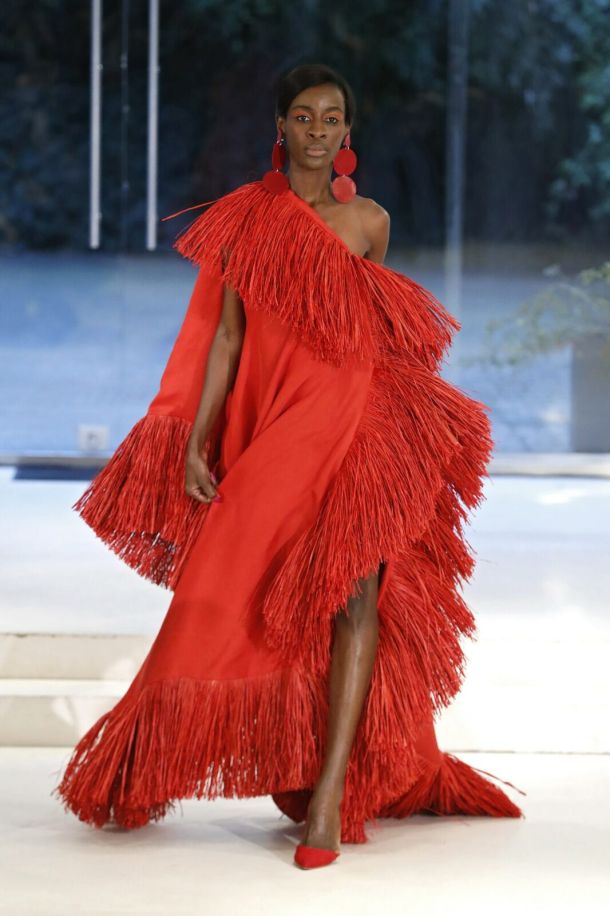
“Faliya” (Spring/Summer 2022) at Paris Fashion Week
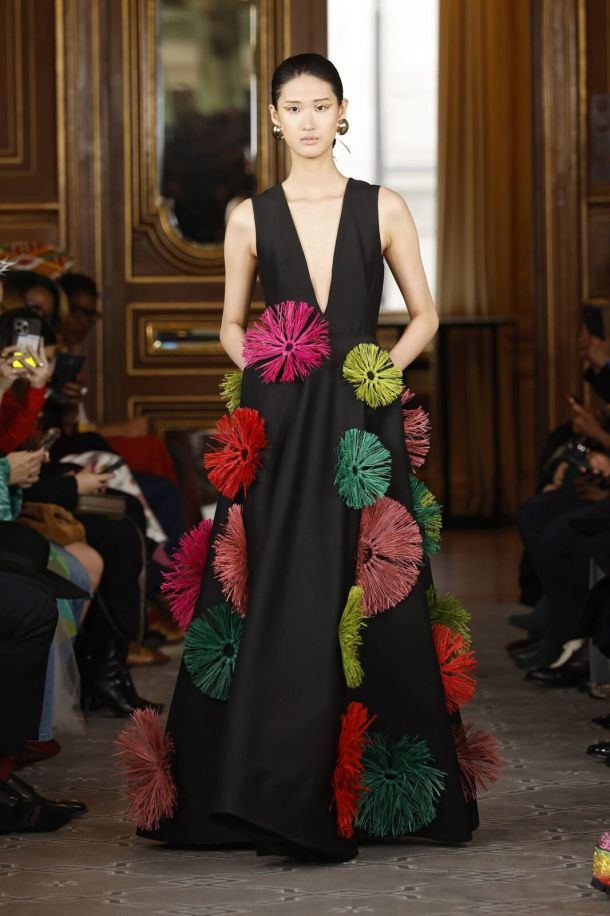
“Akalann” (Spring/Summer 2025) at Paris Fashion Week
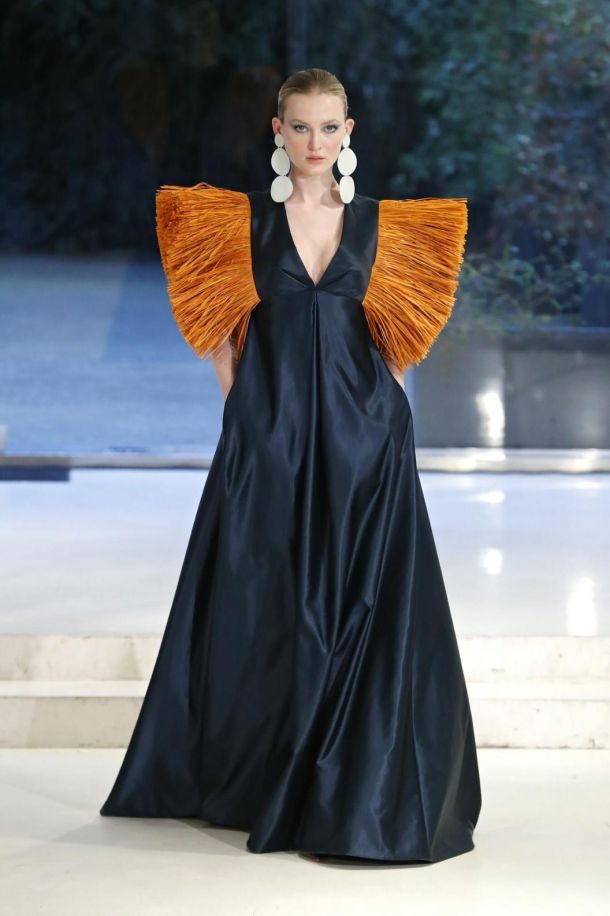
“Faliya” (Spring/Summer 2022) at Paris Fashion Week.
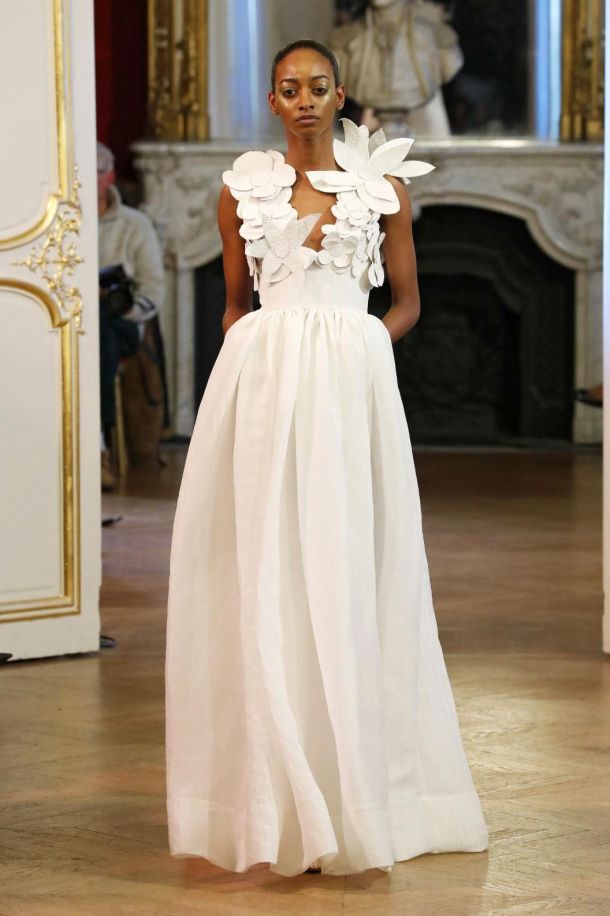
“Akouma” (Spring/Summer 2025) at Paris Fashion Week.
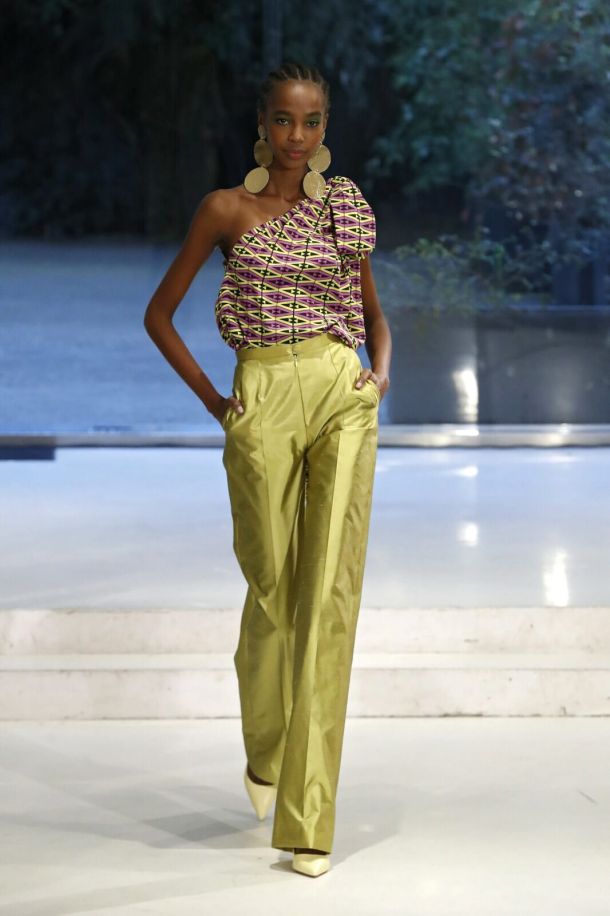
“Faliya” (Spring/Summer 2022) at Paris Fashion Week
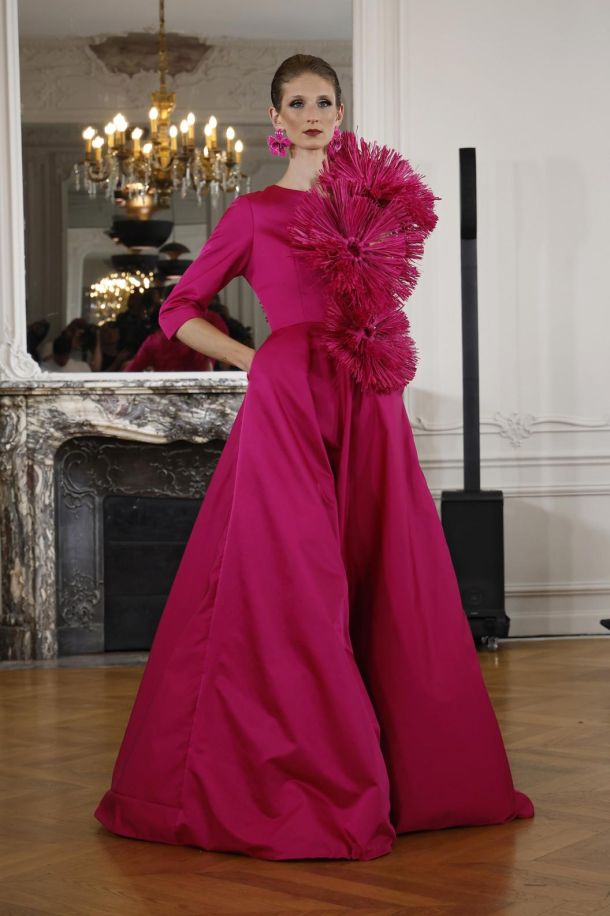
“Ikkorok” (Fall/Winter 2025) at Paris Fashion Week.
“Ikorrok”: Fallow Land as Metaphor for Regeneration
His current collection for Fall/Winter 2025/2026 is titled “Ikorrok” – a word from the Cameroonian language Ewondo meaning “fallow land.” A surface that one returns to nature so it can recover. “This sums up the new relationship we should all be entering into with nature today,” Ayissi explains his vision.
Ikorrok is more than a fashion collection – it is a “vivid ode to earth’s regeneration.” Ayissi incorporates nature motifs in brocade, appliqués, and embroidery, including small animals embroidered using a technique inspired by traditional Yoruba culture. The color palette ranges from earthy tones to vibrant red and deep blue – colors that reflect the vitality of African landscapes.
A special part of the collection consists of biodegradable sheep’s wool felt from France, refined in collaboration with artist Aline Putot-Toupry with porcelain, semi-precious stones, and urushi lacquer. These pieces are completely biodegradable – a radical statement in an industry that traditionally relies on durability.
Cultural Dialogue as Design Principle
Ayissi’s earlier collections show the development of his design philosophy. “Akouma” (2020), meaning “wealth” in the Beti language, referenced the cultural significance of fabrics like raffia or kente, which in Africa represent dignity, status, and collective memory. Inspired by dance and movement, he staged the materials in layers and draperies to make their structure and vitality visible.
With “Faliya” (Spring/Summer 2022) – “mixture” or “crossroads” in his native Ewondo language – he developed this idea further. Upcycling became the technical and metaphorical foundation: fabric remnants from previous collections were transformed into artistic appliqués and combined with materials like jersey and organza. From fragments of the past emerged a new, harmonious aesthetic.
“Akalann” (Spring/Summer 2025) finally deepened the cultural dialogue. Ayissi deconstructed traditional African garments like the boubou and kaba, discovering structural parallels to the Asian kimono or Korean hanbok. These intercontinental connections were underscored by a collaboration with painter Wang Ying, whose impressionism-inspired brushstrokes on silk and bamboo fabrics bridge worlds.
Couture Régénérative: A New Definition of Luxury
Ayissi’s work embodies the three fundamental pillars of Couture Régénérative: materials that strengthen natural cycles, craftsmanship that creates lasting value, and design that reinterprets existing resources. His collections don’t follow the strict seasonal logic of traditional fashion, but develop along new fabrics and techniques – a process that enables complex handwork that can take months to complete.
The origin of his materials is always traceable, often with direct connection to the weavers and collectors of raw materials. This transparency is part of his aesthetic and ethical vision: luxury that knows its roots and stands by them.
Paris as Stage for Global Stories
On the runways of Paris Fashion Week, Ayissi shows that the future of haute couture lies not in isolation, but in opening up. His collections expand couture’s geographical perspective: while Paris provides the stage, an essential part of creation takes place in the workshops of Burkina Faso and Cameroon.
This new cartography of luxury shows no fixed lines between classical fashion capitals. It emerges from points connected through craftsmanship, materials, and design. Between Yaoundé, Ouagadougou, and Paris emerges a fashion that enriches global luxury with a crucial dimension: the equivalence of origin, present, and future of a garment.
With each collection, Imane Ayissi proves that Couture Régénérative represents not only an aesthetic, but also a cultural and ecological revolution. His fashion tells stories of continents and traditions, but above all, it tells of a future where beauty and responsibility are inseparably connected.
The Essence: Imane Ayissi’s Vision of Regenerative Couture
To witness an Imane Ayissi collection is to see the earth itself take form on the runway. ‘Ikorrok’ is an exploration of the space between the wild and the refined—a visual manifesto for fashion that doesn’t just exist but regenerates. It is an invitation to experience the strength of materials that have been harvested, woven, and honored by hand, creating a physical connection to the soil that transcends traditional luxury.
In the Ewondo language of Cameroon, Ikorrok translates to ‘fallow land.’ For Ayissi, this is a powerful metaphor for resilience and the necessity of rest. Just as land must lie fallow to regain its vitality, his philosophy suggests that fashion must pause and return to its roots to find true sustainability. This approach represents a shift toward a more thoughtful, quiet luxury, where the value of a garment lies in its ability to respect the natural cycle of growth and rebirth.
Ayissi acts as a cultural bridge, weaving together two seemingly distant worlds. He takes raw, ancestral materials—such as Obom bark cloth—and treats them with the precision of a Parisian atelier. The result is a silhouette that feels both archaic and modern. By refusing to compromise on the integrity of his origins, he creates a unique aesthetic that speaks to a global audience. It is a dialogue of textures: the honest, rugged feel of the earth meeting the fluid grace of high-end tailoring.
These textiles are the heartbeat of his work because they carry the energy of the hands that made them. Obom, a fabric created from tree bark, is a living material that breathes and reacts to the body. Using these fabrics is an act of preservation; it keeps ancient weaving and harvesting techniques alive in a modern context. For the wearer, it provides a tactile experience that is entirely unique—a reminder that true elegance is found in the maturity and honesty of the material itself.
Ayissi moves beyond the superficial labels of ‘eco-friendly’ to embrace a philosophy of regenerative couture. He focuses on the long-term health of the environment and the communities involved in production. By choosing biodegradable fibers and supporting artisanal weavers in Burkina Faso and Cameroon, he ensures that his fashion leaves a positive trace. It is a silent but profound statement: the most sophisticated objects are those that contribute to the restoration of the world rather than its depletion.
Similar Articles
Savile Row: One Block of Mayfair, Two Centuries of Bespoke Tailoring

The Caliber of the Deep: Blancpain and the Ocean Photographer of the Year 2026

German Jewellery Market: Jörg Gellner Sells His Pearl House to the Dettinger Group
