Hospi-tecture: When Architecture Becomes Medicine
Matteo Thun, architect, begins every project in a very particular way. He travels to the site, brings watercolors, paper and brushes. Before the first detailed discussions begin, before the first plans emerge, before anything is decided, comes seeing and perceiving. “I capture the surroundings and sketch how the building will fit into them,” he says. “The watercolors are the expression of my emotional perception.”
The concept of perception has shaped Thun’s working method from the beginning of his career. Born in 1952 in Bolzano, he was one of Oskar Kokoschka’s students at his “School of Seeing”. Kokoschka had his students draw from moving models – people who turned, walked, changed their posture. The exercise trained seeing to comprehend the world and sharpen perception. The technique was watercolor, as Kokoschka said, because it allows no corrections.
The Origin: Perception as Foundation
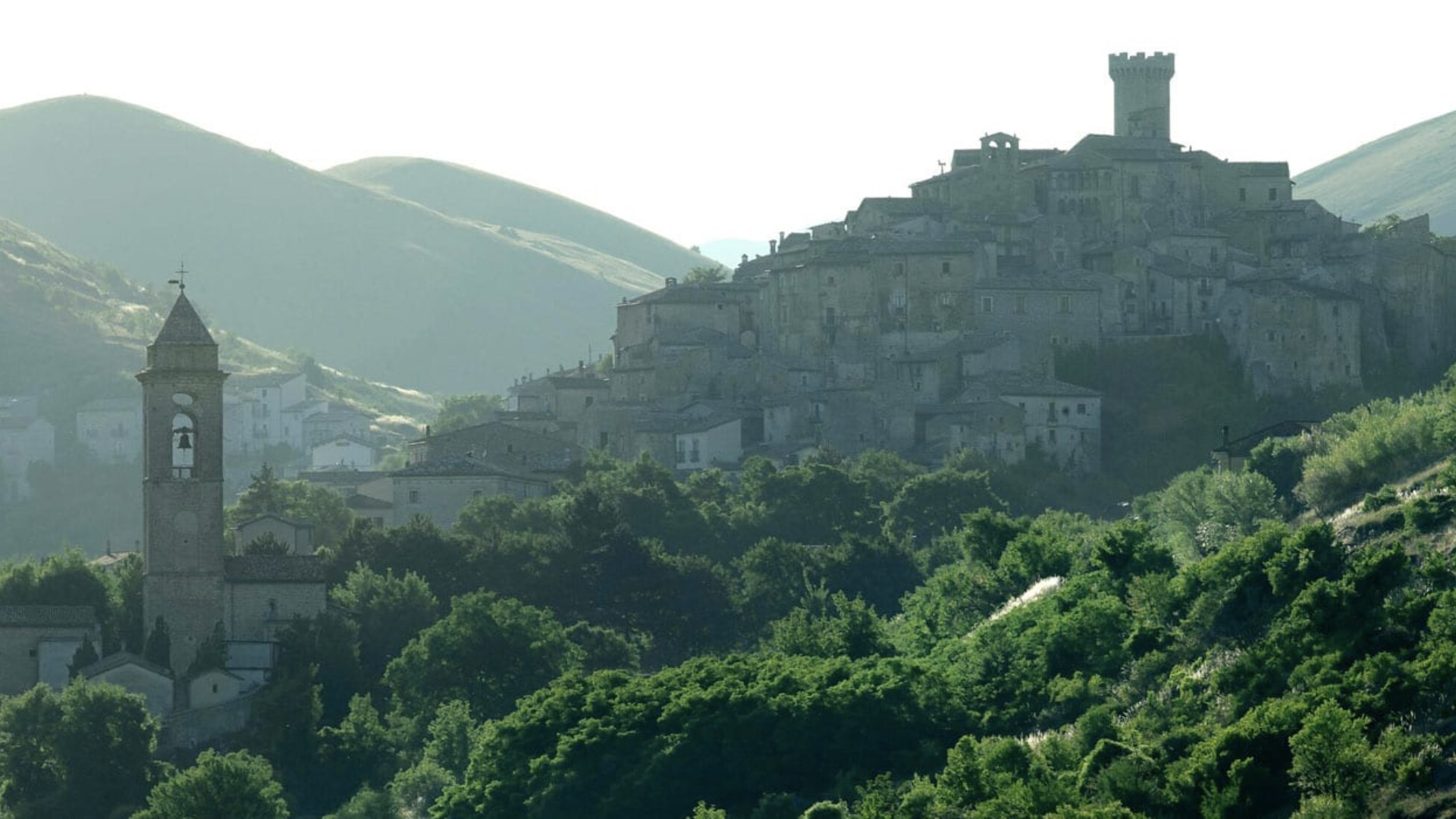
Today Thun counts among the defining architects in the field of sustainable hospitality. His architecture studio in the heart of Milan has designed over 80 hotels since its founding in 1984, most in the luxury segment – from the Vigilius Mountain Resort in South Tyrol to the Waldhotel at Bürgenstock. What connects these projects is less a recognizable style than a fundamental attitude that has much to do with perception: the conviction that architecture emerges from place and can thus bring people into balance.


Genius Loci: Nature as Client
“As with all our projects, we start from the Genius Loci,” says Thun. “The soul of the place plays a central role.” The watercolors that stand at the beginning are more than initial sketches. They are the attempt to understand the place before changing it. At the Vigilius Mountain Resort, larch wood was used, at the Waldhotel, limestone. “Architecture must submit to the surrounding nature. It determines which form and which materials dominate.”
Precise study means spending time on site, observing light conditions, getting to know the materials of the region, understanding climatic conditions. What Kokoschka taught for seeing people – capturing moving form, recognizing the essential – Thun applies to landscapes. The method is the same: perception as the starting point for design.
Thun explains to The Silent Luxury the particular importance of Genius Loci in health projects, which have formed a special new focus for the architect in recent years. “We work with open floor plans that enable flowing transitions between different levels and create a harmonious connection between interior and exterior space, to consciously bring nature inside,” says Thun. The location of many health facilities enables this access: since most lie in nature, the outdoor areas serve as retreats, promote connection to nature and support mental health. Gardens, courtyards and water features are thus consciously integrated into the planning.
The Waldhotel Bürgenstock lies 500 meters above Lake Lucerne, surrounded by forest. The Waldkliniken Eisenberg lie in the middle of the Thuringian Forest. “The surrounding nature brings everything needed for healing,” says Thun. “You just have to let it in. In urban areas, you have to create it.”

Hospi-tecture: Understanding the Patient as Guest
From his experience in hotel construction, Thun developed a concept he calls Healthy Living. “Healthy Living connects well-being and health,” he says. Guests want to be certain that food is freshly prepared with regional ingredients. They want to strengthen their bodies, also preventively. They want to breathe in an environment made of natural materials. Wellness, as the term was long understood, meant service, offerings, treatment, programs. Healthy Living describes something different – a form of well-being that arises through architecture, material and place, without active intervention.
Recent years have shown him something that has changed – a kind of shift in the understanding of travel and hospitality. “Guests are interested in the place in its physical context, in the architecture and the rituals that can be experienced there,” he says. “This isn’t about superficially attractive design; guests expect honesty right down to the building’s lifecycle.”
This insight from hotel construction could be transferred. If architecture in hotels can contribute to regeneration, why not in spaces where healing is the central task? From this Thun developed the concept of Hospi-tecture. “Hospi-tecture connects the aesthetics of hospitality projects with those in healthcare,” he says. The term combines hospital and architecture, describes an architecture that learns from hotels: to see people as guests – hospes, Latin for guest – to give them space, to surround them with calming materials.
“Clinics can learn from the hospitality concept how to place the guest at the center,” says Thun. “This isn’t a question of luxury, but of attitude.” In his Milan office, Thun founded a dedicated Hospi-tecture team that focuses on designing health facilities. The team works to create spaces where people feel like hotel guests, including a fine-dining restaurant, because healthy, varied cuisine is also a prerequisite for the healing process. Everything revolves around the hospes.


The Transformation: Atmosphere Instead of Equipment
The transfer of hospitality principles to clinics manifests in concrete decisions. A patient room receives large windows with views of the landscape. Wood goes underfoot, clay on the walls. Daylight falls deep into the room and changes throughout the day – cooler in the morning, warmer in the evening, always alive. The air feels different than in air-conditioned rooms, the temperature is more even. Corridors become wide, bright. The materials are natural: wood, stone, textiles.
“Hospitality means seeing people as guests,” says Thun. “This attitude can be transferred to clinics.” What changes is less the equipment than the atmosphere. The clinic doesn’t feel like a place where you are sick. It becomes a place where healing is possible.
With the Waldkliniken Eisenberg, Thun succeeded in realizing hotel standards for a municipal clinic. “The term Hospi-tecture should bring it to the point – it’s about the fusion of hotel and hospital,” he says.
Material Intelligence: The Healing Power of Natural Materials
This fusion begins with the choice of materials. Thun speaks of material intelligence – the effect that materials have on people. Wood, stone, textiles – each material sends signals that the body perceives. “Materials are not neutral,” he says. A room made of wood feels different than a room made of concrete. The body reacts to this, even if consciousness doesn’t immediately register it.
In his projects, Thun uses natural materials whose properties are measurable and have direct effects on well-being. Wood regulates humidity. Stone stores warmth. Textiles dampen sound. Material intelligence is part of Healthy Living – choosing materials so they contribute to regeneration without conscious intervention being necessary.
Thun therefore works extensively with wood and stone, materials that “age beautifully,” as he says. “Patina, especially with wood, ensures that buildings fit even more harmoniously into nature.” While a culture of permanent renovation and flawless Instagram design often views patina as a problem, Thun sees value in it: the traces of time make a building more authentic, let it grow together with its surroundings.
“For me, wood is the cement of the 21st century,” he says. “Wood is high-tech and high-touch. It has a technical and aesthetic sustainability that is unmatched. Because it’s so light, construction and handling times can be kept relatively short, and you have zero emissions. And it ages beautifully.”


Zero-Kilometer Design: The Memory of the Region
The choice of materials follows another principle for Thun, closely connected to material intelligence: “Zero-Kilometer Design”. At the Vigilius Mountain Resort in South Tyrol, he worked with South Tyrolean carpenters, at the Longen Resort with Moselle stonemasons. “We believe in the power that traditional know-how brings and the quality associated with it,” he says.
This is less about transportation routes than about transmitted knowledge, local craftsmanship, a quality that industrial production can hardly deliver. When a South Tyrolean carpenter works with larch wood, he possesses knowledge passed down through generations. He knows how the material reacts to moisture, how it works, how it behaves with age. This knowledge is part of the material intelligence in every one of Thun’s projects.
Zero-Kilometer Design connects with Genius Loci – the place determines not only the form of the building but also the people who build it. Architecture thus becomes an expression of the region, carrying its memory and remembrance. The circle closes: from the watercolor at the beginning that captures the place, to the finished building that emerged from the place.
Light and Space: The Fourth Dimension of Recovery
“Light shapes spaces just as much as walls and ceilings,” says Thun. In his projects, he works with natural light that falls into rooms through large windows – those windows he already described in the transformation of the patient room. He uses artificial light sparingly and in ways that support daily rhythms. “Daylight improves mood, regulates daily rhythms,” says Thun. “We therefore try to optimally use daylight to support guests’ circadian rhythm and create a pleasant atmosphere.”
Research shows that daylight regulates circadian rhythm. This rhythm influences sleep, mood, healing processes. Thun refers to studies proving that natural elements, light, colors and spatial design directly affect emotional well-being. Healing architecture has developed into an independent field of research that is gaining increasing importance.
In Thun’s projects, patient rooms have large windows with views of the landscape. Light falls deep into the rooms and changes throughout the day – cooler in the morning, warmer in the evening. This change makes the room alive and gives people orientation throughout the day. It’s the same quality as natural materials: light works along without active intervention being necessary.
Invisible Systems: Well-being from Behind the Scenes
Besides materials and light, there’s a third level that influences well-being: heating, air quality, energy. These systems remain in the background, well hidden and highly effective, yet influence how a space feels. “Houses interact with people, because the human body is inseparably connected with its environment,” says Thun. “The so-called invisible systems, such as renewable energy sources, photovoltaic modules, a solar thermal system and geothermal energy are subtly perceived and influence us in the building. The cleaner, the better.”
Thun designed a biomass facility in Schwendi that functions as a geothermal project. Geothermal energy, he says, is the best solution. A room heated with geothermal energy feels different than a room with air conditioning. The air is different, the temperature is more even, the body reacts to it. These invisible systems are part of material intelligence – they create conditions under which people feel better without consciously registering why. Here too the philosophy of Healthy Living applies: well-being arises through proper design, not through programs or services.

“We are part of nature. When architecture reflects nature and brings it inside, it brings us back into proper balance.”
Matteo Thun, Architect
Aesthetic Sustainability: The Beauty of Aging
When asked about his definition of luxury in regenerative architecture, Thun answers with one word: “Simplicity.” In December 2024, Matteo Thun received the German Sustainability Award for Architecture and the Honorary Award – recognition of his life’s work and pioneering work in sustainable architecture. The jury honored his works, such as the Waldkliniken Eisenberg or the Vigilius Mountain Resort, which uniquely connect nature and architecture. They demonstrate the potential of circular building concepts and so-called “Zero-Kilometer Design”, in which the preservation of traditional building methods and support of local craft businesses are paramount. Thun’s work has inspired countless construction projects and thus contributes significantly to addressing global environmental and climate challenges.
“Architecture always implies efficiency, functionality, user-friendliness, conscious planning and of course also conscious handling in the choice of materials and suppliers,” he says. “The future of construction lies in sustainable resource use and circular economy. The goal is to design the entire lifecycle of a building ecologically – from design to dismantling.”
He is convinced that a building that ages beautifully is regenerative. It doesn’t need constant renewal. It develops over time. The patina that forms is part of its history and connects it with its surroundings – that patina Thun already spoke of regarding materials. This history makes the building more valuable. For him, simplicity doesn’t mean renunciation but reduction to the essential, to what remains.
Simplicity: The Return to Balance
When asked whether architecture can heal and if so, from what, Thun answers: “We are part of nature. When architecture reflects nature and brings it inside, it brings us back into proper balance.”
This answer summarizes what Hospi-tecture means. It’s not about technology, not about programs, not about additional services. It’s about balance – the balance between person and space, between inside and outside, between architecture and nature. This balance establishes itself when you build correctly. When you start from the place, when you work with natural materials, when you use light properly, when you let nature in.
The method Thun applies for this, he learned at the beginning of his career from Oskar Kokoschka. Seeing as a tool to comprehend the world. He applies this method today to design buildings where people recover, become healthy, regenerate. Hospi-tecture is the application of this method to spaces where healing happens. Healthy Living is its result.
Learn more: matteothun.com
Similar Articles
Prix Versailles 2026: The Architecture of Dining
From Baja California to Bhutan: Hospitecture and the Stays That Treat Arrival as a Health Decision
1 Hotel Tokyo: Ōya Stone, a Zen Garden Ceiling and an Hourglass in the Shower