
The Design of Trust: Workwear’s New Code.
von Eva Winterer
The Design of Trust: Workwear’s New Code.
Fristads CEO Petra Öberg Gustafsson breaks the linear logic: Sustainability is redefined as a structural business discipline, converting the regenerative mindset into quantifiable service and long-term profitability.
von Eva Winterer
Every year, the global textile industry loses around $150 billion in value through discarded materials. Behind that figure lies a mindset problem rather than a material one – an inability to recognise durability as value. In Vienna, inside a sun-lit corner of the Hotel Altstadt, a place guided by its own quiet sustainability principles, Petra Öberg Gustafsson, CEO of Fristads, speaks about changing that logic. Calm, precise, and deeply focused, she describes a system where industrial discipline meets human empathy – and where sustainability has become a service, a mindset, and a measure of respect.
A Century of Function, a Future of Meaning
The light filters through the tall windows of the Altstadt’s salon, touching the muted colours of the walls – a room where design and conscience coexist naturally. Fristads, founded in 1925, was born from the need for workwear that could endure. Under Petra Öberg Gustafsson, that endurance has turned from physical to cultural. “Sustainability is not a department,” she says. “It’s a mindset. Everyone in the company – from sourcing to logistics – shares that responsibility.” Her voice carries the certainty of someone who has translated principle into process. “You can copy a system, but you can’t copy a mindset. The mindset is what truly changes a company.” At Fristads, this mindset links people, materials, and numbers into one architecture – a living system of appreciation and accountability.

Sustainablity as a Service
The concept of Sustainability as a Service redefines how industrial partnerships function. Instead of selling garments and moving on, Fristads provides an ongoing service: collecting used workwear, sorting, repairing, and re-spinning it into new fibres. Clients receive dashboards showing their CO₂ and water savings, helping them meet strict supply-chain-compliance standards. “Our clients face increasing regulation,” Gustafsson explains. “We make sustainability manageable – not marketing, but measurable.” The idea began with a single customer in the Netherlands who asked how Fristads could help meet its climate targets. “We built the system together,” she recalls. “They told us their challenges; we designed the solution. That collaboration became the blueprint.” Now, the model stretches across Europe. In warehouses, collection bins have replaced waste containers. Old textiles return as new workwear; value circulates instead of disappearing. “Circularity isn’t charity,” she says with a quiet smile. “It’s efficiency with conscience.”
Luxury is, when you can do your job without thinking about what you wear. When protection becomes confidence.
Petra Öberg Gustafsson
Appreciation as Precision
During the conversation, Gustafsson often pauses before speaking – choosing words with the same care she describes in production. “You can’t build durable products without emotion,” she says. “Appreciation is part of performance.” She remembers the day when employees received garments made partly from their own old uniforms. “They recognised the colours, the fibres – and they felt proud. That pride is also sustainability.” The story illustrates her conviction that emotion and efficiency belong together. Each Fristads piece carries traces of use and renewal – an industrial expression of continuity. “Luxury,” she adds, “is when you can do your job without thinking about what you wear. When protection becomes confidence.”
You cannot be sustainable if you are not profitable. But you won’t stay profitable if you ignore sustainability.
Petra Öberg Gustafsson
Profitability and Purpose
Fristads belongs to Investment AB Latour, one of Sweden’s most stable industrial owners – a context that allows for long-term thinking. “Profitability and sustainability go hand in hand,” Gustafsson says. “You cannot be sustainable if you are not profitable. But you won’t stay profitable if you ignore sustainability.” Her logic is pragmatic: circular systems reduce waste, lower costs, and strengthen client relationships. “Every repaired garment is one less resource wasted – and one more reason for customers to stay.” Sustainability, in her view, is no longer a communication layer but a business discipline – a structural advantage.

Regeneration as Culture
The sun shifts across the parquet floor as the conversation turns to leadership. “If you have to play a role at work, you lose energy,” Gustafsson says. “Authenticity is sustainable leadership.” Her approach is disarmingly straightforward. “I act the same wherever I go – Sweden, Austria, the Netherlands. People feel when you pretend. Real energy comes from being real.” At Fristads, meetings begin with listening. Teams are encouraged to speak about what motivates them, not only what they deliver. “When people feel seen, they gain energy,” she says. “That’s where regeneration starts – not in materials, but in people.” It is a quiet transformation inside a manufacturing company: culture as renewable energy.
The Aesthetics of Function
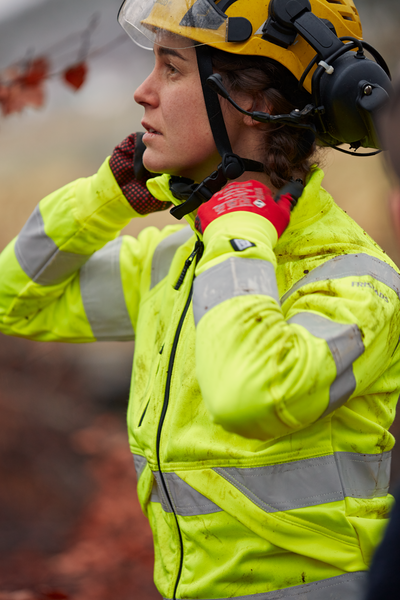
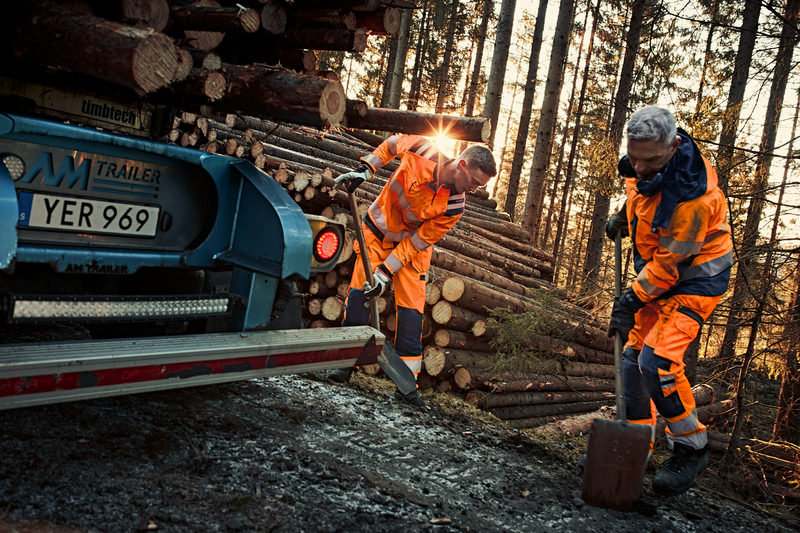
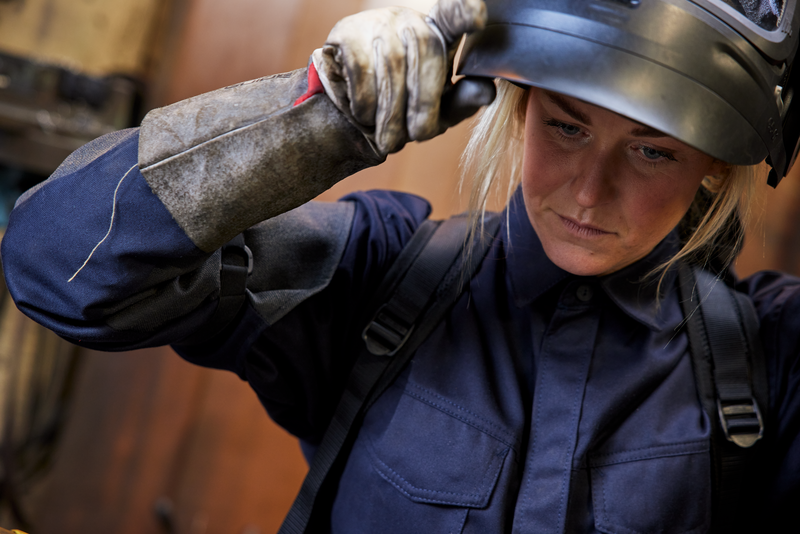
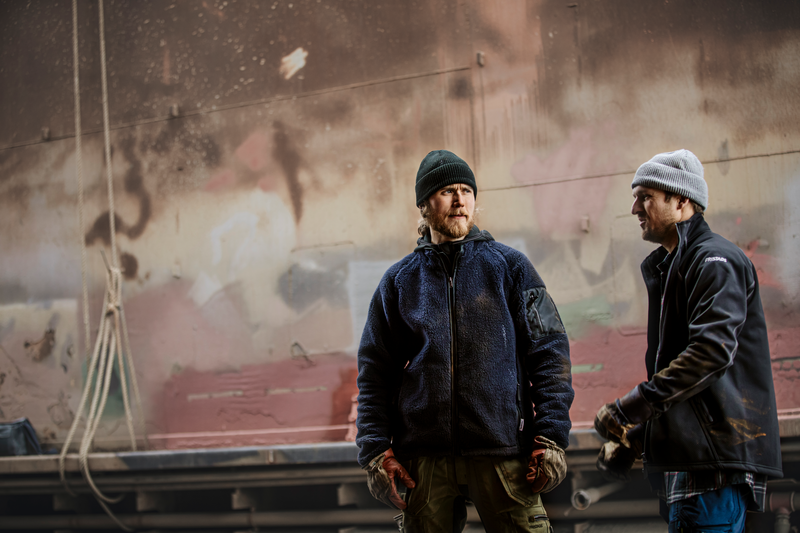
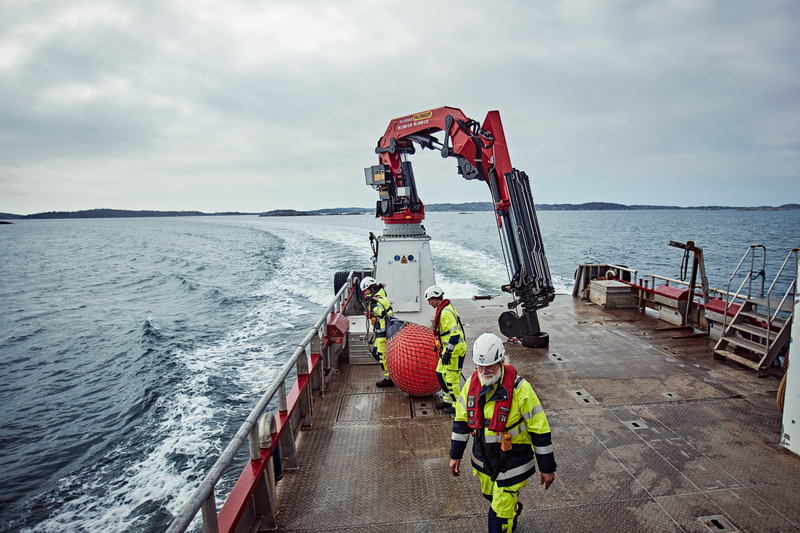
Workwear is rarely linked to aesthetics, yet Fristads’ design language conveys an understated grace. Reflective seams, recycled fibres, and breathable membranes form what Gustafsson calls “the silent design of trust.” “We never compromise on security, quality or durability,” she says. “If sustainability weakens the garment, it fails. Real innovation protects both the planet and the person wearing it.” Here, functionality becomes beauty – a philosophy that aligns naturally with the ethos of Silent Luxury: beauty through precision, refinement through restraint, meaning through endurance.
From Industry to Insight
As the last light fades across the rooftops of Vienna, Gustafsson reflects on the wider transformation. “We changed the way people look at workwear,” she says. “And maybe the way they look at work itself.” Her words echo the insight of the BCG study, which quantified the global value gap caused by linear production. Fristads, through its circular model, turns that gap into measurable recovery – economically, materially, and culturally. “In ten years,” she adds, “I hope we won’t have to talk about sustainability anymore. It will simply describe how we work.” Between textile fibres and team culture, Fristads has built a new kind of industrial intelligence – one that measures success in appreciation as much as in efficiency. An architecture of responsibility illuminated, that afternoon in the Hotel Altstadt, by the soft Viennese sun.
Continue Reading & Stay Informed:
The strategic principles applied by Fristads in the workwear industry correspond with the new architecture of value creation in the premium segment. Explore the analysis on "Couture Regenerative" and the redefinition of value in the era of Silent Luxury: Couture Regenerative: The Architecture of Value in Luxury's New Era
Don't Miss Any Insights:
Subscribe to our newsletter and receive exclusive analyses on sustainable transformation, leadership, and the architecture of value in the fashion and textile industry. Sign up here: https://the-silent-luxury.com/newsletter
Ähnliche Artikel

Brigitte Bardot: The Woman Who Invented Saint-Tropez and Liberated Fashion

Hospi-tecture: When Architecture Becomes Medicine
