
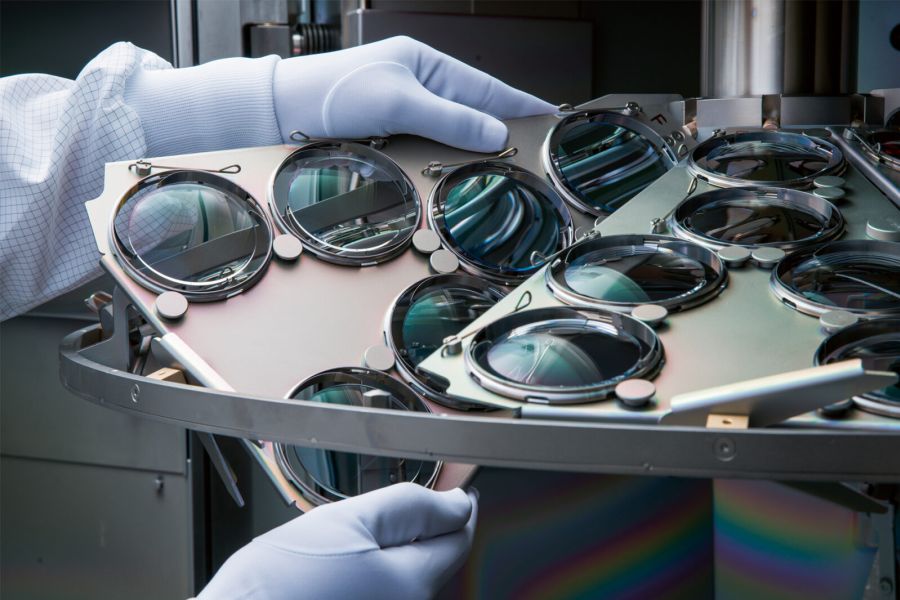
The Eyewear Split: How a $173 Billion Market Is Dividing Into Two Irreconcilable Logics
In 2026 the global eyewear market reached $172.92 billion, according to Mordor Intelligence. Within that figure, two structurally different industries are operating simultaneously: one organised around AI platforms and EssilorLuxottica’s target of twenty million units by end of 2026, the other around sixty-year manufacturing histories and 1.8-gram titanium frames. In 2026, Bain and Company identified a trust deficit between luxury consumers and several major houses. The split is structural.
Seven Million Pairs
The global eyewear market has long organised itself around a stable logic: lenses correct vision, frames carry fashion, and the luxury segment commands premium pricing for materials and manufacturing depth. That logic is being restructured by a technology partnership signed between Meta and EssilorLuxottica in 2021, which has since expanded into one of the most consequential industrial bets in wearable technology.
The numbers are precise. EssilorLuxottica tripled its Meta AI glasses sales to over seven million pairs in 2025, confirmed in earnings. Meta holds 76.1 percent of the global smart glasses market, according to IDC data cited in April 2026. The market shipped 9.6 million units in 2025 and is forecast to reach 13.4 million in 2026. Smart Analytics Global, cited by industry media in May 2026, projects AI smart glasses revenue to quadruple in 2026, from $1.2 billion to $5.6 billion, with unit volumes rising from six million to twenty million. To meet demand that had already caused supply shortages and suspended international sales, Meta and EssilorLuxottica are targeting production capacity of twenty million units annually by the end of 2026, according to Bloomberg reporting from January 13, 2026.
The Ray-Ban Meta Gen 2, launched in September 2025 at $379, offered double the battery life, 3K video capture, and on-device AI in Wayfarer and Headliner frames designed by the same teams that design regular Ray-Bans. In April 2026, prescription-compatible versions launched at $499 through optical retail with adjustable temple tips and interchangeable nose bridges. These are eyewear features, designed for eyewear retail. The technology is the interior; the frame is the argument.
|
Global Eyewear Market · 2026 · $172.92B Two markets, one name |
||
|
Precision Object Market $19.26B Luxury eyewear, 2026 +4.5% CAGR through 2032 $25.16B projected by 2032 Source: Research and Markets, 2026 |
Platform Market $1.2B → $5.6B AI smart glasses revenue, 2026 ×4 in one year 6M → 20M units forecast Source: Smart Analytics Global · IDC, 2026 |
|
|
Global eyewear market total: $172.92B in 2026. Source: Mordor Intelligence. © The Silent Luxury · Silent Communications GmbH |
||
The global eyewear market reached $172.92 billion in 2026, according to Mordor Intelligence. Within that figure, two structurally different industries are operating simultaneously: one organised around AI platforms and EssilorLuxottica’s target of twenty million units by end of 2026, the other around sixty-year manufacturing histories and 1.8-gram titanium frames. In 2026, Bain and Company identified a trust deficit between luxury consumers and several major houses. The split is structural.
Seven Million Pairs
The global eyewear market has long organised itself around a stable logic: lenses correct vision, frames carry fashion, and the luxury segment commands premium pricing for materials and manufacturing depth. That logic is being restructured by a technology partnership signed between Meta and EssilorLuxottica in 2021, which has since expanded into one of the most consequential industrial bets in wearable technology.
The numbers are precise. EssilorLuxottica tripled its Meta AI glasses sales to over seven million pairs in 2025, confirmed in earnings. Meta holds 76.1 percent of the global smart glasses market, according to IDC data cited in April 2026. The market shipped 9.6 million units in 2025 and is forecast to reach 13.4 million in 2026. Smart Analytics Global, cited by industry media in May 2026, projects AI smart glasses revenue to quadruple in 2026, from $1.2 billion to $5.6 billion, with unit volumes rising from six million to twenty million. To meet demand that had already caused supply shortages and suspended international sales, Meta and EssilorLuxottica are targeting production capacity of twenty million units annually by the end of 2026, according to Bloomberg reporting from January 13, 2026.
The Ray-Ban Meta Gen 2, launched in September 2025 at $379, offered double the battery life, 3K video capture, and on-device AI in Wayfarer and Headliner frames designed by the same teams that design regular Ray-Bans. In April 2026, prescription-compatible versions launched at $499 through optical retail with adjustable temple tips and interchangeable nose bridges. These are eyewear features, designed for eyewear retail. The technology is the interior; the frame is the argument.
|
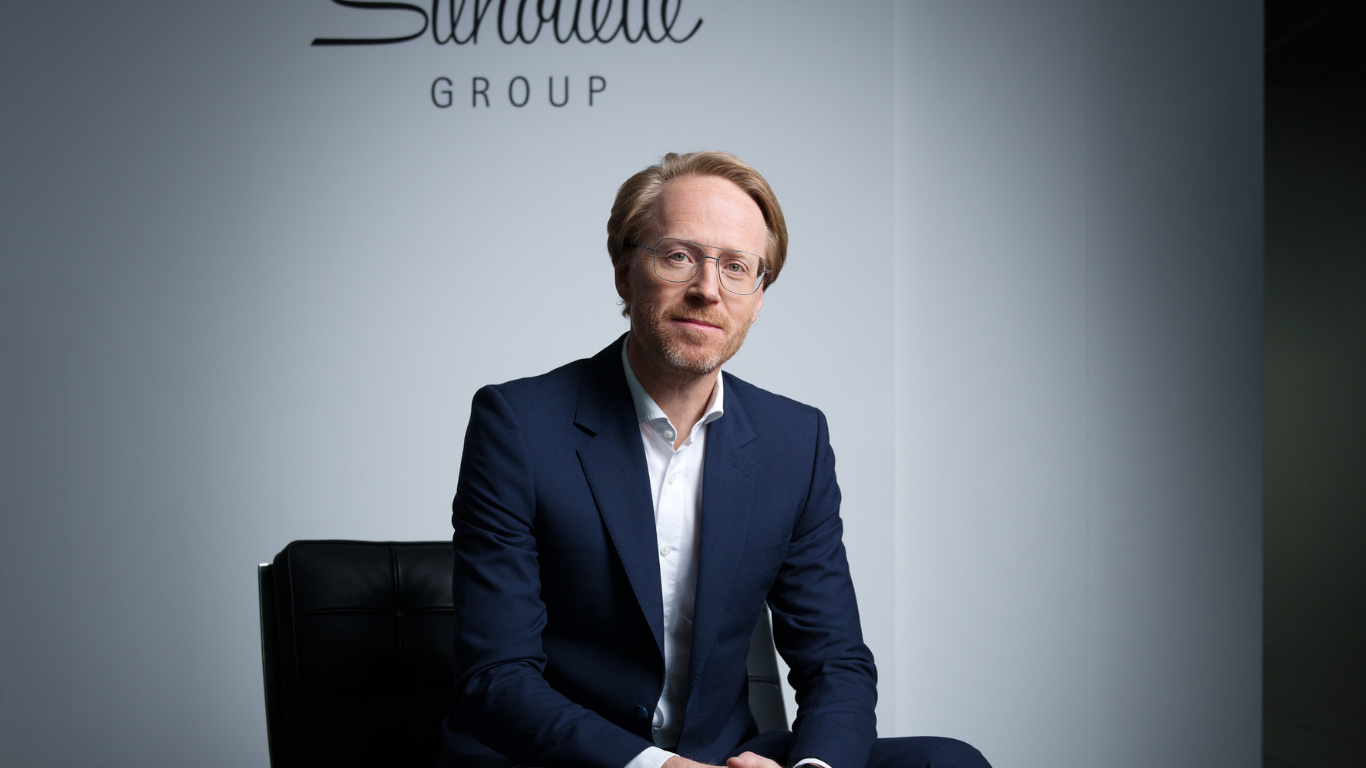
Exclusive Interview · The Silent Luxury “We think in generations, not seasons.” Christian Bachler, CEO Silhouette International Silhouette CEO Christian Bachler on Trust, Purity, and the Long Game Read the full interview → |
The Platform Bet
The strategic consequence is becoming visible at the brand level. At Google I/O in May 2026, Google and Samsung previewed Android XR audio glasses developed with Warby Parker and Gentle Monster. The framing was deliberate: the glasses fit within those brands’ regular collections, indistinguishable in a display case from non-connected frames. Gucci has signed a partnership with Google placing its name alongside Android XR in a luxury context. When two of the largest hardware companies on earth lead with the fashion brand rather than the silicon, the bottleneck they are solving is adoption, not capability.
EssilorLuxottica occupies both sides of this movement. The company controls approximately twenty-five percent of the global eyewear market, according to public filings, and holds exclusive long-term manufacturing licences for Chanel, Prada, Burberry, Armani and Tiffany, among others. Its 2025 revenue reached €26.4 billion, up from €24.8 billion the prior year, driven by premium segment growth and direct-to-consumer expansion, according to full-year results published in March 2026. The company is simultaneously the world’s largest producer of traditional luxury frames and the world’s largest manufacturer of AI-enabled smart glasses. It holds both positions at scale.
The Object Logic
The other side of the market operates on a different premise, and its argument is stated in operational terms. Christian Bachler, appointed CEO of Silhouette International on April 13, 2026, set out that premise in an exclusive interview with The Silent Luxury. Silhouette has been producing eyewear in Linz, Austria since 1964, without moving production offshore. Its Titan Minimal Art frame weighs 1.8 grams. In April 2026, the company completed the phase-out of fossil natural gas from its Linz facility, a step Bachler describes as consistent with what he calls the principle of reduction before compensation. “Producing in Austria, investing in material innovation, continuously refining the wear experience are not campaigns,” he said. “They are part of our long-term philosophy.”
His position on the smart frames question was direct. “We see eyewear not as a gadget or a short-lived technology product, but as something deeply personal,” Bachler said. “Glasses are part of people’s everyday lives, something they wear for many hours a day and often for many years.” He described Silhouette’s approach to innovation as the refinement of what already exists. “True innovation, in our view, is often invisible: it is the precision of the engineering, the lightness of the frame, the flexibility of the material, or a hinge design that enhances comfort without the wearer even noticing it consciously.” The word he reaches for when describing the design philosophy behind the Titan Minimal Art is purity. “We do not define it as reduction, but as purity. Purity means focusing on what truly matters.”
|
EssilorLuxottica × Meta · Ray-Ban & Oakley AI Glasses Units sold and targeted, 2023–2026 |
||||
EssilorLuxottica earnings, February 2026 |
||||
Confirmed · EssilorLuxottica Q4 2025 earnings (CNBC, February 11, 2026) |
||||
IDC market forecast · entire smart glasses category |
||||
Bloomberg, January 13, 2026 · production capacity target |
||||
|
Meta holds 76.1% of global smart glasses market (IDC, 2026). © The Silent Luxury · Silent Communications GmbH |
Trust and the Precision Object
This position has market context. Bain and Company’s Worldwide Luxury Market Monitor identified a trust breach between consumers and several of the industry’s largest luxury houses in 2026, driven by price increases unaccompanied by corresponding gains in quality or creative output. The trust deficit does not resolve automatically in favour of any particular producer. It creates a window for brands with operational depth to make a structural argument. Silhouette’s argument is the sixty-two years of domestic production, the 1.8-gram frame, and the April 2026 fossil gas phase-out. Bachler’s phrase for the consistency behind that argument is clear: “That consistency is what creates trust, and ultimately defines modern luxury.”
Two Markets, One Name
Italy produces sixty-five percent of all luxury eyewear in Europe, according to European Commission data cited in industry research. The luxury eyewear segment is growing at 4.5 percent annually, according to Research and Markets, on a trajectory toward $25.16 billion by 2032. Smart glasses revenue is growing at a multiple of that rate. The two trajectories do not converge, and the companies executing them are not competing for the same customer relationship.
The market is running two parallel experiments. One integrates AI, cameras, speakers and real-time translation into frames that look indistinguishable from fashion eyewear, targeting production at tens of millions of units annually. The other refines a precision object that has been in production for decades, manufactured in a single location, held to a weight of 1.8 grams. These industries carry different cost structures, different customer logics, and different definitions of what the product is for.
What 2026 is sorting out is whether buyers choosing a platform and buyers choosing an object still constitute the same market. The evidence from both sides suggests they do not.
Sources
EssilorLuxottica Q4 2025 Earnings (CNBC, February 11, 2026) · Bloomberg, January 13, 2026 · IDC, April 2026 · Smart Analytics Global, May 2026 · Mordor Intelligence Eyewear Market 2026 · Research and Markets Luxury Eyewear Market 2026 · Bain and Company Worldwide Luxury Market Monitor 2026 · European Commission luxury eyewear production data · The Silent Luxury exclusive interview with Christian Bachler, CEO Silhouette International, May 27, 2026.
Similar Articles

The Gilded Divide: How Luxury Outran the American Consumer in H1 2026

Armani Without Giorgio: The House Opens a New Chapter
The Long Goodbye: What LVMH Really Sold When It Parted Ways with Marc Jacobs
