“Delicious is Not Enough!” – The Radical Art of Dulcesserie
Silent Luxury: The opening to our conversation is quite classic, to get to know you a bit better. Then we’ll escalate. What path led you to patisserie?
Markus Hufnagl: I did a classic confectioner’s apprenticeship and then stayed in the training company for almost two years. But I was actually very dissatisfied. I wanted to see something new, to develop further. That’s how I got the idea to switch to patisserie. It was a 5-star Relais & Châteaux hotel on Lake Wörthersee with hotel guests, a beach restaurant, and a two-toque restaurant. Switching from a confectionery to top-level hospitality was a huge adjustment for me. Both professionally and privately, it was an incredible challenge.
SL: What was your moment of no return, the decisive moment for founding Dulcesserie?
Hufnagl: After this entry into patisserie, I had worked for a luxury company for 9 years, participated in international projects, developed products that today stand in flagship stores worldwide. For me it was clear: this is the job of my life, this is where I belong, this is my life. But as life goes—everything turned out differently than planned. The structure was changed and it was no longer what it once was. I suddenly stood before a pile of ruins; the meaning of my life no longer existed. My best friend then said: “Why don’t you actually become self-employed?” I asked him how he came up with such an idea. Later that evening while running, I thought about it and came to the conclusion: “Just do it.” The friend who gave the triggering push is Spanish, and so DULCESSERIE is a homage and thank you to him. A thank you for our friendship and for showing me a path—no, actually my path.
SL: Dulcesserie is different. Very different. What’s the motivation behind it? What’s your message?
Hufnagl: I want to change the image of patisserie. I want to show that patisserie doesn’t have to be well-behaved and sweet, but can also stand out. Dulcesserie stands for uncompromising taste, radical aesthetics, and the understanding that luxury has to do with experience and pleasure.
SL: Your motto “F*cking delicious” is very strong and very provocative in what is, as we discussed earlier, a rather reserved industry.
Hufnagl: It’s actually a promise I fulfill with every bite. ‘F*CKING delicious’ means: when you get something from me, it’s not just good, it blows you away. It’s the middle finger to mediocrity and proof that pleasure knows no compromises. Delicious is not enough!
SL: You play with seduction and pleasure. How would you describe these words? What do they express for you?
Hufnagl: Pleasure is something deeply personal for me, something touching and honest. I’m convinced that real pleasure may challenge, surprise, perhaps even provoke. It actually makes you hungry for more and transforms. Because fundamentally, the true art of seduction works the same way: it takes you on a journey with unexpected nuances, small breaks, and that one moment when you think: “Wow, I didn’t expect that.”
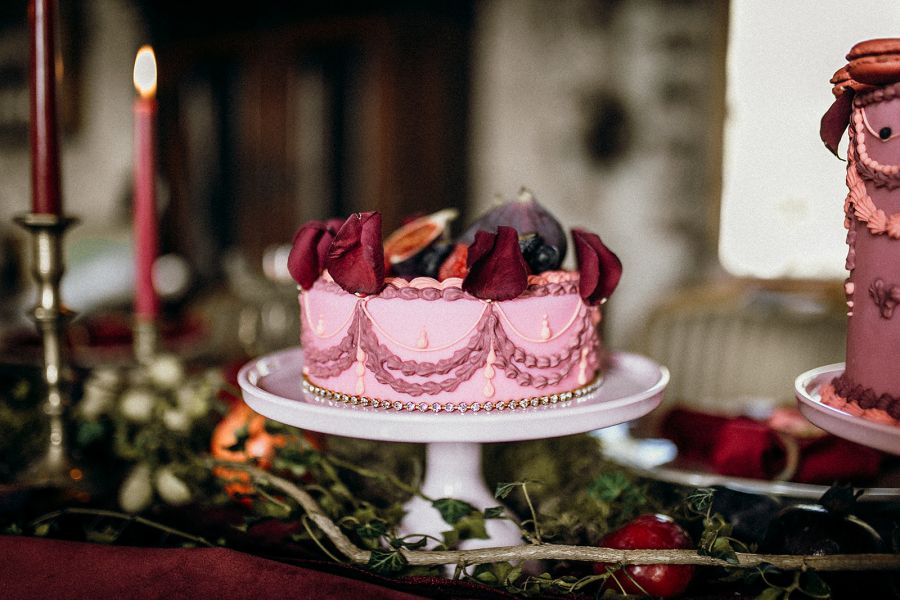
SL: Looking at your sweet table reminds one of the artworks of the great old masters in museums. Are your cakes artworks? Or what distinguishes an artwork from your cakes?
Hufnagl: That’s a very difficult question. I often hear “You’re an artist” and it always seems a little strange. I think about it every time, whether I’m a confectioner or an artist. Or whether I can also be an artist as a confectioner. But to come back to the question: Actually nothing at all. At least not with me. A cake can trigger emotions just like a painting or sculpture, when it’s made with the same dedication, vision, and radicality. The difference is perhaps only that my art is eaten. And that’s exactly what makes it so exciting: it lives in the moment, it disappears physically. However, this one bite can remain in memory longer than any painting.
SL: Painting is a good keyword. Every artist has their very own creative process. What does yours look like?
Hufnagl: I love developing new products from a story. Inspiration plays a very big role for me. At the beginning of every creation stands the question of the story and its narrative arc: What do I want to say? What was the inspiration? Why am I doing it? Then I develop the flavor direction: Which components fit the concept? How do they go together? Then follows the question of structure, textures, consistencies. Once all that is in place, I start tinkering and experimenting. And yes, it happens that I completely change my plans during the process.
SL: Are there rituals or processes that help you translate ideas into forms and flavors?
Hufnagl: Yes of course, but they’re rarely romantic. Ideas often come to me in the middle of chaos, in situations of emotional overwhelm, when strong feelings, both positive and negative, are at play. I write them down immediately and start working on them in my head, and I lose myself in the whirlwind of creativity. One thing follows from another without me having to think much.
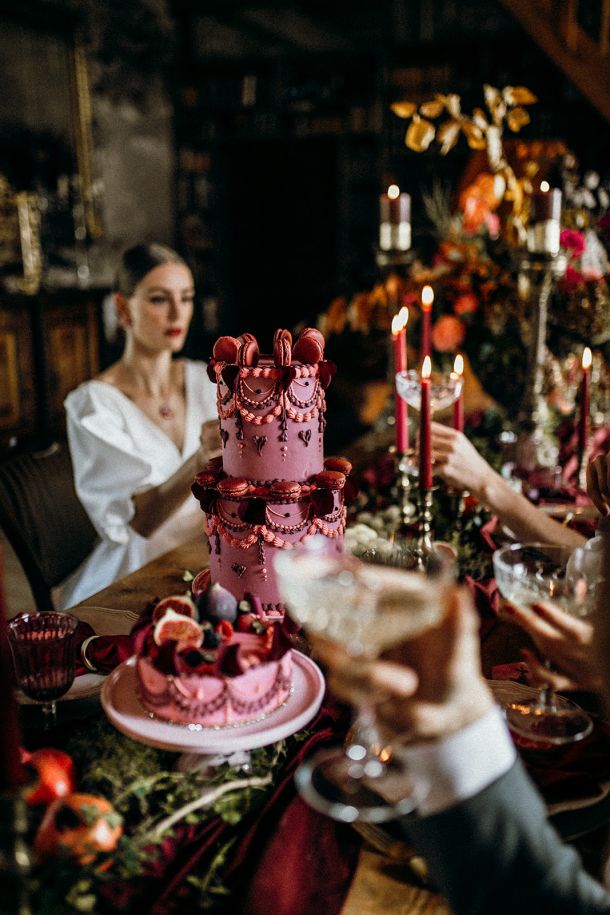
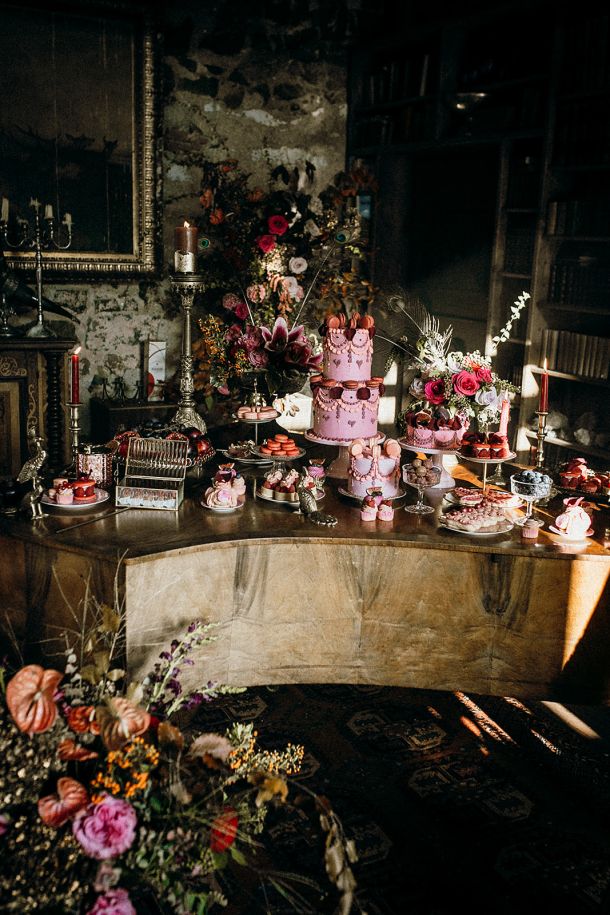
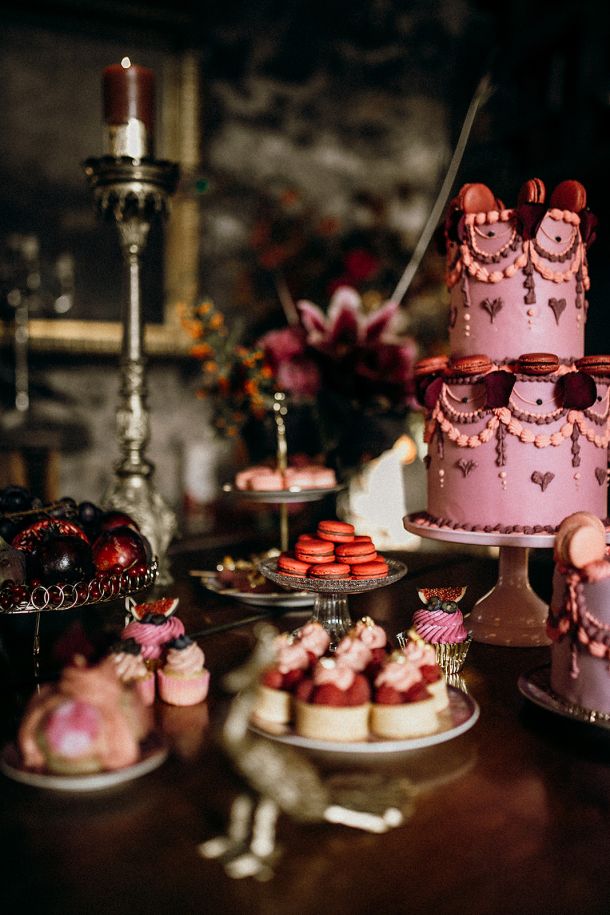
Delicious is not enough—it must be a rebellion. For Markus Hufnagl, a cake is a fleeting masterpiece that exists only in the intensity of the moment, leaving an emotional imprint far more permanent than any static work of art. It is the ‘F*cking Delicious’ promise: a symphonic clash of salt, structure, and soul. | Photo: Alexandra Schweinberger
SL: By which ingredients does one recognize your signature?
Hufnagl: By courage and salt. Courage to do things differently, to combine flavors that nobody expects. And salt, because it makes everything more honest. It brings out depth, takes away the mask from sweetness. Technically speaking, I work a lot with high-quality basic products.
SL: What’s decisive for your choice? Or asked differently, what do you particularly pay attention to when selecting basic products?
Hufnagl: Honesty. I want to know where something comes from, how it was produced, and whether it delivers what it promises. You don’t recognize quality by the label, but by how a product smells, tastes, and feels. I don’t buy anything just because it’s currently ‘hip.’ My raw materials carry my signature just as much as my technique.
SL: How important is the balance between taste and appearance to you?
Hufnagl: Balance is mandatory for me! There’s no either/or. Many focus only on appearance. For me, that lacks soul. Others bake only for taste and waste the presentation. Not with me. My cakes should captivate just as much as they seduce. There’s only F*CKING delicious and EXTRA (but not) ORDINARY!
SL: Many of your artworks are multi-tiered wedding cakes. That involves overall composition and precise planning. How do you proceed step by step?
Hufnagl: Here too, I start with the inspiration, the narrative that unites taste, scent, and appearance. This includes: Is there a mood board? What does the location look like? What’s the couple like? Then follows the concept—the flavors, shapes, colors.
After that, individual layers and fillings are precisely planned. Baking happens, and once everything has cooled, it’s layered, stabilized, and thoroughly chilled. Every tier must sit perfectly, otherwise everything collapses. Then follows the design of personality, decoration as a combination of sugar, chocolate, cream, edible sculptures.
SL: What technical challenges are there?
Hufnagl: There are four technical challenges: stability, texture, temperature, and timing. Stability is certainly the biggest challenge. Every tier must carry the weight of the cakes above it without fillings running, layers tipping, or cakes even sinking into each other. Texture means that when cut, the entire work must hold perfectly, remain moist, and taste harmonious. Temperature is a critical factor, because heat, humidity, and transport can ruin a cake if you don’t calculate well. And finally, timing is everything: every component must be ready at the right time so that taste, appearance, and freshness create perfect interplay.
SL: What fascinates me is the statics hidden in the cakes. What does it take for these constructions to be stable and work as a total artwork?
Hufnagl: It takes discipline, precision, and a lot of feeling. Every tier must sit perfectly, every filling must have the right consistency. It needs a good, almost intuitive eye for proportion, harmony, and dramaturgy. Because only when all components—stability, taste, and aesthetics—mesh perfectly does the cake work as a true total artwork. It’s work without a predefined recipe. Often you need the feeling for when something holds and when it may breathe.
Thank you for the conversation.
The Essence: The Sweet Manifesto
Dulcesserie is a middle finger to the average. Markus Hufnagl believes that if a creation doesn’t blow you away, it shouldn’t exist. It is the living feeling of a flavor that challenges and seduces at the same time.
It is a binding promise. For Markus Hufnagl, ‘delicious’ is the baseline, not the goal. ‘F*cking Delicious’ means a product must have the power to stop time and demand the eater’s full attention. it is a rebellion against the mediocre and a commitment to flavor profiles that have no room for compromise.
Because they trigger the same depth of emotion as a sculpture or a painting. The only difference is the medium. While a painting remains, a cake is ephemeral—it exists to be destroyed and enjoyed. This transience makes the experience more intense, turning a single bite into a lasting memory that resides in the senses long after the physical object is gone.
Hufnagl approaches his tiered cakes with the discipline of an engineer. He manages four core challenges: stability, texture, temperature, and timing. Each layer must bear the weight of the one above without losing its structural integrity or moisture. It is a work without a pre-defined recipe, requiring an intuitive eye for proportion and the technical mastery to ensure that the aesthetics never overshadow the soul of the taste.
Similar Articles
Anton Rupert Moves Up at Richemont as the Rupert Succession Takes Shape
Three Women, One City: How Luca de Meo Put Sabina Belli, Charlotte Fournet and Krizia Cucurachi in Charge of Kering in Milan
Spazio Gio Ponti: Milan Finally Gives Its Architect a Home